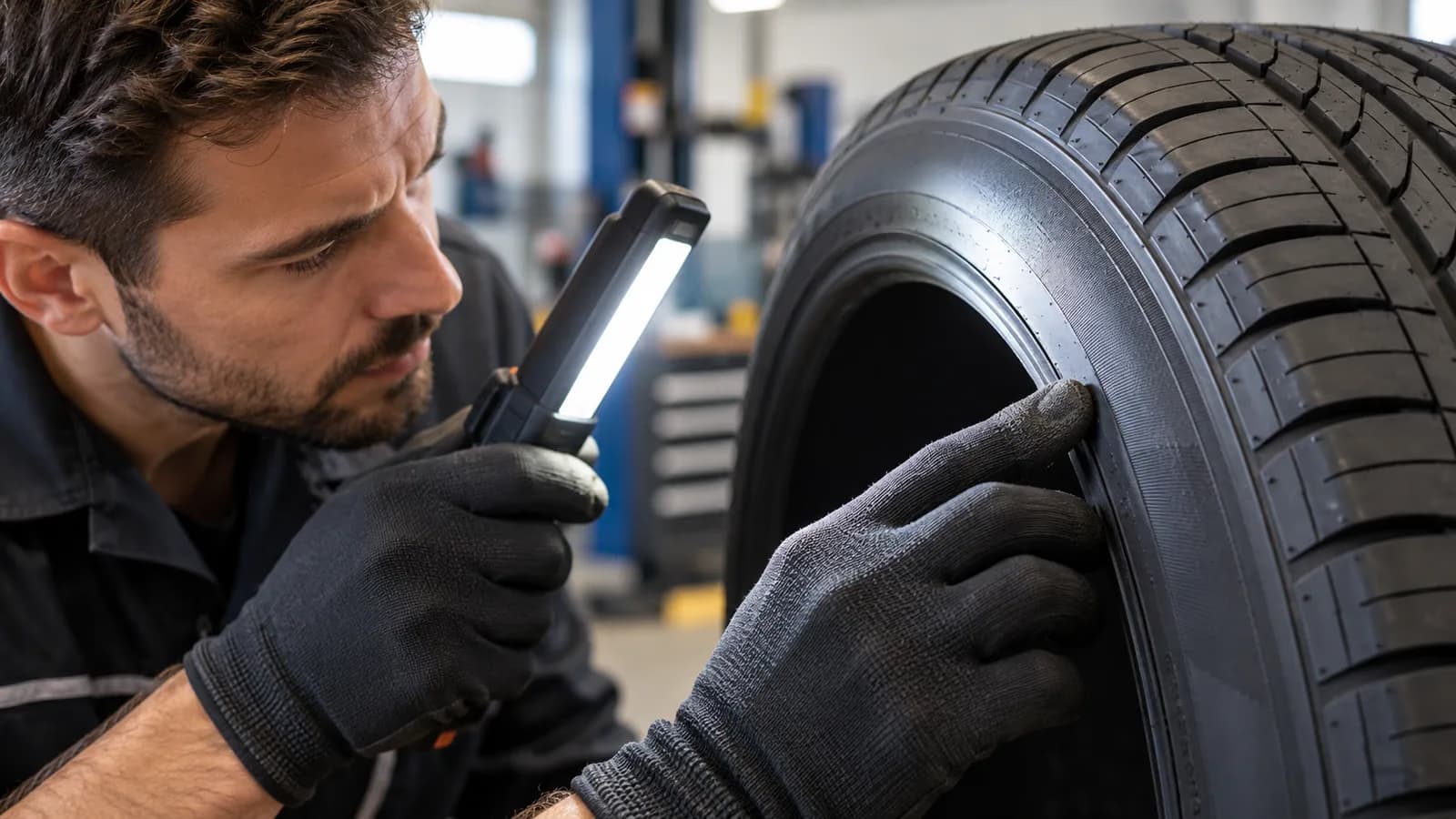
A kerb strike can leave a tyre looking almost normal, which is why sidewall damage deserves a careful response rather than a quick visual dismissal. The sidewall flexes in service and is not the same as the central tread area, so an assessment should focus on condition, not appearance alone.
What to record immediately
Park safely and photograph the area in good light. Look for cuts, exposed material, bulges, deep abrasion, loss of pressure or vibration. Do not keep driving on a tyre that is visibly damaged, losing air or showing a bulge. Fit the spare only if you can do so safely and according to the vehicle instructions.
Why a professional inspection matters
A trained tyre professional can check the extent and location of the damage, wheel condition and pressure retention. They can also advise whether a replacement is required. Do not assume that a cosmetic-looking mark is harmless, and do not attempt a sidewall repair based on a generic online video.
Reduce the chance of repeat damage
- Keep tyres at the pressure specified on the vehicle placard.
- Approach kerbs and potholes slowly and avoid sharp-angle contact.
- Inspect tyres after a severe pothole or kerb impact.
- Check wheel alignment if the steering, pull or tyre wear pattern changes.
Michelin's tyre-safety guidance is a helpful general reference; your tyre maker and service professional should guide the final decision for the affected tyre.