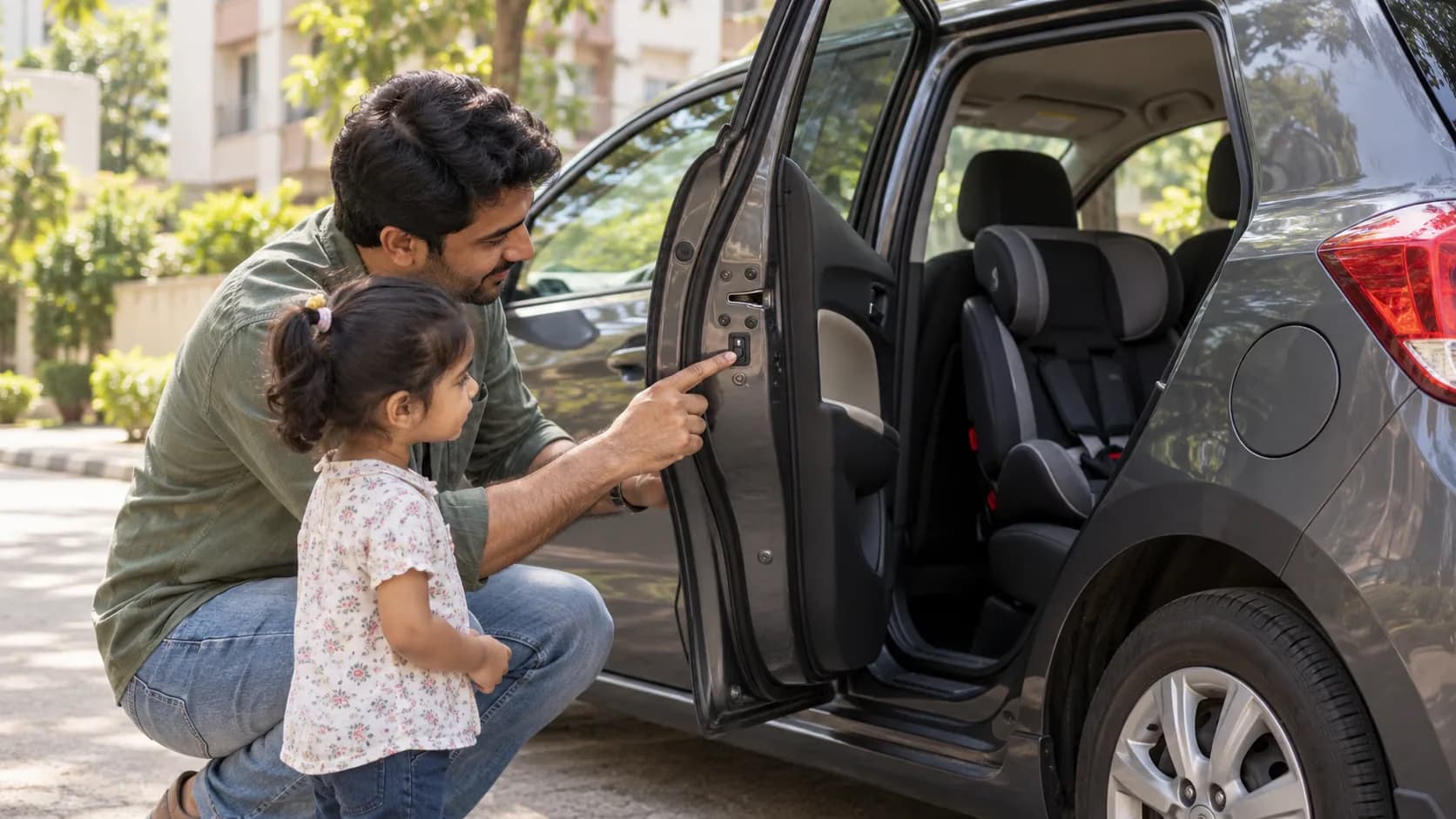
A rear door that will not open from inside is not necessarily broken. On many cars, somebody has moved the small child-safety switch on the door edge. That is useful when a young passenger might pull the handle in traffic. It can also cause a confusing handover if nobody has told the next driver that the rear occupant cannot get out unaided.
The distinction matters because three controls that sound similar do different jobs: the normal central lock, the rear-door child lock and the power-window lock. A parent should know which one is active before setting off, and a buyer should try each on the actual car rather than assuming a dashboard icon covers everything.
What the rear-door child lock actually does
On a car with a mechanical child lock, open a rear door and look at its trailing edge near the latch. A small selector is usually moved with the mechanical key or a suitable tool, following the markings beside it. Once engaged, that particular rear door can normally still be opened from outside when the car is otherwise unlocked, but the inside handle will not release it. You usually need to set the left and right rear doors separately. The exact selector and direction vary by vehicle; the owner's manual wins over any general advice.
Kia's owner's manual describes the mechanical operation and its separate electronic alternative. This is a useful reminder not to assume every car has a visible tab: on some equipped versions, the electronic switch takes its place.
An electronic child lock is typically commanded from the driver's area. The indicator confirms its selected state, but check the manual for when it can be operated and what a failure message means. Kia notes that its electronic version can also disable the rear windows; that is a feature of that system, not a rule for every model. If the cluster says the lock has failed, do not treat the illuminated button as proof that the door is secure. Have it checked.
Why the central lock is different
Central locking is about locking the doors against entry, not reliably preventing an occupant from using an interior release. On many vehicles, an inside handle, double-pull action or unlock control can still open a centrally locked door. Some cars behave differently when deadlocking is active. That makes central locking a poor substitute for a dedicated rear-door child lock.
Likewise, the window-lock switch usually stops the rear window switches from operating; it does not necessarily prevent the doors from opening. Children can interact with both handles and switches, so a driver should verify both functions rather than relying on a single control. A locked window also does not replace supervision or a correctly installed child restraint.
The two-minute check before a family trip
With the car parked somewhere safe, first confirm that each rear door opens normally from outside when the car is unlocked. Engage the child lock for the door a child will use. Sit in the rear seat, close the door and gently test the inside handle, with another adult outside ready to help. Check that the outside handle still releases the door when unlocked. Repeat on the other side if needed. Do not test this alone with a child inside.
Then try the rear window controls with the driver's window lock on and off. Read the switch markings, because some vehicles disable all passenger switches and others only the rear ones. Finally, check that an adult who may travel in the back understands how to leave the car: if the child lock remains engaged, somebody outside may have to open the door. That matters at school drop-offs, valet handovers and after a journey with older relatives.
Kia's electronic-lock guidance also warns that its Safe Exit Assist does not automatically switch on the child lock. A warning about approaching traffic and a physical restriction on opening the door are separate protections. Where a car has both, check both settings.
What to try in a showroom
Ask the salesperson to demonstrate the specific variant you are considering, not a higher trim on the display floor. Find out whether the child lock is mechanical or electronic. If mechanical, can a parent reach the selector easily without scratching the door edge, and does each side need separate setting? If electronic, where is the button, can its state be seen clearly and what happens when the ignition is off? Some systems have timing rules after shutdown.
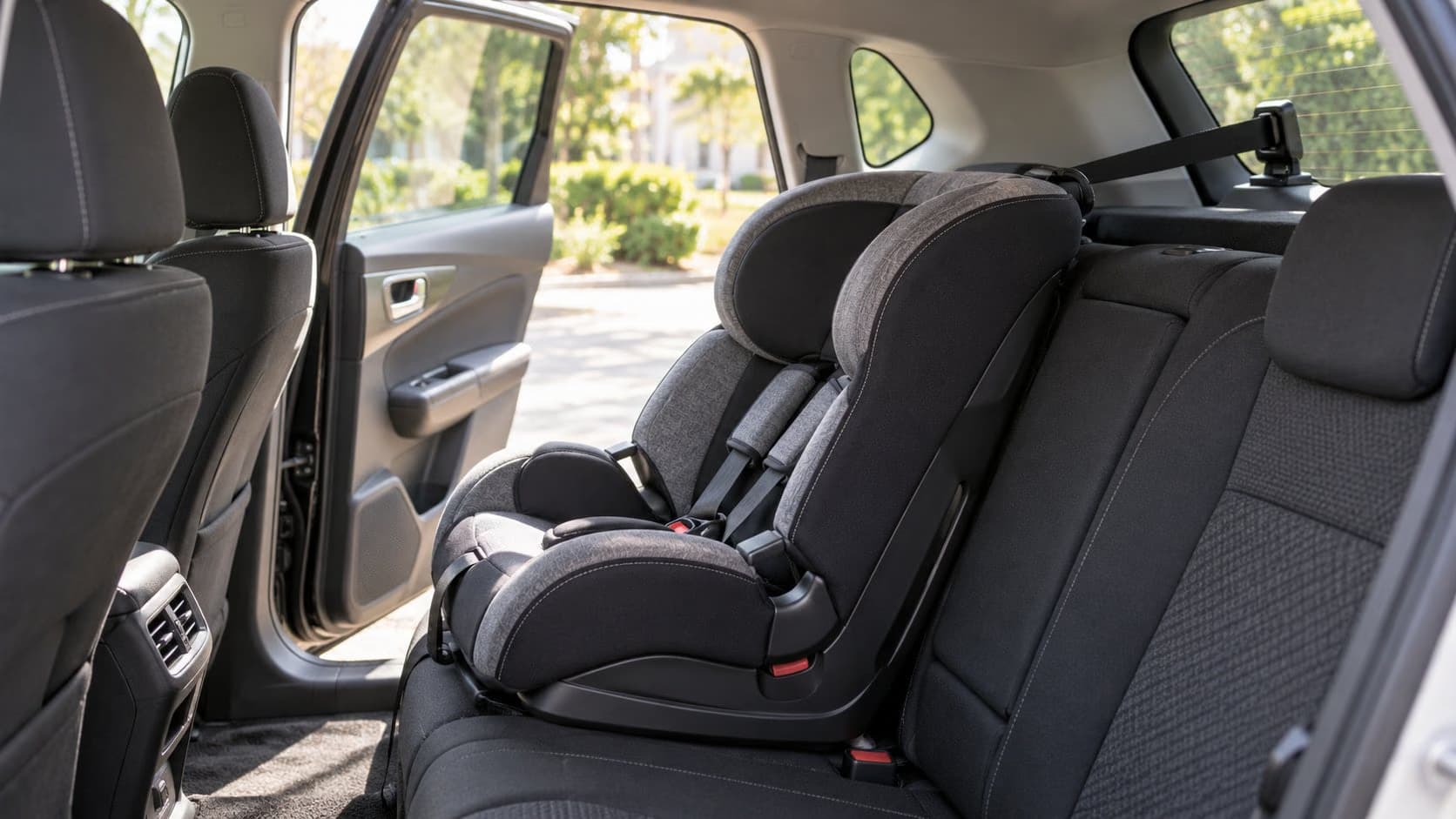
Do the test with the car stationary. Check the outside handle and rear window operation. If you routinely carry a child seat, confirm you can access the seat, buckle and door without awkwardly leaning across another passenger. Door aperture, sill height and the angle at which a door opens can be more important to daily use than a feature label on a brochure.
Pay attention to exit behaviour as well. A child lock prevents a child opening a door from inside, but it can also leave an adult rear passenger waiting for help after a crash or a routine stop. Any decision to leave it on should reflect who is travelling. There is no universal set-and-forget configuration for every journey.
If the rear door refuses to open
Start with the simple checks while the vehicle is safely parked: is the central lock released, does the outside handle work, and has the child-lock selector been moved? Try the other rear door for comparison. Do not force the interior handle repeatedly; that can damage trim or the linkage without curing the problem.
If neither handle opens the door, or the electronic child-lock system displays a fault, the cause may be a latch, actuator, cable or electrical problem rather than the intended child-lock state. Use the manufacturer's service channel. If a person is trapped in a dangerous situation, treat it as an emergency and seek immediate help, rather than attempting a roadside door dismantling.
Child lock is only one layer
The most important in-car protection for a small passenger is still a suitable restraint fitted and used according to the restraint and vehicle manufacturers' instructions. The door lock does not hold a child in place during a collision. It also cannot watch what is happening beside the car when somebody opens the door after parking. An adult should check traffic, cyclists and the footpath before helping a child out.
When somebody else borrows the car
Tell the next driver which rear doors are child-locked. A cab driver, grandparent or friend may assume a passenger can leave through the inside handle. Conversely, a parent collecting the vehicle after someone else has driven it should not assume the lock remains set. Mechanical selectors are easily moved during cleaning or service; electronic systems may retain or change state depending on the model. A quick check at the start of the trip avoids discovering the setting only at the destination.
For a family car, the useful question is not simply whether the brochure says "child lock: yes." It is whether you can operate the actual doors correctly, confirm their state quickly and reverse the setting when your rear passengers change. A two-minute parked test answers more than a specification sheet.