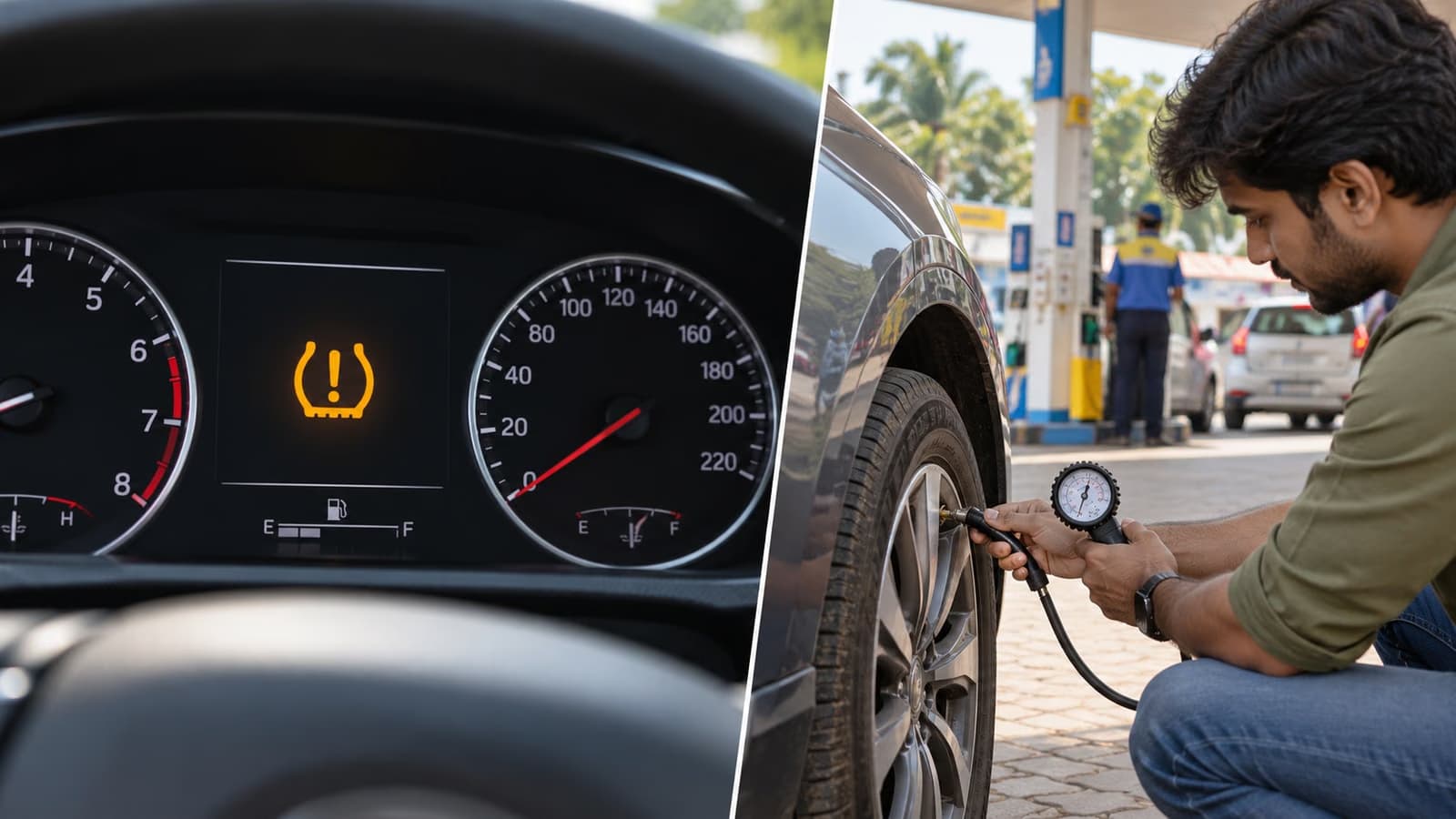
The small tyre-shaped warning with an exclamation mark is easy to ignore when the car still feels normal. It should not be ignored. A tyre-pressure monitoring system, or TPMS, is designed to flag a pressure change that can affect handling, tyre wear and efficiency. It does not diagnose every tyre problem, and it does not replace a manual pressure check, but it gives the driver an early reason to stop guessing.
What TPMS is watching
TPMS is an electronic monitoring system. In a direct system, sensors at the wheels measure pressure and report it to the car. An indirect system uses data such as wheel-speed behaviour to infer that one tyre may be under-inflated. The exact warning, reset process and displayed values differ by model, so the owner manual is the first reference for your car.
| System type | How it works | What it means for the owner |
|---|---|---|
| Direct TPMS | Wheel-mounted sensors report pressure values. | Can show actual readings, but sensors and valve work need care during tyre service. |
| Indirect TPMS | Uses wheel-speed signals to detect a rolling-diameter change. | May need a reset after setting pressures or changing tyres, depending on the car. |
What to do when the light comes on
- Reduce speed smoothly and avoid abrupt steering or braking.
- Stop at a safe place as soon as practical and inspect the tyres for visible damage.
- Use a reliable gauge when the tyres are cold, then set pressure to the vehicle's placard or owner-manual value.
- Do not copy a pressure from another car, a tyre sidewall, or an online comment.
- If the light returns, pressure keeps falling, or a tyre is visibly damaged, have it inspected promptly.
The door sticker matters more than a generic PSI number
The recommended pressure is set for the vehicle, tyre size and load conditions. Hyundai's owner-manual guidance says tyres should be checked when cold and inflated to the vehicle manufacturer's recommended label value. A dashboard display may vary slightly from a handheld gauge; use the system as an alert, then follow the specified cold-pressure procedure.
Low pressure light versus TPMS malfunction
A steady low-pressure warning usually calls for a tyre check. A warning that flashes before staying on can indicate a system fault in some vehicles. Sensor batteries, wheel changes, unapproved sealants and damage during tyre work can all affect system operation. Do not clear the warning repeatedly without finding the reason.
TPMS is a safety aid, not a tyre-health certificate
It may not tell you about every cut, bulge, tread issue or alignment problem. Check tyre condition visually, maintain the recommended pressure, and pay attention to pulling, vibration or repeated pressure loss. The best outcome from TPMS is not a dashboard that stays silent; it is a driver who acts early when it speaks.
Reference: Hyundai India TPMS guide.