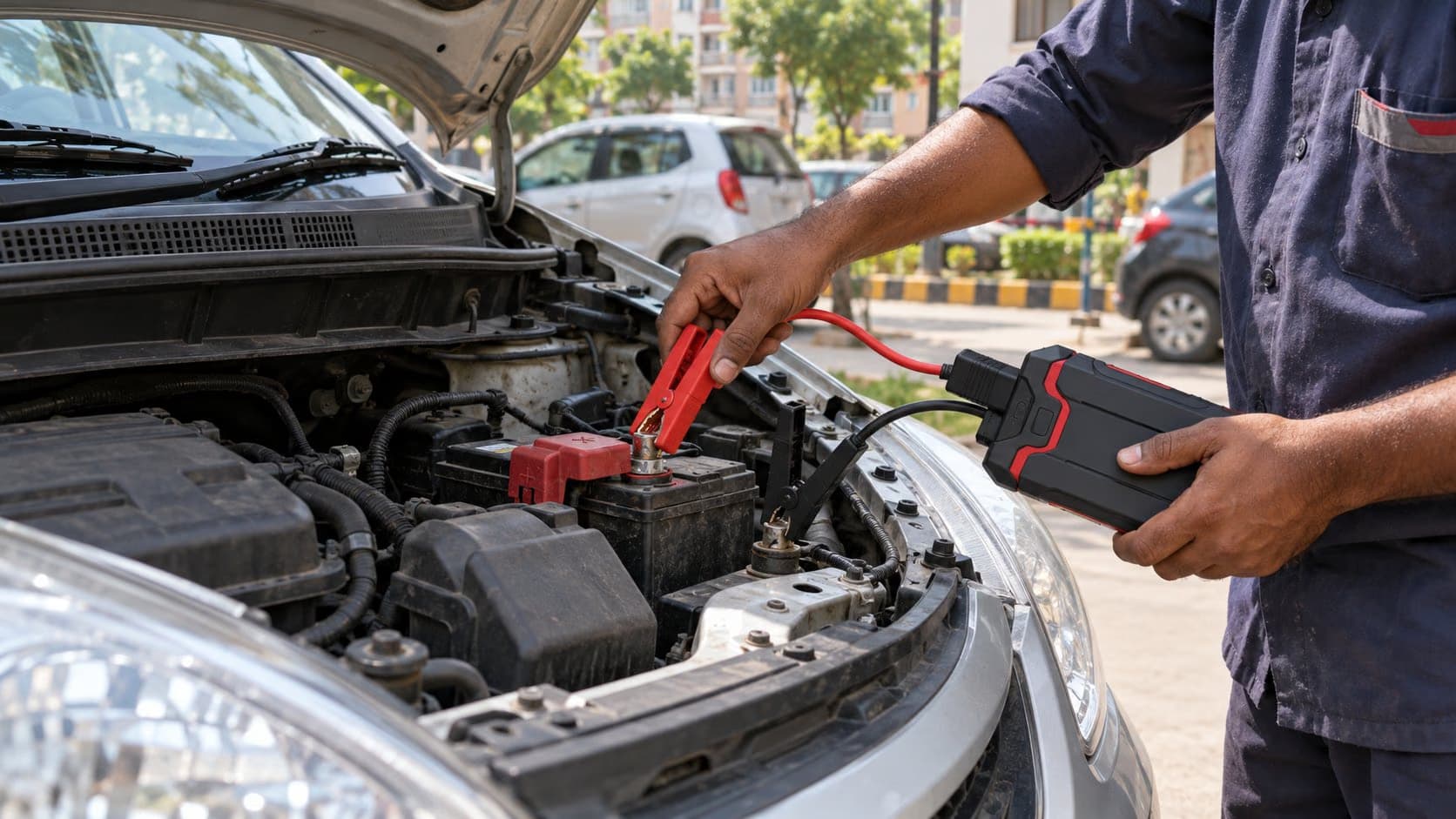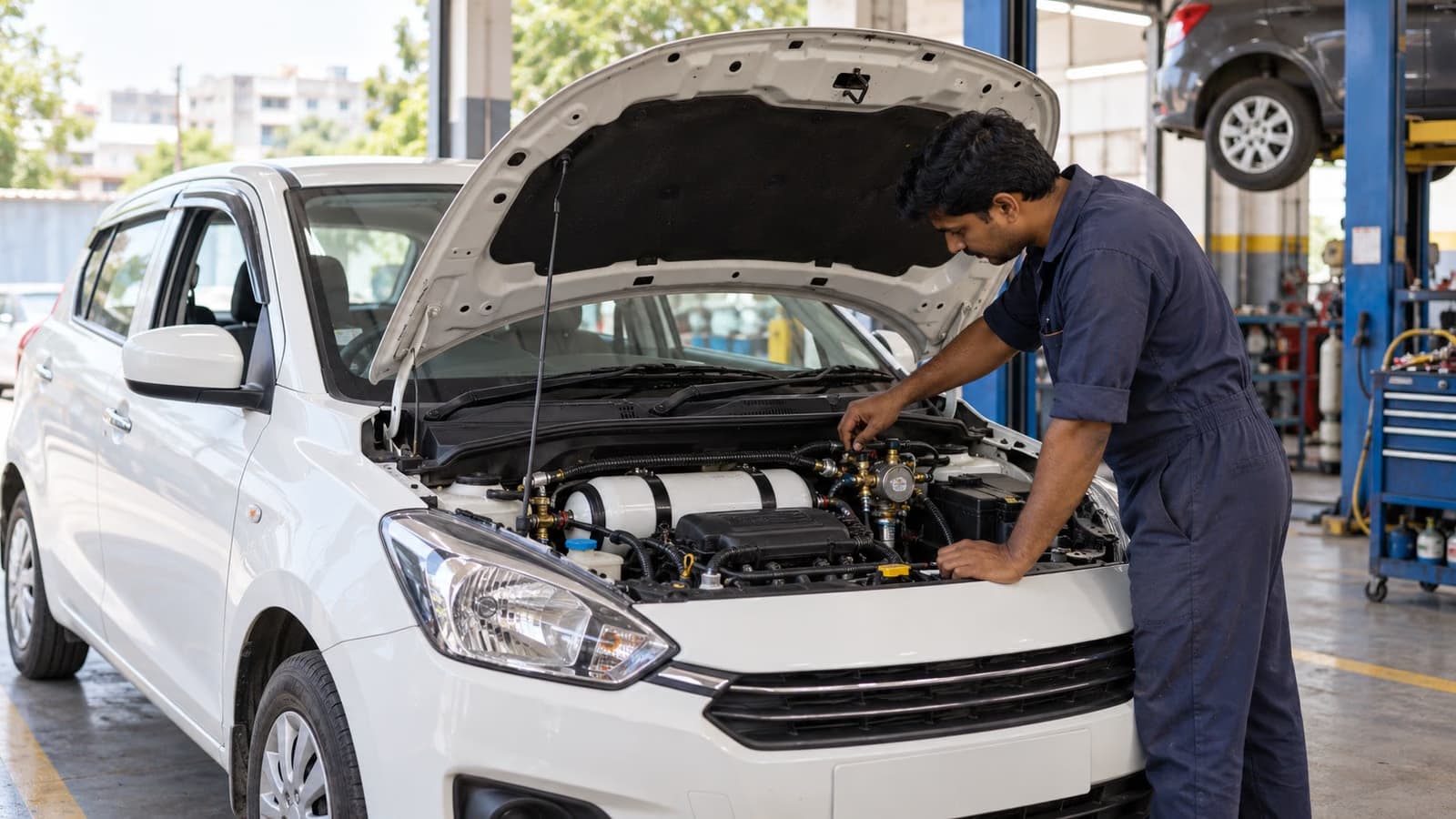
A factory-fitted CNG car can make everyday kilometres less expensive, but its running cost only stays predictable when the service schedule and fuel-system checks are treated as normal ownership work. The useful approach is not a special ritual at every fill-up. It is following the exact manual, using authorised service support when something changes, and refusing improvised modifications.
Begin with the manual for your exact CNG model
CNG systems differ across engines and manufacturers. Maruti Suzuki, for example, provides supplementary CNG manuals alongside vehicle owner manuals. That is a good reminder that generic advice is secondary to the instructions for your specific car: service intervals, fuel recommendation, inspection requirements and warning lights belong to the manufacturer.
What a sensible CNG routine looks like
| Habit | Why it helps | What to avoid |
|---|---|---|
| Follow scheduled service | Keeps ignition, filters, hoses and engine checks aligned with the manufacturer's plan. | Skipping inspections because the car feels normal. |
| Use approved fuel stations | Reduces the temptation to accept questionable filling practices. | Forcing more gas after automatic cut-off. |
| Watch for changed behaviour | Rough running, smells, warning lights or poor pickup deserve early diagnosis. | Continuing to drive while hoping the problem clears itself. |
| Keep the petrol system healthy | Many CNG cars use petrol at start-up or under defined conditions. | Letting the petrol tank remain near-empty for long periods. |
At the filling station
Switch off the engine, follow station instructions and let the automatic cut-off do its job. Do not ask an attendant to force additional gas into the cylinder after cut-off. Inspect the filler area occasionally for damage or unusual odour; if you smell gas away from a filling station, stop safely, switch off and seek authorised help rather than attempting a roadside repair.
Warning signs that deserve an appointment
- Hard starting, repeated stalling or a new hesitation under acceleration.
- A check-engine light, a change in fuel-switching behaviour or an unfamiliar warning message.
- A persistent gas smell, damaged pipework or signs of leakage.
- A sudden and sustained change in efficiency after accounting for route and traffic.
- Work performed by an unauthorised installer or a suspected impact near the CNG system.
Do not add informal changes
A factory-fitted CNG system is engineered as part of the car. Unapproved electrical additions, fuel-system alterations or repairs by an unqualified workshop can introduce a safety issue and may affect warranty support. This is one of the places where saving a small amount upfront can create a larger diagnosis later.
The ownership rule that keeps things simple
Use the specified fuel, retain service records, keep the petrol side of the car healthy, and ask an authorised workshop before assuming a new symptom is “just CNG behaviour”. Good CNG ownership is ordinary disciplined ownership, not endless tinkering.
Reference: Maruti Suzuki owner and CNG supplementary manuals.