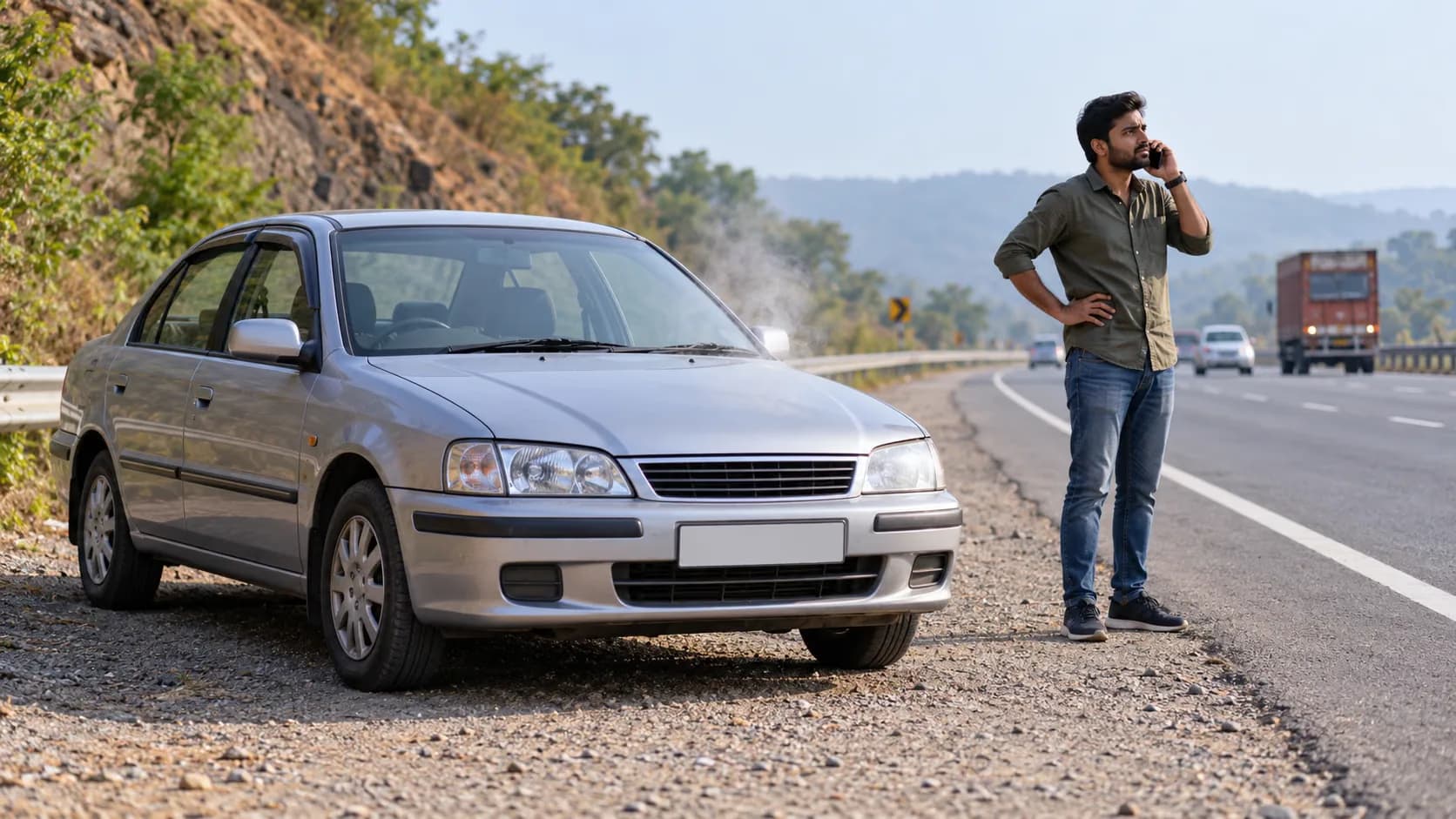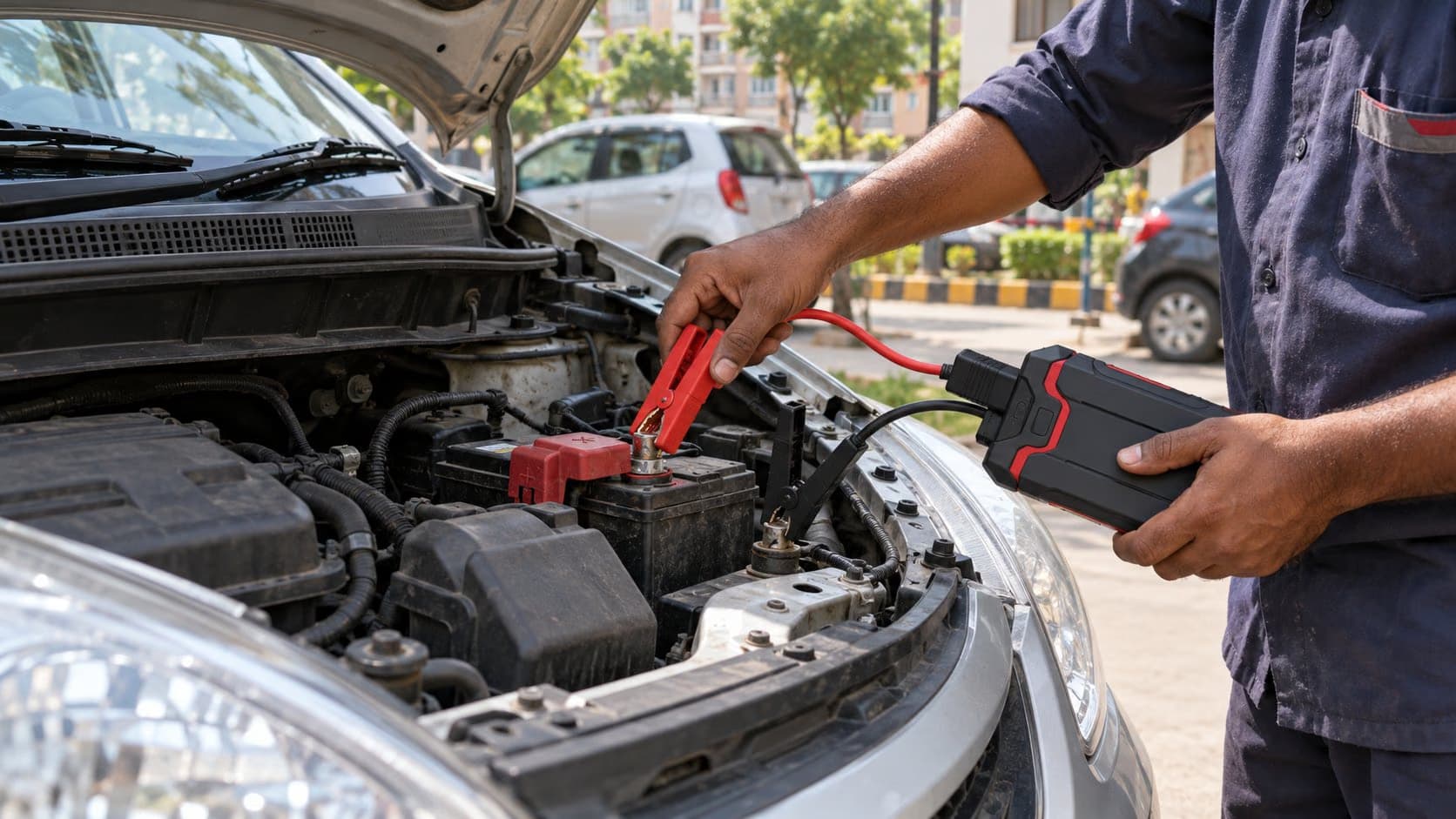
The car is parked, the dash is dim, and the engine will not start. A portable jump starter looks like the quickest fix. Sometimes it is. But 'flat battery' is a diagnosis to test, not a licence to connect clamps anywhere that looks metallic. Modern cars may have designated jump posts, battery monitoring equipment or instructions that differ from a generic video. The first useful action is to open the owner's manual for your exact vehicle.
Hyundai's owner-manual library and battery maker Exide's jump-start guidance both point toward a careful, vehicle-specific procedure. There is a difference between using a jump pack to recover a discharged 12-volt system and repeatedly cranking a car with another underlying fault. A jump start gets you out of one immediate problem; it does not prove the battery or charging system is healthy.
First decide whether this is a 12-volt problem
Clues include very weak cabin lights, slow or absent cranking, and electronics that reset when you try to start. Yet these signs are not conclusive. A starter fault, loose terminal, immobiliser issue or other electrical problem can produce a similar moment of frustration. If the dashboard is bright and the engine cranks at normal speed, a booster may be irrelevant. If the car has collision damage, leaking fluids or a burnt smell, stop and seek professional help rather than trying a quick restart.
Look at the 12-volt battery and its surroundings without touching bare conductors. A cracked case, leakage, swelling, exposed wiring or heavy heat damage makes roadside experimentation a bad idea. Exide also cautions that modern vehicles with electronic management need appropriate protected jump-start equipment. If you do not have the correct pack or cannot positively identify the specified connection points, call roadside assistance.
An electric car still has a 12-volt system, but that does not make its procedure identical to a petrol car's. Hyundai's electric-vehicle manual, for example, specifies a 12-volt power source for jump-starting its 12-volt system. It does not authorise using a high-voltage battery connection or improvising at orange cables. Never touch high-voltage components. Read the EV's own manual and use the designated posts.
The manual tells you where the clamps belong
Battery locations and accessible jump posts vary. Some cars provide a remote positive terminal under a cover and a dedicated ground point away from the battery. Others have a battery sensor on the negative cable. The general principle of matching polarity does not replace the vehicle maker's exact order, location and warnings. Locate the diagram for your model and model year before you attach anything.
Switch off accessories, secure the car against movement and keep the booster pack switched off until its instructions tell you otherwise. Check the pack's state of charge and whether it is intended for the vehicle's 12-volt system and engine size. Inspect its cables and clamps. A frayed lead, damaged case or uncertain polarity is a stop sign. Keep clamps apart and away from moving belts and fans.
Follow the sequence in both the vehicle manual and the pack manual, including the specified ground point and removal order. Do not clamp onto a random bolt just because it is nearby. Do not connect to fuel lines, painted metal or an unidentified electrical terminal. If the two instruction sets seem to conflict, pause and ask the maker or a qualified technician. This is a situation where 'I have seen it done before' is not good enough.
When the car starts, the job is not over
A successful start tells you that external 12-volt power helped. It does not tell you why the battery discharged. Perhaps an interior lamp was left on; perhaps the battery has aged; perhaps the alternator or charging circuit is not doing its job. The recovery plan should include a battery and charging-system check if the cause is not obvious. Hyundai's manual guidance recommends inspection when the reason for discharge is unclear.
A short idle may not fully restore a depleted battery. It is tempting to assume a drive around the block fixes everything, but the required recovery depends on battery condition and vehicle charging behaviour. Ask a workshop to test battery health rather than guessing from one successful restart. If the vehicle dies again, or warning lamps remain on, do not keep using jump starts as a substitute for diagnosis.
If the car will not start after the manual's permitted attempts, stop. Repeated cranking can strain the starter and deplete the booster. Exide's public guidance advises seeking an auto electrician when a vehicle does not respond. The proper next step may be a tow or roadside technician, especially if there is a wiring or charging fault.
A portable pack or another car?
A quality portable pack is convenient because it avoids positioning two vehicles close together and does not depend on a helpful stranger. It still needs charging, correct storage and periodic inspection. A donor vehicle introduces additional questions: can it safely provide a jump, are both electrical systems compatible, and can the cars be parked without touching or blocking traffic? The manuals for both vehicles matter.
Do not assume an EV or hybrid can act as a donor. Some manufacturers restrict using their vehicle to jump-start another car even if their own 12-volt system can be boosted. Similarly, a 24-volt commercial-vehicle source is not interchangeable with an ordinary 12-volt car. If you are unsure of the source, do not connect it.
On a busy road, personal safety comes first. Pull into a safe location if possible, use hazard lights as appropriate, and avoid working between traffic and the vehicle. A roadside assistance call can be the sensible choice even when you know the electrical procedure. Good judgment includes where you are parked, not only which clamp goes on first.
When a booster is the wrong tool
A jump pack cannot repair a broken battery terminal, failed starter motor or charging-system fault. If the vehicle is displaying a specific warning, the owner manual may direct you away from attempting a restart. Record the warning or photograph it before the display goes dark, then give that information to roadside assistance. It can save time when the technician arrives.
Temperature and storage matter to the pack as well. A unit left discharged for months may not deliver the output printed on its label, while a swollen or damaged pack should not be used. Check the maker's instructions for charging and storage intervals. If the pack's leads are short, do not stretch them across hot or moving engine parts merely to reach a convenient terminal.
After recovery, ask for the actual test result rather than just 'battery weak'. A workshop can check the resting and loaded 12-volt condition and, for an engine-driven car, the charging output. The useful repair depends on which part failed. Replacing a battery when a poor connection or faulty charging system caused the discharge can bring you back to the same roadside spot.
Before the next flat-battery morning
- Save the vehicle manual or the relevant jump-start page on your phone.
- Locate the actual 12-volt jump posts in daylight, without connecting anything.
- Check that your booster is compatible, charged and stored within its temperature guidance.
- Keep roadside assistance details accessible when mobile data is weak.
- Have the battery and charging system tested after an unexplained discharge.
A jump starter is a useful recovery tool, not a diagnosis. The safe sequence starts with the correct manual, a sound 12-volt source and identified connection points. If any of those pieces are missing, the fastest responsible solution may be a professional with the right equipment.