A nail in the middle of a tyre tread often looks like a ten-minute repair. Sometimes it is. The harder question is what happened between the first loss of pressure and the moment the car stopped. A tyre that rolled for even a short distance while nearly flat can be damaged inside, where a roadside plug cannot show it. The decision is not simply plug versus patch; it is whether this tyre is structurally safe to repair at all.
For a driver waiting beside a puncture shop, the useful evidence is the position and size of the injury, the pressure at which the car was driven, and what the technician finds after taking the tyre off the rim. A neat-looking outside surface is only part of the story.
First, get off the road safely
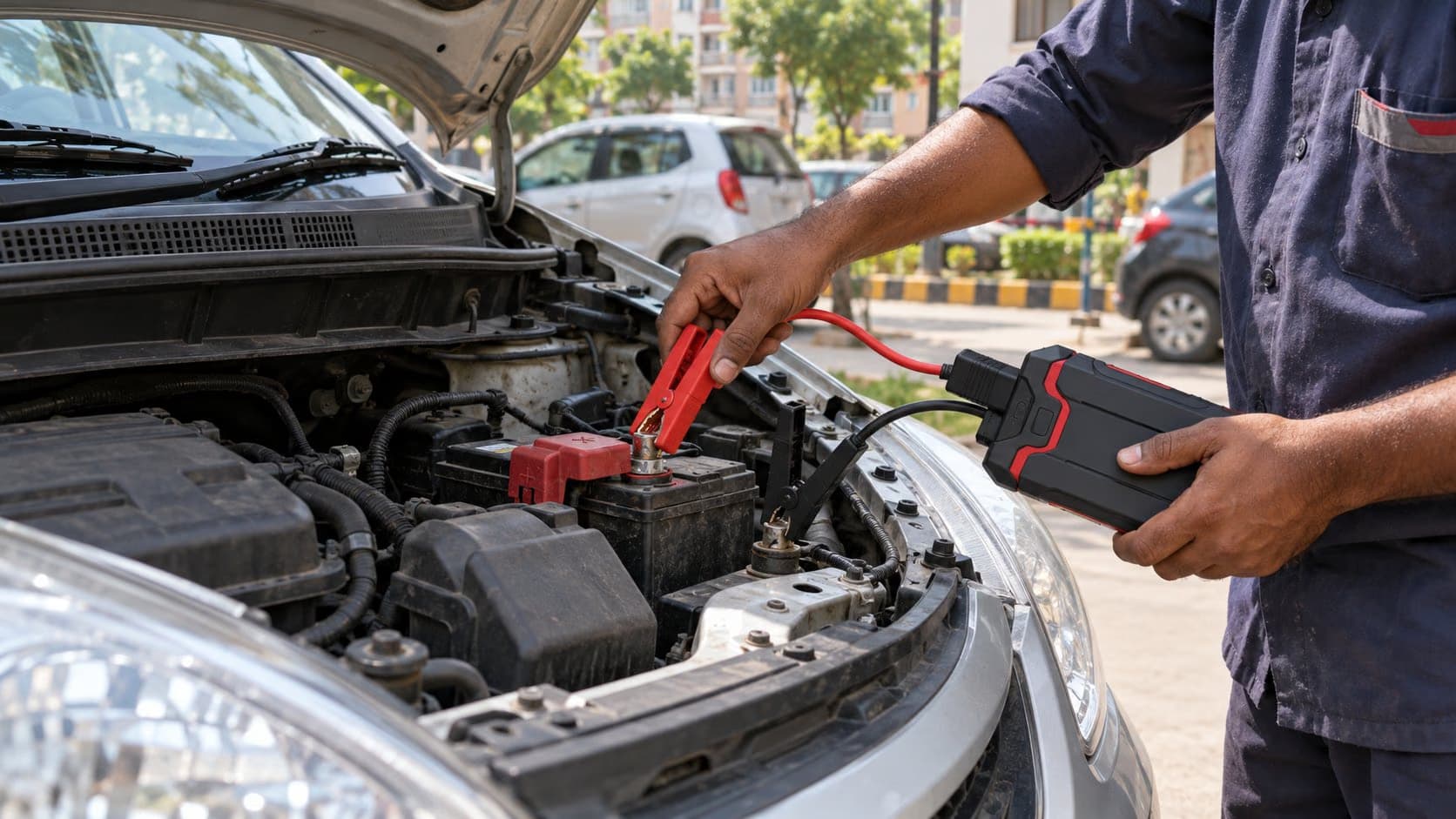
If the steering feels heavy, the car pulls, the tyre-pressure warning appears or you hear a repetitive thump, slow down smoothly and find a safe stopping place. Do not make a high-speed dash to a familiar shop on a visibly flat tyre. If the shoulder is narrow or traffic is fast, move people to a safer position and call assistance rather than changing a wheel in the traffic stream. Follow the vehicle's manual for a spare or inflator kit.
Note which tyre is affected and whether it still holds some air. A tyre that has been driven fully deflated needs a more cautious assessment than one caught early by a pressure warning. Michelin India's guidance says a tyre that has lost most or all pressure must come off the wheel for a complete internal inspection; even short flat running can make it unrepairable.
The location of the hole changes the answer
Minor punctures in the central tread region are often repairable if the tyre has not suffered internal damage. An injury near the shoulder or through the sidewall is a different matter because those areas flex heavily. Michelin's repair guidance says shoulder punctures are not repairable and advises against sidewall repairs in general, with narrow product-specific exceptions. Do not treat an internet photo of a repaired sidewall as proof that your particular tyre should be patched.
Size matters too, but a universal number lifted from another brand is unsafe. The tyre maker's limit, the angle of penetration and the tyre's speed rating can affect repair eligibility. A slash or cut is not equivalent to a round nail hole. Multiple injuries close together may also change the decision. Ask the technician to show the puncture on the tread and explain the relevant limit for that tyre.
Why the tyre should be removed
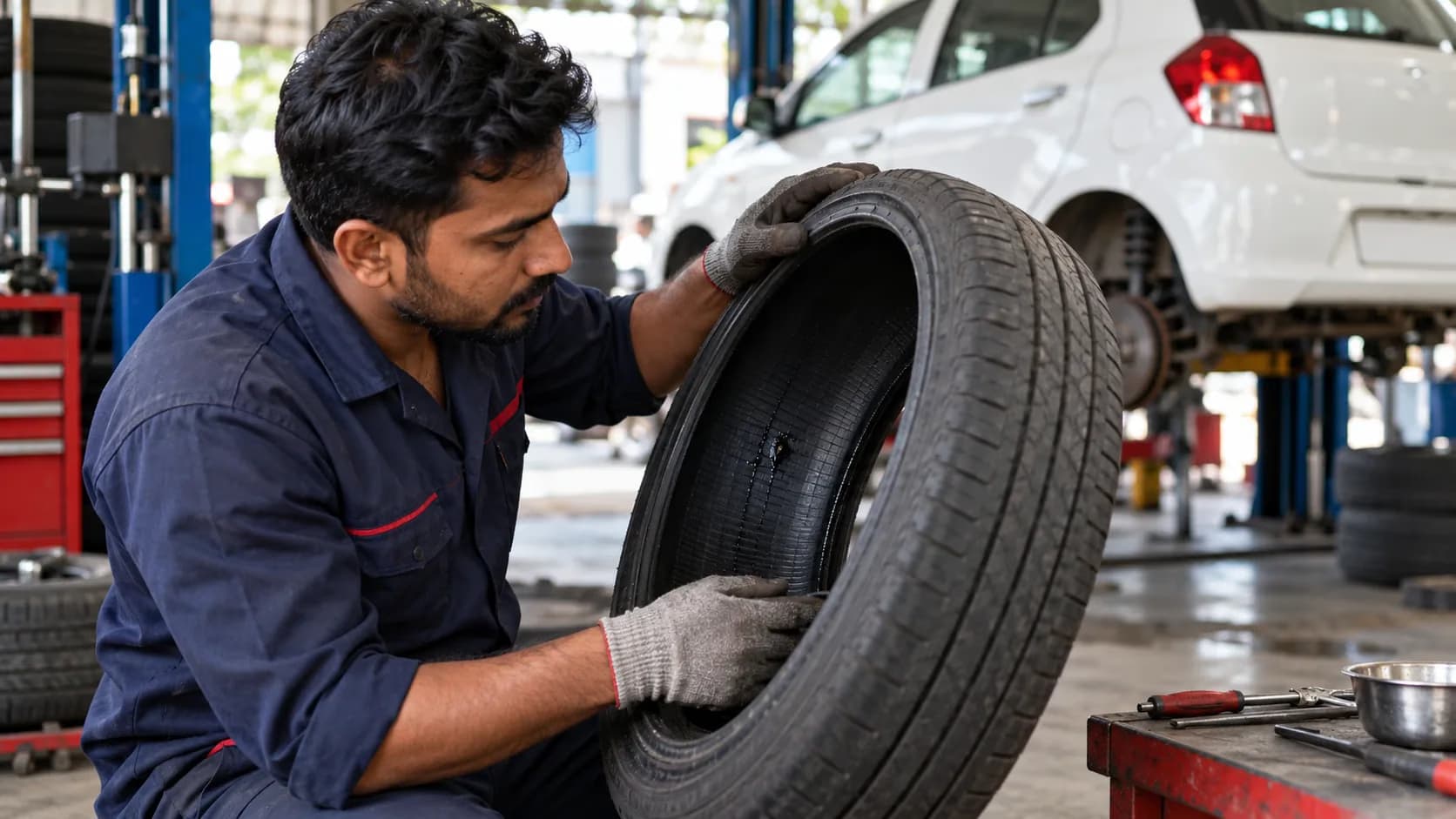
Inside, a technician can look for abrasion, heat damage, separated layers or rubber debris caused by running underinflated. Michelin describes a condition sometimes called marbling, where the inner liner shows the tyre has been crushed while flat. If the carcass is compromised, sealing the hole does not restore strength. The tyre may hold air at the shop and still fail later under load and speed.
Removal also reveals whether the nail entered at an angle and whether there is damage at the bead or wheel. A leak can come from a valve or damaged rim instead of the obvious screw in the tread. A quick bubble test is useful for locating escaping air, but it cannot inspect the inner structure.
Outside string plug versus internal repair
A string plug inserted from outside is popular because it is fast and does not require removing the tyre. It can be helpful as an emergency measure, but it leaves the internal condition unexamined. Michelin strongly discourages treating this as a permanent repair for exactly that reason. A simple patch on the inner surface seals from inside but may leave the injury channel exposed. A trained technician can choose an approved repair that addresses both the hole and inner liner after assessing the tyre.
That does not mean every temporary roadside repair has failed. Its job is to help you reach a tyre specialist, within the vehicle or kit maker's speed and distance instructions. The mistake is assuming that because the pressure holds overnight, the tyre has been permanently restored. If sealant was used, tell the shop before dismounting; it may need cleaning and can complicate inspection.
Ask the shop five specific questions
- Where is the injury relative to the central tread, shoulder and sidewall?
- Has the tyre been removed and examined for internal damage?
- Does the hole size and angle fall within this tyre maker's repair limits?
- What repair method will be used, and does it seal the injury channel as well as the inner liner?
- Was the valve, rim and tyre pressure checked before refitting?
If the answer is simply "it holds air now," you have not learned whether it is safe. Ask for a photograph of any internal damage before a replacement is fitted. Conversely, do not pressure a technician to repair a tyre they judge structurally unsound to avoid buying a new one.
After the repair
Check pressure when the tyre is cold using the vehicle's specified setting, not the maximum figure moulded on the sidewall. Recheck over the next few days. If it drops again, return for an inspection rather than repeatedly topping up. Confirm the wheel is fitted and tightened correctly and that the tyre-pressure monitoring system, if equipped, behaves normally. A vehicle that pulls or vibrates after a wheel has been removed deserves a prompt check.
Keep the repair invoice, especially if the tyre is under a road-hazard plan or warranty with specific rules. If the tyre had to be replaced, discuss matching size, load and speed specification with the other tyres on that axle and the vehicle manual. A cheap repair is not good value if it hides an internal injury.
When the nail is not the whole problem
A slow leak after a puncture repair can be caused by a second injury, a leaking valve, corrosion at the wheel bead or damage to the rim. Replacing the plug repeatedly without locating the escaping air wastes time and may enlarge the original injury. Have the entire wheel checked, including the inner sidewall that is hard to see while mounted on the car.
If the tread is already close to its wear limit, a technically repairable hole may still sit in a tyre that needs replacement soon. Ask the shop to show the tread depth across the width, not just at the deepest groove. Uneven wear may point to an alignment or suspension issue that should be addressed alongside the tyre decision. Avoid buying a single mismatched replacement without checking the vehicle's tyre specifications.
What about a run-flat tyre?
Run-flat tyres have their own manufacturer-specific repair rules. Michelin notes that its ZP run-flat tyres may be repairable once by a professional under stated conditions, unless marked otherwise. That does not authorise a generic repair on every run-flat. Tell the technician how far and how fast it was driven after pressure loss, because a run-flat can conceal damage while continuing to support the vehicle.
The practical rule is simple: a tread puncture can be repairable, but a tyre is not cleared by a plug alone. The internal inspection is the part that answers the question a driver cannot see from the roadside.