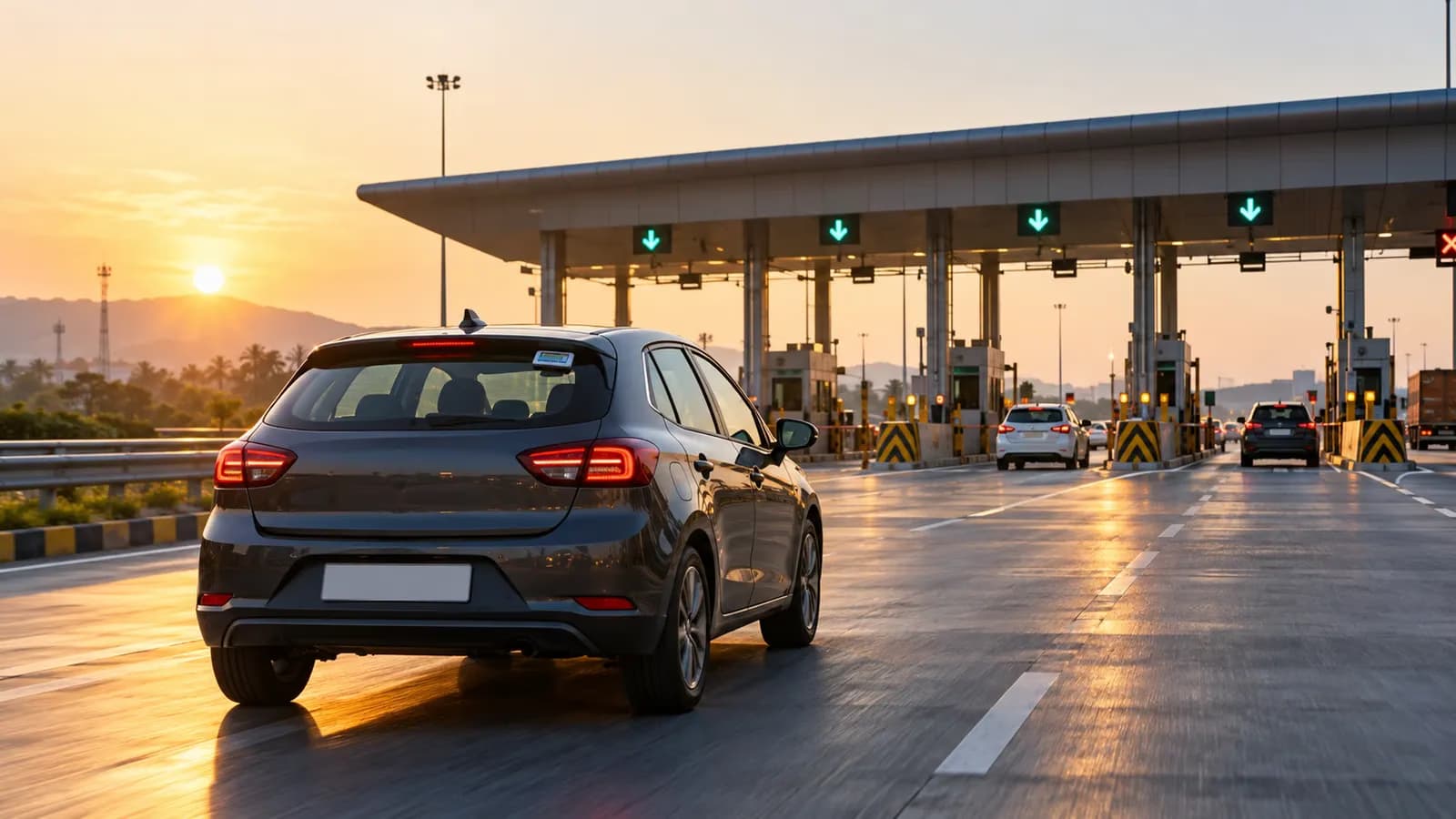
A toll pass is useful only when it matches the roads you actually use. NHAI’s FASTag Annual Pass is aimed at private car, jeep and van owners who make repeated journeys through eligible National Highway and National Expressway fee plazas. It is not a replacement for every toll payment in India, and it should not be bought simply because the headline says “200 trips”.
What the pass currently offers
NHAI’s Rajmargyatra portal lists a one-time fee of Rs. 3,075 for FY 2026-27, validity of one year from activation, and up to 200 eligible toll crossings. The pass is linked to the vehicle’s existing FASTag; it is not a second tag and it does not require a fresh windshield installation. NHAI says activation follows eligibility verification and payment.
That makes the first question very simple: will this particular vehicle make enough eligible crossings in the next year? A family that uses an expressway every weekend can answer differently from a car used almost entirely inside city limits.
Start with route coverage, not arithmetic
Before paying, open the official Rajmargyatra Annual Pass page and check the eligible-plaza information for the routes you genuinely use. Do not assume that every state road, city toll, parking payment or privately operated stretch behaves the same way. The relevant detail is the fee plaza on your usual trip, not the name of the highway on a social-media post.
- List your regular intercity routes and the toll points on each.
- Check whether the car is a private, eligible vehicle with a valid FASTag.
- Estimate return journeys, not only one-way holidays.
- Keep a normal FASTag balance available for journeys or plazas outside the pass scope.
How to think about the 200-trip limit
A crossing count can disappear faster than expected on a route with several fee plazas. Build the estimate from actual trips: a weekly return journey with four eligible crossings is already eight crossings a week. Conversely, two long holiday drives may sound substantial but may not make an annual pass economical.
Use a conservative comparison. Add the tolls you paid on eligible routes over the previous three to six months, then scale only for travel you are reasonably sure will happen. Do not treat a possible road trip as guaranteed savings. Once the one-year validity or 200-trip limit is reached, the tag continues to work as a regular FASTag according to the programme terms.
Purchase checklist
- Confirm the vehicle registration number and linked FASTag are correct.
- Use the official NHAI website or Rajmargyatra app, not a forwarded payment link.
- Check the displayed eligibility and activation status before starting a highway journey.
- Save the confirmation and keep the usual FASTag account in good standing.
- Review the pass after a few months: if your travel pattern has changed, do not assume it will suit the next year too.
The buyer-first conclusion
The annual pass is a route-and-frequency decision, not a universal “discount”. For a private vehicle that repeatedly crosses eligible National Highway or expressway plazas, the fixed payment can reduce friction and simplify budgeting. For occasional highway users or cars that mostly encounter non-covered tolls, an ordinary FASTag remains the cleaner choice. Check the live terms before payment because fee, eligibility and covered locations can change.