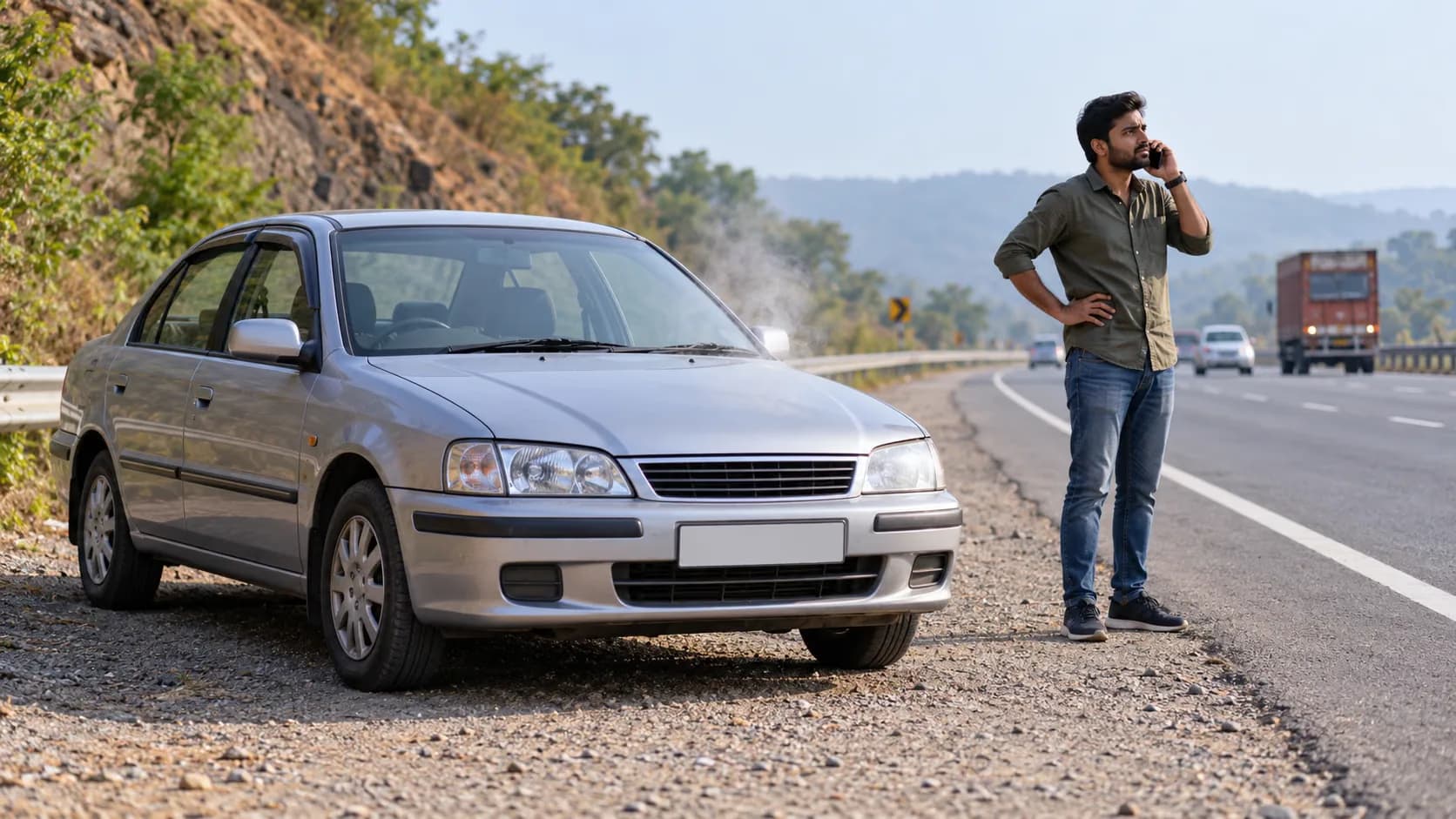
A temperature warning appearing in slow traffic asks for a decision, not an experiment. The tempting move is to pull over, lift the bonnet and open the coolant cap. That last step can be dangerous: a hot cooling system is pressurised, and escaping steam or liquid can cause serious burns. What matters first is finding a safe place to stop, reading the warning and avoiding further engine load.
Overheating is not one fault with one fix. A low coolant level, leak, failed fan, slipping belt, blocked radiator or another problem may produce a similar warning. The driver's job at the roadside is to protect people and avoid turning a repairable problem into engine damage; diagnosis comes later.
Recognise the warning early
Some cars have a temperature gauge, others a warning lamp or message. A gauge moving towards its hot zone, a high-temperature alert, steam or an unusual sweet smell merits attention. A rising gauge while idling with the air conditioner on is not permission to keep driving until the next fuel stop. Equally, an unchanging gauge is not a reason to ignore visible steam.
Maruti Suzuki's car-care guidance says to switch off the air conditioner and move the vehicle to a safe place when a high coolant-temperature warning appears. It distinguishes a warning without steam from a car visibly venting steam: if steam or a hissing sound appears, stop safely, switch the engine off and do not open the bonnet until it stops. Follow the manual for your own model, which may specify a different sequence.
What to do on the road
Signal, reduce speed smoothly and pull over where you are not exposed to traffic. Avoid a sudden stop in a live lane if the car can be moved a short distance to safety. Switch off the air conditioner. Check the manual's instructions for your particular warning. If there is steam, a strong coolant smell, visible fluid escaping or the warning stays on, shut the engine down once safely parked and arrange assistance.
Keep passengers away from traffic and hot engine components. Do not lean over the front of the car to inspect it while vehicles pass nearby. If you must leave the vehicle, use the safest exit and a location well clear of the carriageway. Roadside safety comes before identifying a leak.
Some manuals permit a brief idle period when there is no steam, allowing the temperature indication to return to normal. That is not a blanket instruction to idle an already distressed engine indefinitely. If the indication worsens or you are unsure which case applies, stop the engine and consult the manual or the manufacturer's roadside assistance.
Why you must not open a hot cap
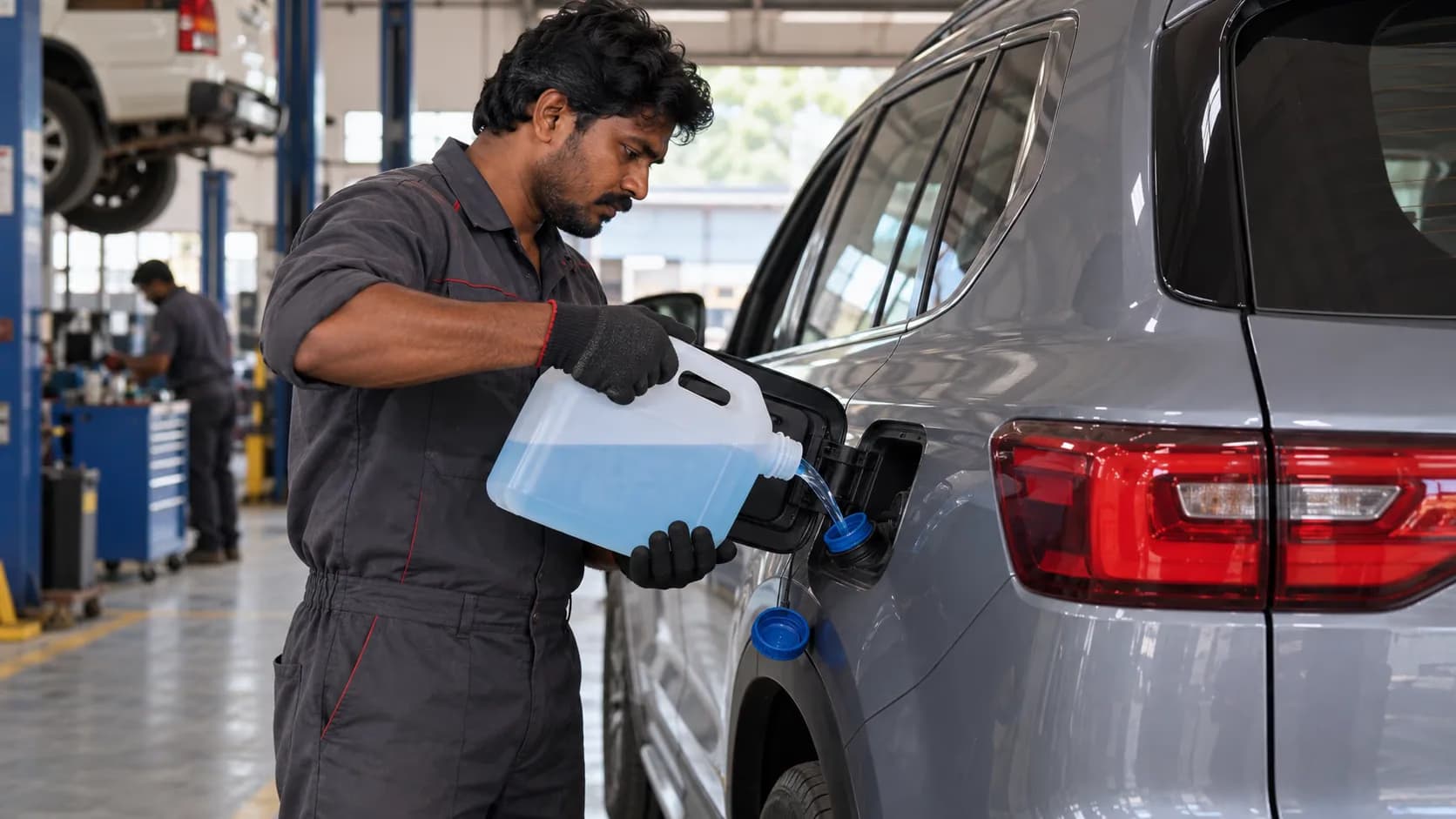
The coolant reservoir and radiator cap are not equivalent to a windscreen-washer bottle. The cooling system can stay hot and pressurised after the ignition is switched off. Removing a hot cap can release boiling liquid. Maruti Suzuki explicitly warns against opening the radiator cap while the engine is hot. Wait for the system to cool, and follow your own manual before inspecting the reservoir.
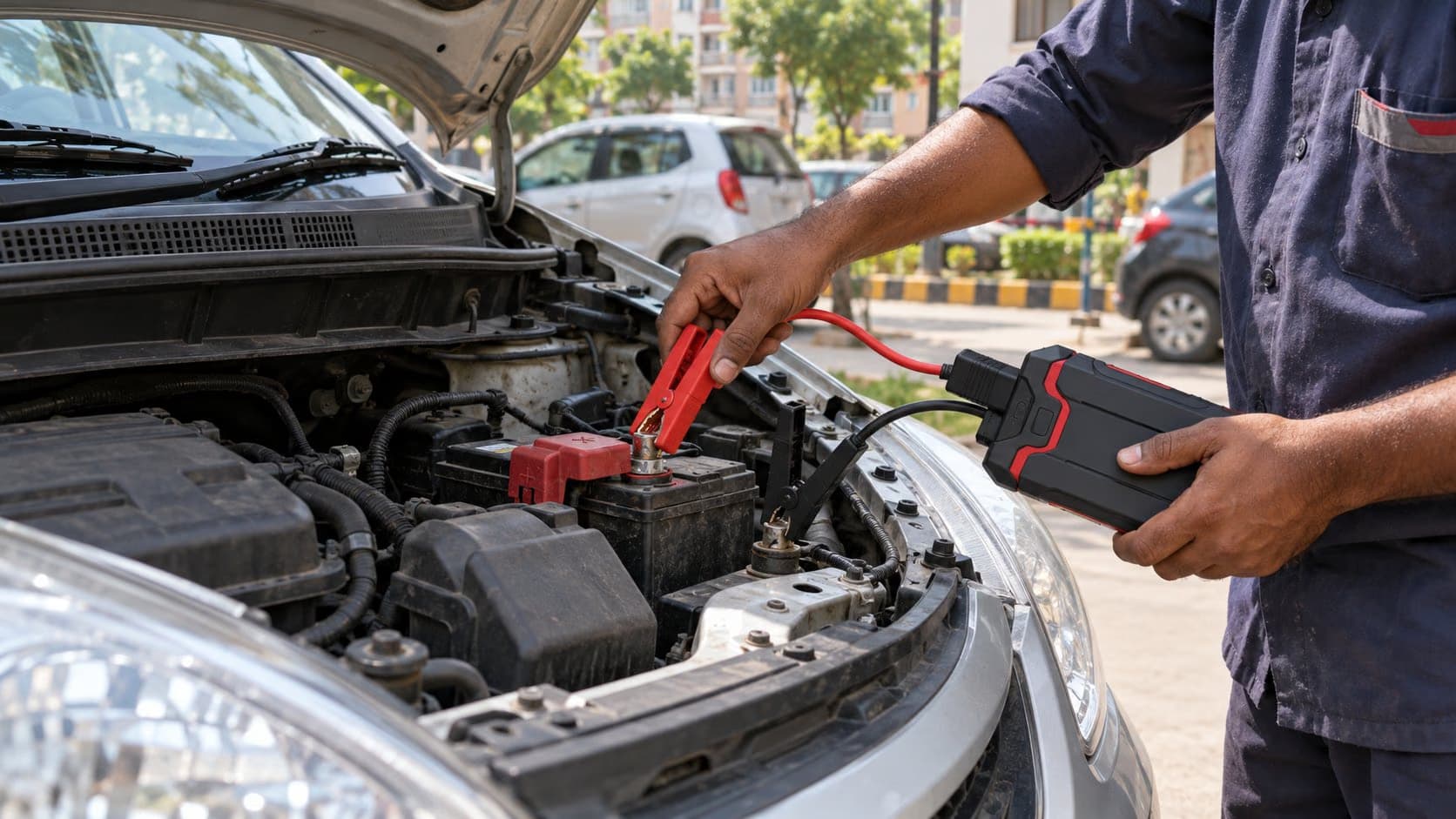
Even a "just top it up and go" decision can be wrong if the loss is caused by an active leak. Maruti Suzuki advises not restarting when a leak has been found. A low level is a symptom; adding fluid without establishing why it fell may get you stranded again or damage the engine. If the reservoir is accessible only with your face or hand close to hot parts, leave it for a technician.
Coolant is not interchangeable with whatever is at the petrol pump
Cars use specified coolant chemistries and mixtures. The correct type, dilution and filling procedure are in the vehicle manual. Mixing an unknown coolant with what is already in the car can be inappropriate; repeatedly adding plain water is not a maintenance plan. In an emergency, the manual may allow a temporary measure, but it should not be treated as a repair.
If roadside assistance or a workshop proposes topping up, ask them to note the fluid used and whether the system was leak-tested. After the fault is fixed, the final fill should match the manufacturer's specification. A transparent invoice should state what was replaced, not merely say "overheating rectified."
What a workshop should be able to explain
A competent diagnosis begins with the symptom and a cooled engine. Ask the workshop to identify whether coolant was low and why. Was there a visible external leak? Was the radiator fan operating when commanded? Are the hose, cap, thermostat and water pump functioning? Is there evidence of combustion gases entering the cooling system? The right set of checks depends on the vehicle and warning history.
It is reasonable to ask for photos of a leak or damaged part and a quotation before replacements. Replacing the radiator because the gauge went high, without testing the rest of the system, can leave the real fault in place. Conversely, a severe overheat may require inspection for secondary engine damage even after a leaking hose is fixed.
Keep the timeline: when the warning appeared, whether the air conditioner was running, whether steam was present, how long the car moved after the alert, and whether the heater worked. Those observations may help distinguish an intermittent fan problem from a large coolant loss. Do not recreate the fault by deliberately running the engine hot for a mechanic.
Can you drive after the warning disappears?
A warning that goes away does not prove the cooling system is sound. It may simply reflect lower load or a temporary drop in temperature. If fluid escaped, a leak is visible, steam appeared, or the gauge returned to hot quickly, towing is the safer choice. Even when there is no visible leak, seek guidance from the manufacturer's service network before resuming a long journey.
Before the next long drive
Check coolant only with the engine cold and on level ground, using the reservoir markings and the vehicle manual. A level that repeatedly drops is not normal consumption to be masked with a weekly top-up. Look for stains where the car is parked and have a workshop inspect the system if you see them. Keep the service invoice showing the coolant type and replacement date, because the next mechanic will need to know what is in the system.
If the car overheated recently, ask the workshop what test confirmed the repair. A road test that never reaches traffic temperature may miss an electric fan that fails only while idling. Equally, a dry radiator after a long drive can point to a leak that appears only under pressure. The workshop can choose the appropriate pressure, fan and temperature checks; the owner should not have to recreate overheating to prove it is real.
Keep a note of any prior coolant top-ups and temperature warnings. A pattern of small losses may be more informative than a single dramatic roadside event. If you bought a used car recently, ask for past cooling-system invoices and make sure the workshop knows what was replaced. A recent new radiator does not rule out a hose, cap or fan fault.
The main avoidable mistake is continuing at speed because the car still moves normally. Engines can run while damage accumulates. The second is reaching for the coolant cap in a hurry. Pull over safely, respect the hot system and get the cause diagnosed before the next trip.