A diesel driver's instrument cluster may ask for urea or DEF even though the fuel tank is nearly full. That is not a contradiction. Diesel exhaust fluid, often sold as AdBlue, is held separately from diesel and used by the selective catalytic reduction system to reduce nitrogen-oxide emissions. Ignoring its warning can eventually prevent a restart on vehicles designed with that safeguard. Pouring it into the diesel filler instead is a much more serious mistake.
Not every diesel car has the same system. Older models, different emission configurations and different manufacturers can use different equipment and warning sequences. Before buying a container at a pump, check whether your particular car has a DEF filler and what grade and procedure its owner's manual specifies.
What the warning is telling you
A low-fluid alert generally means the separate DEF tank needs a refill. Some vehicles show an approximate remaining distance before further warnings or a no-restart condition. Hyundai's owner's manual for an SCR-equipped diesel describes staged low-urea warnings and a message that the vehicle will not start after the countdown is exhausted. That is a model-specific illustration, not a fixed distance for every car.
A warning that persists after filling may mean the system has not recognised the refill, the amount was insufficient under the manual's procedure, or there is a sensor or SCR fault. Do not keep adding random quantities to clear a message. Note the exact warning text, level and mileage, then consult the manufacturer or authorised service centre.
Find the correct filler before opening a container
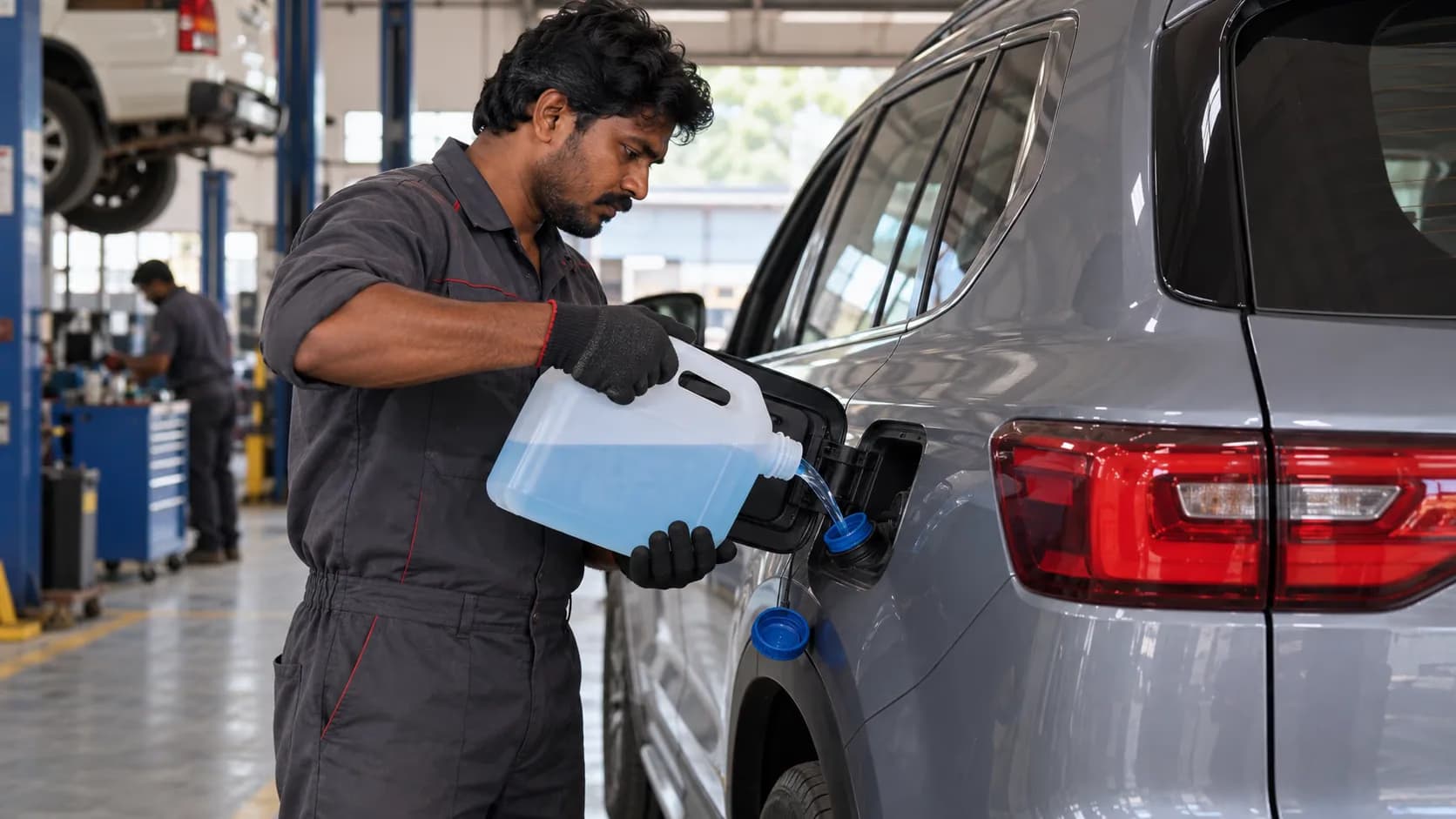
The DEF opening is separate from the diesel tank, sometimes beside the fuel filler and sometimes elsewhere. It is usually identified with its own cap and marking. Confirm in the manual and at the vehicle. The blue cap seen in photographs is a clue, not a guarantee: colours and layouts can vary.
Clean around the opening, use a sealed container that meets the specification in the manual, and avoid dirt, diesel or other liquids entering the DEF tank. The reverse error also matters. If DEF has been put into the diesel tank, do not start the engine or switch on systems that may circulate fuel; arrange professional assistance immediately. If diesel has entered the DEF system, do not attempt to dilute it. Both are contamination problems needing the correct workshop procedure.
Use the filling quantity and minimum refill instruction specified for your car. Filling until a warning disappears is not necessarily the correct procedure. The tank has its own capacity and may need time or an ignition cycle to update its reading, as the manual explains.
Choose fluid by specification, not colour
DEF is an aqueous urea solution made to a defined standard, commonly ISO 22241. It is not plain water, screenwash, coolant or a generic "emission additive." The correct specification matters because impurities can damage the SCR system. Look for the standard and storage information on the sealed product, and do not use an unlabelled bottle of unknown age or origin.
Store it as the container supplier directs and keep the spout clean. A spill should be dealt with according to the vehicle and fluid instructions; residue can crystallise. Do not use equipment that has handled fuel or oil to transfer DEF. If a roadside outlet can only offer a dirty funnel, waiting for a suitable sealed bottle or professional refill may be wiser.
Low level and system fault are not the same thing
A low-urea warning is usually addressed by a correct refill. A separate SCR malfunction warning may require diagnosis even if the tank is full. Hyundai's warning-light guidance distinguishes a nearly empty DEF tank from fault indications elsewhere in the emission system. Read the displayed text, not merely the icon. A fault can concern dosing hardware, sensors, wiring or fluid quality; a top-up cannot fix each of those.
Do not assume a workshop suggestion to "delete" the warning software is a repair. It can hide a real emission-control fault and create compliance problems. Ask for diagnostic codes, test results and the failed component before authorising replacement. Keep a record of the fluid used, amount added and the warning state afterward.
Plan refills rather than waiting for the countdown
DEF consumption depends on the vehicle and operation; it is not a simple fixed percentage of diesel usage you can transfer from another owner's car. Check the level in the cluster if your car displays it, or follow the maintenance and warning instructions. On a long trip, a warning at the first stage is a prompt to locate suitable fluid or service, not a reason to use the entire remaining distance.
For a used diesel, verify that the DEF filler, cap and warning system are intact. Ask about recurring SCR repairs and view invoices rather than accepting "the sensor always shows that." If a no-restart message is active, resolve it before purchase; the car may need more than a bottle of fluid.
Why a warning sometimes remains after a correct refill
The car may need a minimum amount before its sensor registers a change, and some systems update only after the specified ignition or driving sequence. Follow the manual rather than pouring in another container immediately. Keep the receipt and note the fluid's brand, standard and batch if available. That information helps if a quality-related fault is later suspected.
If the warning evolves from low level to a system-fault message or a restart countdown, contact service promptly. Ask the technician to record the codes before clearing them. A warning erased without documenting its cause can return when you are far from home. A genuine repair should include a post-repair check that the warning stays away and the system is operating normally.
What not to confuse it with
A diesel particulate filter warning is a different emissions issue. Adding DEF will not clean a blocked DPF, just as a regeneration drive will not refill an empty DEF tank. The cluster wording and owner's manual identify which system needs attention. Treat a combination of warnings as a reason for diagnosis, not as a cue to try multiple roadside remedies.
A common confusion is that "urea" sounds like an engine fluid. It is not mixed into engine oil, coolant or diesel fuel. In an SCR-equipped vehicle it is metered into the exhaust-treatment system from its own tank. Its job is emissions control, not lubrication or cooling. That physical separation explains why an otherwise healthy diesel can show a DEF warning while its fuel gauge reads full.
Commercial filling equipment and passenger-car bottles may use different nozzles. Do not force an incompatible nozzle into the car. If you cannot identify the correct filler confidently, ask an authorised workshop to demonstrate it once; take a photograph of the right location for future reference.
The practical rule is simple: recognise DEF as a separate consumable, use the exact specified product and opening, and treat a continuing warning as a diagnostic issue. A five-minute check of the manual is much cheaper than repairing a contaminated fuel or SCR system.