The car is back from a body shop, the dashboard warning is off and the belts look clean. That still does not prove the restraint system is ready for another collision. A seat-belt pretensioner can tighten the belt rapidly in a crash, and many designs work only once. Before collecting a repaired car, ask what happened to the belts and their pretensioners, what was inspected and which manufacturer procedure the workshop followed.
A Honda owner manual hosted by NHTSA says its automatic tensioners may activate during a moderate-to-severe frontal impact even when an airbag does not inflate. It instructs owners to replace an activated tensioner and inspect the system. A Ford owner manual likewise says activated pretensioners must be replaced and that belts and airbags should be checked after a collision. The exact repair procedure depends on your car, but the principle is clear: a neat cabin and a cleared fault code are not the complete check.
What the pretensioner actually does
A belt needs to restrain an occupant promptly. Ordinary slack from clothing, seat position and normal movement can allow the person to move forward at the start of an impact. The pretensioner quickly takes up slack when the crash-sensing system calls for it. It works alongside the belt, load limiter, seat and airbags, rather than acting as a separate convenience feature. Different vehicles use different mechanisms, so the service manual must identify the particular assembly fitted to your seat.
Many systems are pyrotechnic and single-use. Other cars may also have reversible pre-crash belt functions, which are a different matter. A belt that still retracts by hand can have had a one-time-use component fire. Equally, an airbag that stayed folded does not prove the pretensioner remained unused. Honda's manual specifically describes tensioner activation without an airbag deployment in some collisions. That is why the repairer needs diagnostic records and a physical inspection.
Which seats should be checked?
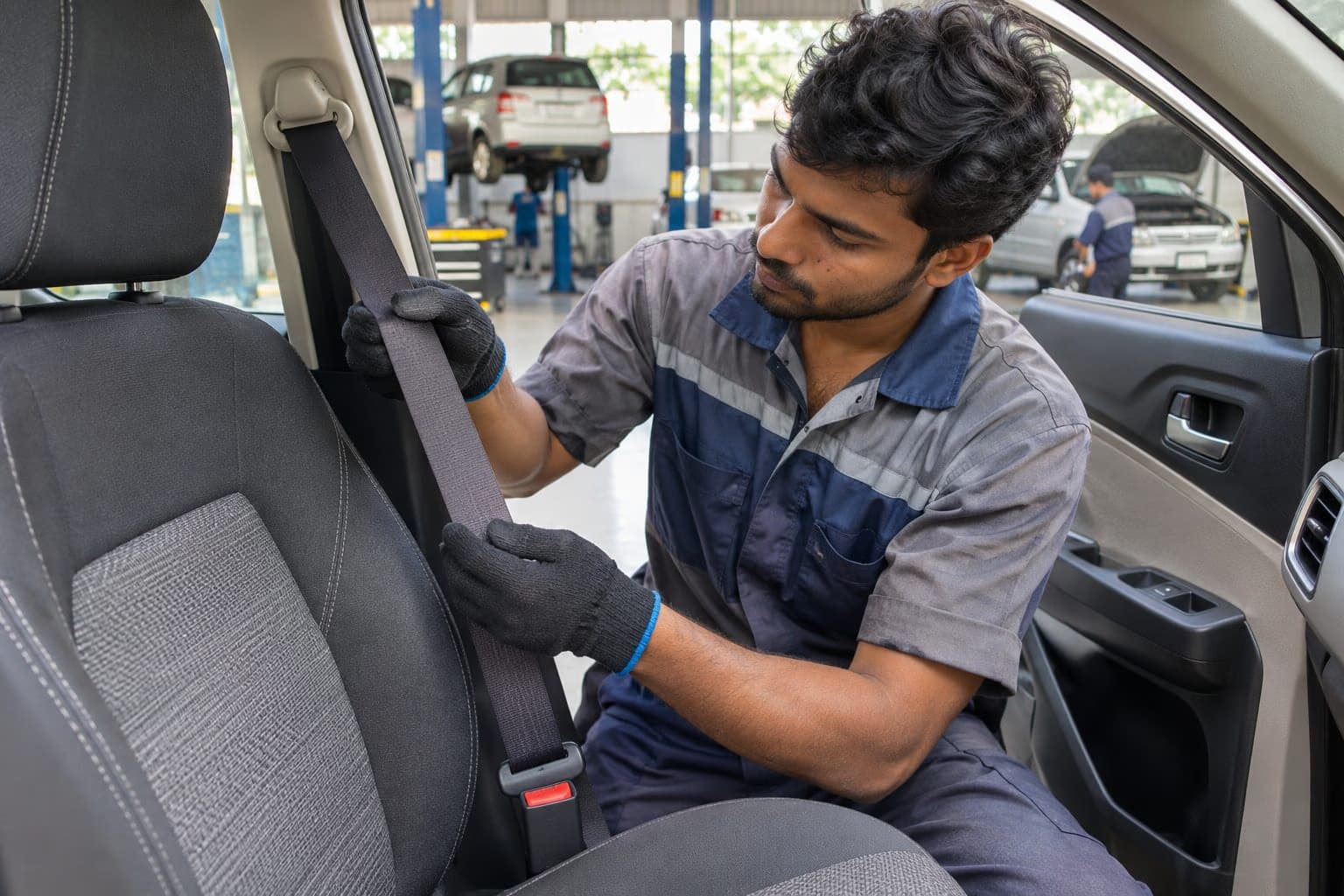
Start with every position occupied during the collision and every belt exposed to damage. Ask the workshop to inspect webbing, retractors, buckles, anchorages and pretensioners using the maker's collision-repair instructions. A front impact, side impact and rollover can call for different checks. Some rear seats also have pretensioners. The Honda manual notes that the tensioner on the struck side can activate in a side impact, so a driver-only inspection is insufficient when passengers were aboard.
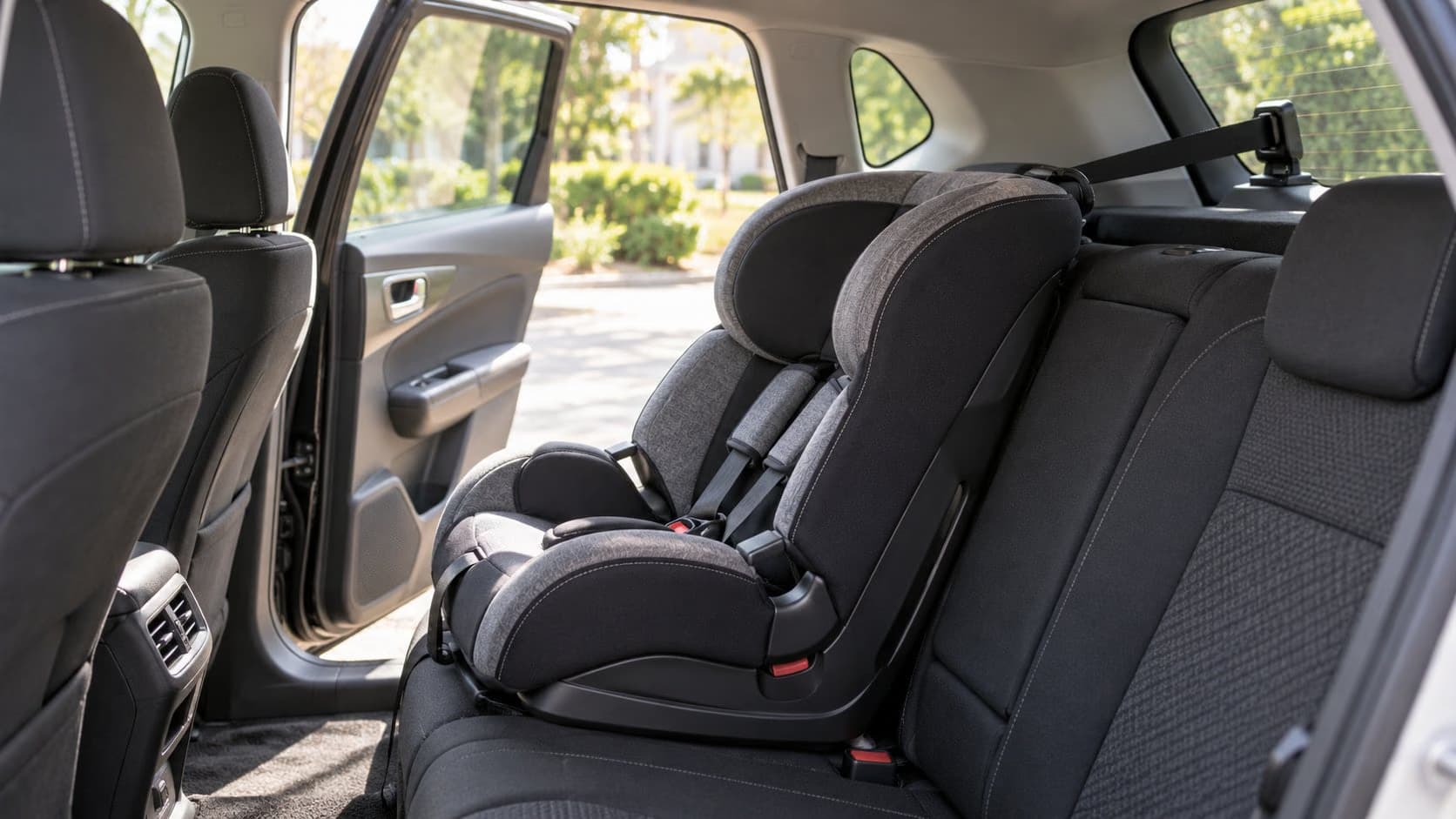
Check the child-restraint system separately. A child seat maker may require replacement after particular collision conditions even when the car's own belt appears usable. Follow the child-seat manual rather than assuming one workshop's decision covers both products. If a child seat was installed, tell the repairer where it was fitted and keep the restraint's model details with the accident file.
The job card should list what was found at each seating position. “Seat belts checked” is too broad to tell you whether a tensioner deployment was investigated. Ask for the diagnostic report, manufacturer procedure and the part numbers for anything replaced. This matters for your passengers and for any future owner who needs to know that the car's safety equipment was restored properly.
Why switching off the SRS light is not enough
The supplementary restraint system warning can point to a detected fault, but clearing a code cannot restore a fired one-time-use part. Replacing a sensor or repairing a wire may fix a genuine electrical problem; it does not automatically fix a damaged belt reel, buckle or pretensioner. Ask how the workshop established that every relevant component is sound, and why the final fault scan is clean. A resistor or other shortcut used solely to hide a warning is no substitute for repair.
At the same time, do not authorise a large basket of parts on guesswork alone. A qualified collision-repair technician should identify actual deployment and damage, then follow the precise manufacturer replacement rules. Ask for an estimate that separates diagnostic work, parts and labour. If the explanation is vague, request the relevant page of the service procedure or a second assessment from an authorised service centre.
What can an owner inspect?
You can notice obvious trouble: frayed or cut webbing, a belt that will not extend or retract normally, a buckle that fails to latch, or an SRS warning that stays on. Those are reasons to keep the seat out of use and seek professional help. They are not a complete test. Do not dismantle a retractor, probe restraint wiring, force a locked belt or spray lubricant into the mechanism. Safety-system components can contain pyrotechnic devices and need trained handling.
If the car was repaired after a rear or side impact, inspect the affected doors, seats and anchor points with the technician present. A body panel can be straightened while an interior mounting point remains compromised. Ask whether the maker calls for checks of seat frames, buckles or child-seat anchors in that type of collision. An independent inspection can be useful if the body repair was extensive or the work record is incomplete.
Buying a used car with crash history
A repainted bumper or panel does not automatically make a car unsafe, but it should prompt questions. Request invoices for belts, pretensioners and airbags that were replaced, plus the repair facility's diagnostic records. Check all belts' ordinary functions and the dashboard lamp self-check, then remember that these observations cannot confirm an undeployed, correctly wired system. A specialist inspection is valuable when records are missing or the seller says only that the lamp is off.
Do not accept “the airbags did not open” as proof no restraint work was needed. The manufacturer manuals cited above explain why a tensioner can activate without an airbag. Also avoid the opposite blanket claim that every minor scrape requires all belts replaced. The impact, occupants, fault data and vehicle-specific procedure determine the work. Ask the seller to distinguish documented repair from assumption.
Questions before accepting the keys
Ask which belts were inspected, whether any pretensioner activated, what parts were replaced, and whether every SRS fault was resolved. Request the final scan and written repair order. Sit in each affected seat and have the technician demonstrate normal belt extension, latching and retraction. Confirm the SRS lamp's startup self-check behaves as described in your owner's manual. If a belt locks, slips, shows damage or a warning remains, do not use that seating position until the cause is fixed.
The Honda and Ford manuals are examples of the manufacturer's approach, not universal part lists. For the car in front of you, insist on its own repair instructions and a record of the completed work. A seat belt is a primary safety device, and a collision repair is incomplete if its condition is left to appearance alone.