When you brake hard on a wet road, the pedal may push back against your foot with rapid pulses. For a driver encountering anti-lock braking for the first time, that sensation can feel like a fault. It is often the opposite: the ABS is cycling brake pressure to help prevent wheel lock. The useful response is to keep firm, continuous pressure on the pedal and steer toward a safe path, not to release the brake because it feels unusual.
The instruction is consistent across Ford India's owner guidance and the US National Highway Traffic Safety Administration's driving guidance. Both explain that ABS can be felt through the pedal and that the driver should keep pressure on the brake. The exact feel varies by vehicle and road surface, so read the owner's manual for the car you drive. The general principle is useful to learn before an emergency, when there is no time to interpret a new sensation.
What is the system doing?
A wheel that stops rotating while the car is still moving can lose much of its ability to steer. ABS uses wheel-speed information and a control unit to adjust brake pressure when it detects impending lock. The system can release and reapply pressure quickly at one or more wheels. Those changes can create pedal vibration, a mechanical buzz or a brief change in pedal travel. Ford's guidance says the pedal may pulse and may travel further during ABS operation. That is why a driver should not assume a moving pedal means the brakes have failed.
ABS does not do the driving for you. You still need to choose a clear path, look where you intend to go and avoid abrupt steering that could create another hazard. A modern car may also have electronic stability control and other systems, but their presence cannot create grip that the tyres and surface do not provide. If you drive into standing water, loose gravel or a very slippery patch, the car remains limited by available traction.
What to do in the moment
Brake firmly and keep steady pressure while you guide the car toward a safe open space. Keep your eyes beyond the obstacle rather than staring at its bumper. If a safe escape path exists, steer smoothly within the grip available. The common mistake is to pump the pedal repeatedly because older advice for cars without ABS described manual brake pumping. With a working ABS system, that action can interrupt the control the system is trying to provide. Ford's glossary of vehicle features describes maintaining pressure rather than pumping.
There is no single steering instruction that fits every emergency. Sudden swerves at high speed can make the outcome worse, especially if the adjacent lane is occupied or there is a barrier. Prioritise reducing speed and choosing a path that is actually clear. If the car is pulling sharply to one side, feels unstable or has a brake warning light, treat that as a separate problem to investigate once you have stopped safely.
Does ABS always shorten stopping distance?
No. Its core role is to help avoid wheel lock and retain steering control during hard braking. Stopping distance still depends on entry speed, tyre condition, load, surface and driver reaction. Ford explicitly warns that ABS does not remove the hazards of following too closely, aquaplaning, taking corners too fast or poor road surfaces. On some loose surfaces, the distance can behave differently from what a driver expects. Do not use ABS as a reason to reduce your following gap.
The biggest improvement most drivers can make is before braking begins: leave more room. In traffic, a comfortable gap allows time to recognise a hazard, move your foot and build braking pressure. In rain, visibility and tyre grip can fall together, so the required margin increases. A car with good tyres and enough space can avoid asking ABS to solve a problem caused by excessive speed. The system is a backup for a difficult moment, not a substitute for planning.
Why tyre condition changes the answer
ABS can control brake pressure, but it cannot manufacture contact between worn rubber and wet tarmac. Tread depth, inflation and tyre quality matter. A tyre with visible damage or uneven wear should be assessed before a long trip. Use the vehicle maker's cold-pressure recommendation, and do not assume all four tyres are at the same pressure simply because the dashboard has no alert. If the car is heavily loaded, check whether the manufacturer specifies a different pressure.
On a flooded road, a tyre can lose effective contact with the surface. ABS may activate or the car may feel light, but steering and braking remain limited. Slow down well before the water, avoid sudden inputs and never assume the depth is safe. The practical lesson is that systems work within the available grip. If the grip is nearly gone, electronics cannot replace it.
When pulsing is normal, and when it needs checking
A short burst of pulsing during a hard stop can be normal ABS operation. A persistent ABS warning lamp, a brake warning lamp, unusually long pedal travel in ordinary braking, fluid leakage or a car that consistently pulls under braking deserves prompt professional attention. Your owner's manual explains what each lamp means for that model. If the braking feel is unsafe, stop driving and arrange assistance rather than testing it repeatedly on public roads.
Remember that the ABS light and the main brake warning can mean different things. A car may still have conventional braking when one function is disabled, but its behaviour and stopping capability may change. Do not diagnose the issue from the dashboard icon alone. A qualified workshop can read fault codes, inspect sensors and verify the hydraulic and mechanical brake system. Avoid bypassing a warning simply because the pedal felt normal on the last journey.
Can you practise safely?
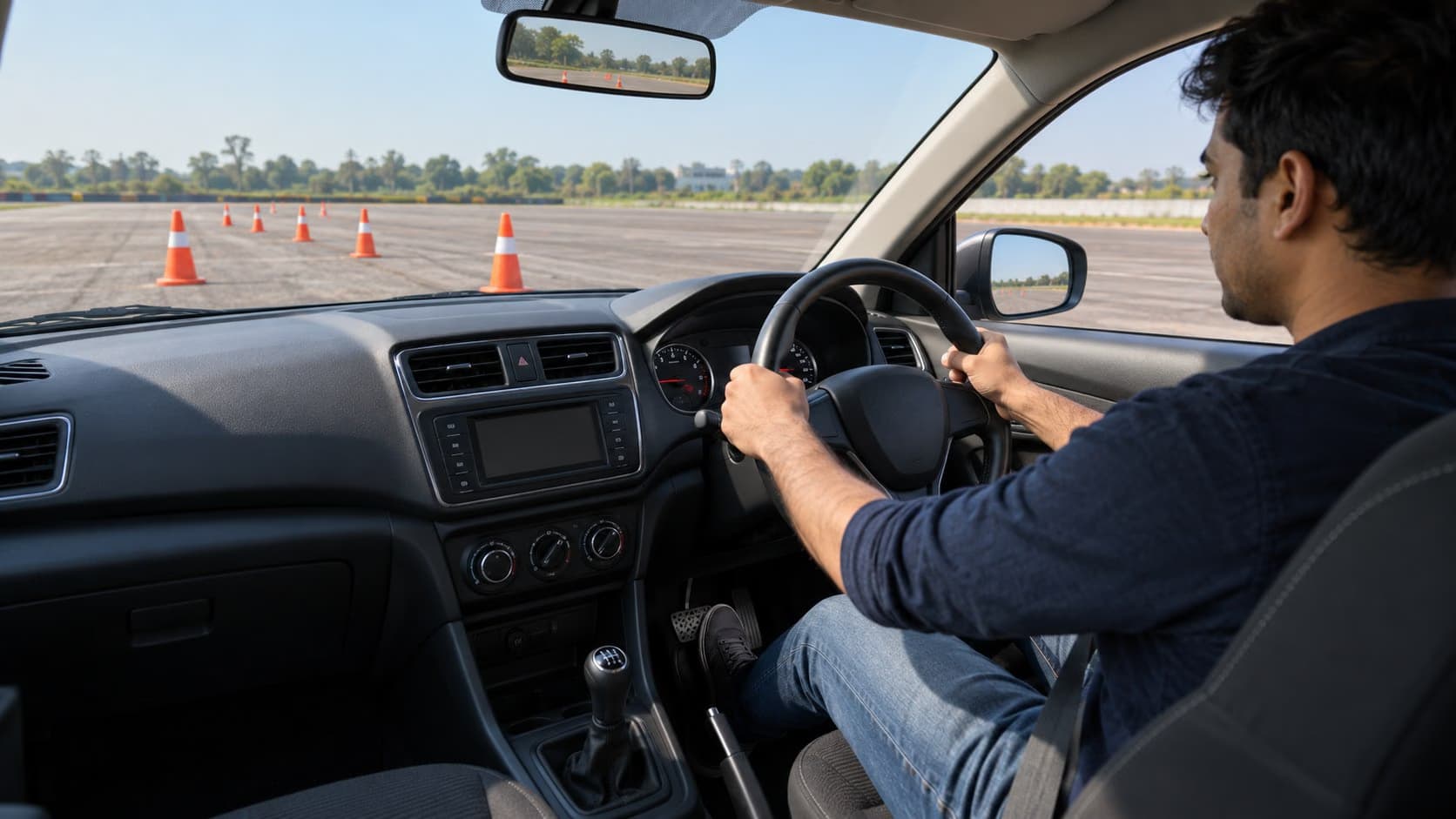
Some driver-training facilities let motorists experience controlled hard braking with an instructor. That is a better place to learn the pedal sensation than a public road or an empty-looking car park with unknown obstacles. If training is not available, at least read the braking section of your owner's manual and make sure every regular driver of the car knows that ABS can pulse. Understanding the sound and feel beforehand may prevent the instinctive lift-off that reduces braking in an emergency.
Even on a practice course, keep expectations realistic. Different speeds, surfaces and tyres produce different responses. A demonstration does not prove how much distance your car will need on a future wet highway. Maintain tyres and brakes, leave space and watch the road. When an actual hard stop activates ABS, keep pressure on the brake and steer only toward a path you have checked is clear. For the underlying instructions, see Ford India's brake guidance and NHTSA's ABS advice.