Most drivers adjust the mirrors, move the seat and fasten the belt before setting off. The padded support behind the head is often left wherever the last occupant put it. That is an avoidable oversight. A car's head restraint is a safety component intended to limit backward head movement in a rear impact; it is not simply a comfort accessory. The useful question is whether the occupied seat supports your head and torso together when it has to.
The Insurance Institute for Highway Safety evaluates seats and head restraints as a system in simulated rear impacts. Its measurements include how the head moves relative to the pelvis and how quickly the restraint contacts the head. That explains why merely spotting an adjustable headrest in a brochure says little about its real protection. The shape of the seat and the occupant's position both matter.
Why the position matters
In a rear-end collision, the seat pushes the torso forward while the unsupported head can lag behind. That difference in movement bends and stretches the neck. IIHS explains the mechanism and says useful geometry is high enough and near the back of the head. A properly designed seat also needs to manage energy as the whole body moves. A loose cushion tied to the posts is not a replacement for the engineered restraint.
None of this means an adjusted restraint makes a crash harmless. Vehicle design, impact severity, belt use and occupant size also affect injury risk. The point is more modest and more practical: use the equipment the manufacturer fitted, in the position it specifies, before every journey. If the seat has been moved for a different driver, reset the restraint along with the mirrors.
Start with the way you actually sit
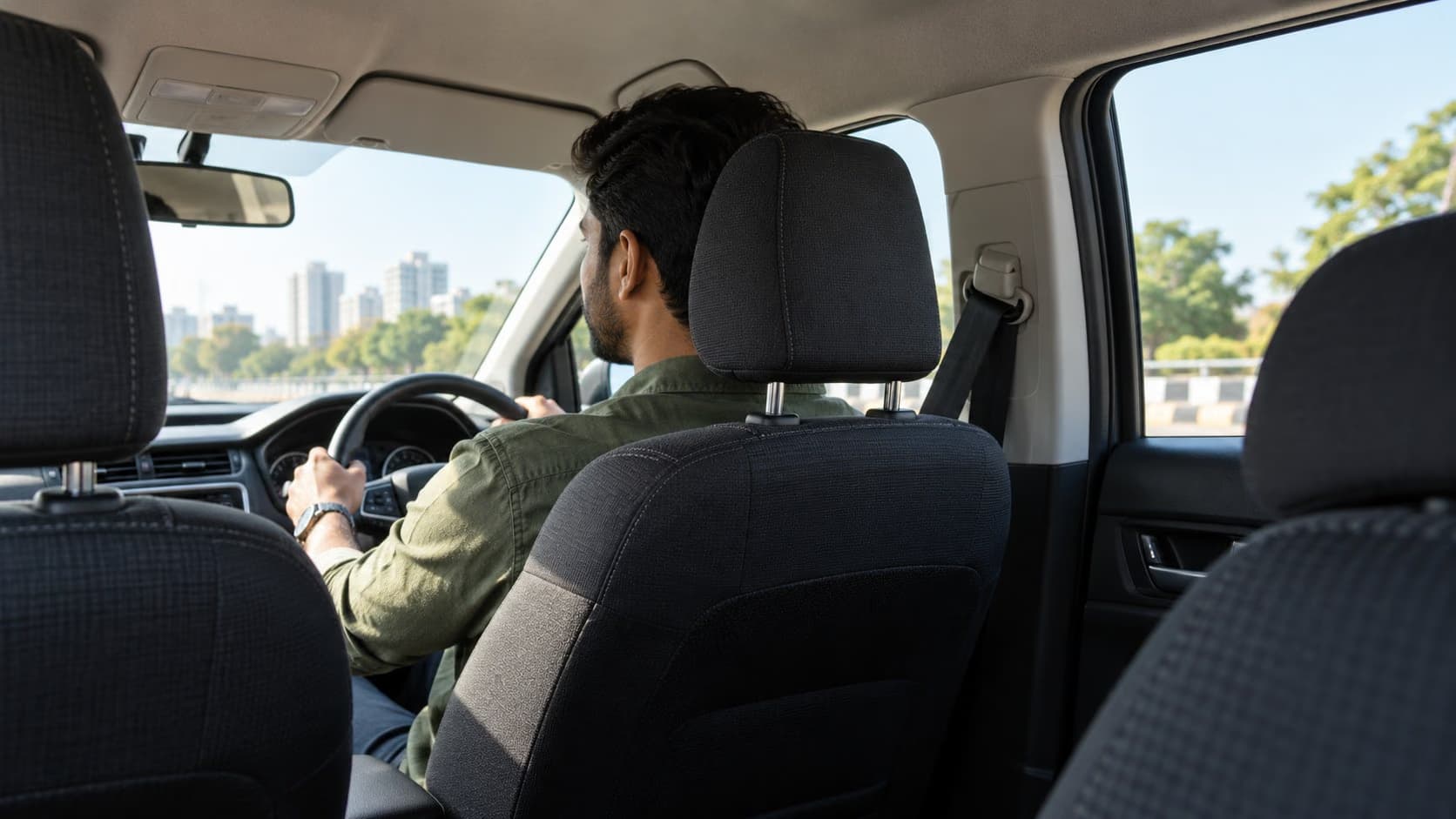
Set the seat distance and backrest angle for safe pedal and steering control first. Sit upright with your back against the seat rather than leaning forward to reach the wheel. If the car offers steering reach adjustment, use it to avoid an excessively reclined driving posture. Now check the head restraint. Raising it while sitting differently from your normal driving posture creates a false impression of good fit.
As a practical visual check, aim for the restraint to reach at least the upper portion of your head, and keep the gap behind your head small without forcing your neck forward. Follow the car's own manual for its exact positioning instructions; head restraint shapes and adjustment ranges differ. One manufacturer's owner-manual material hosted by NHTSA says the back of the head should align with the centre of the restraint and warns that an incorrect position reduces protection. The exact geometry is a vehicle-specific instruction, so do not turn one manual's picture into a universal centimetre rule.
Run the check for every occupied seat
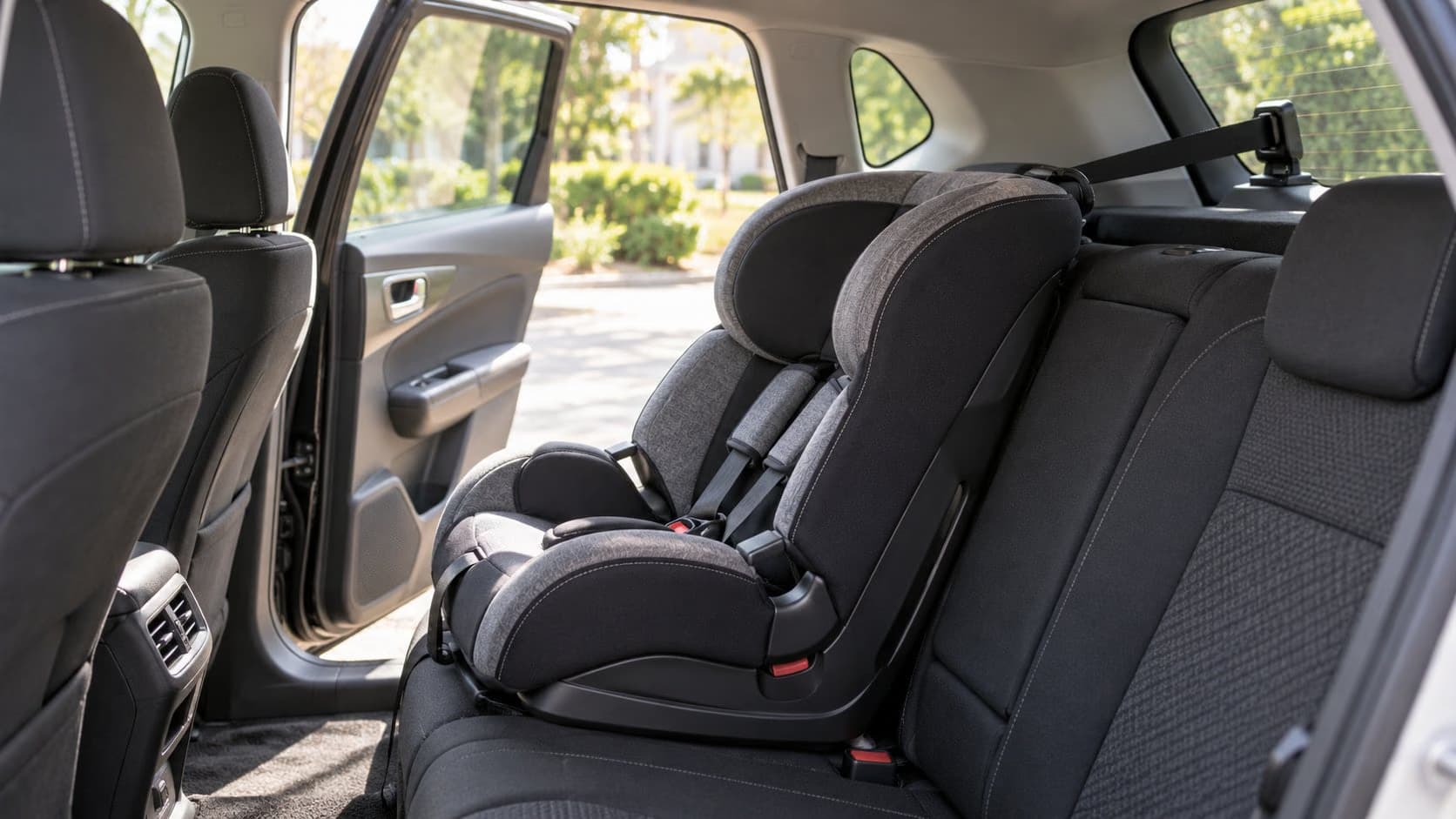
Rear passengers are often overlooked. On many cars, rear restraints can be lowered for visibility or removed for cargo flexibility. Before anyone sits there, make sure the correct restraint is installed, raised to a useful height and locked into place. A rear-centre position may have a different mechanism from the outer seats. Pull gently upward after adjustment to see whether it is latched, and consult the owner's manual if its release or travel is unclear.
Do not assume an occupied rear seat is safe simply because it has a three-point belt. The belt and head restraint address different movements during a crash. Conversely, raising a restraint does not excuse a badly positioned belt. Seat belts should be worn correctly by all occupants. With a child restraint, use the installation instructions for that specific child seat and car; do not improvise around a headrest or tether anchor.
What a showroom test can reveal
When shopping for a car, sit in the driver's seat and adjust it for your actual height. Then see whether the head restraint can be placed behind the head without pushing you into a strained posture. Repeat the exercise in the front passenger and the rear seats you expect to use. Taller occupants may find a short restraint or limited travel; shorter occupants can struggle with a shape that tips the head forward. Those impressions matter even when a generic specification says “adjustable headrests.”
Bring the family members who will use the seats most often. Have them sit naturally for a few minutes, not just pose for a quick photograph. Check that rear restraints remain useful when the front seats are set to the occupants' normal positions. If a third passenger will use the rear centre, inspect its head support separately. Some cars have a distinct centre restraint; others may not offer the same adjustment range. Read the exact variant specification rather than assuming a feature displayed on a higher trim is standard.
Avoid fixes that defeat the design
Decorative pillows, loose neck cushions and items hung from the restraint posts can change the gap between your head and the designed support. The manufacturer may explicitly warn against such objects. The same NHTSA-hosted owner's manual advises against hanging objects on the restraint or placing anything between an occupant and the seatback. Before fitting any accessory, check whether it interferes with the seat or belt.
Removing a restraint to gain a better rear view is especially poor trade-off if that position will carry a passenger. Refit it correctly before the seat is occupied. If it has been taken out for cargo, store it safely so it cannot become a loose projectile, and make sure its posts go back into the intended seat. Do not swap left, right and centre restraints unless the manual explicitly says they are interchangeable.
What to do after a seat repair or cover change
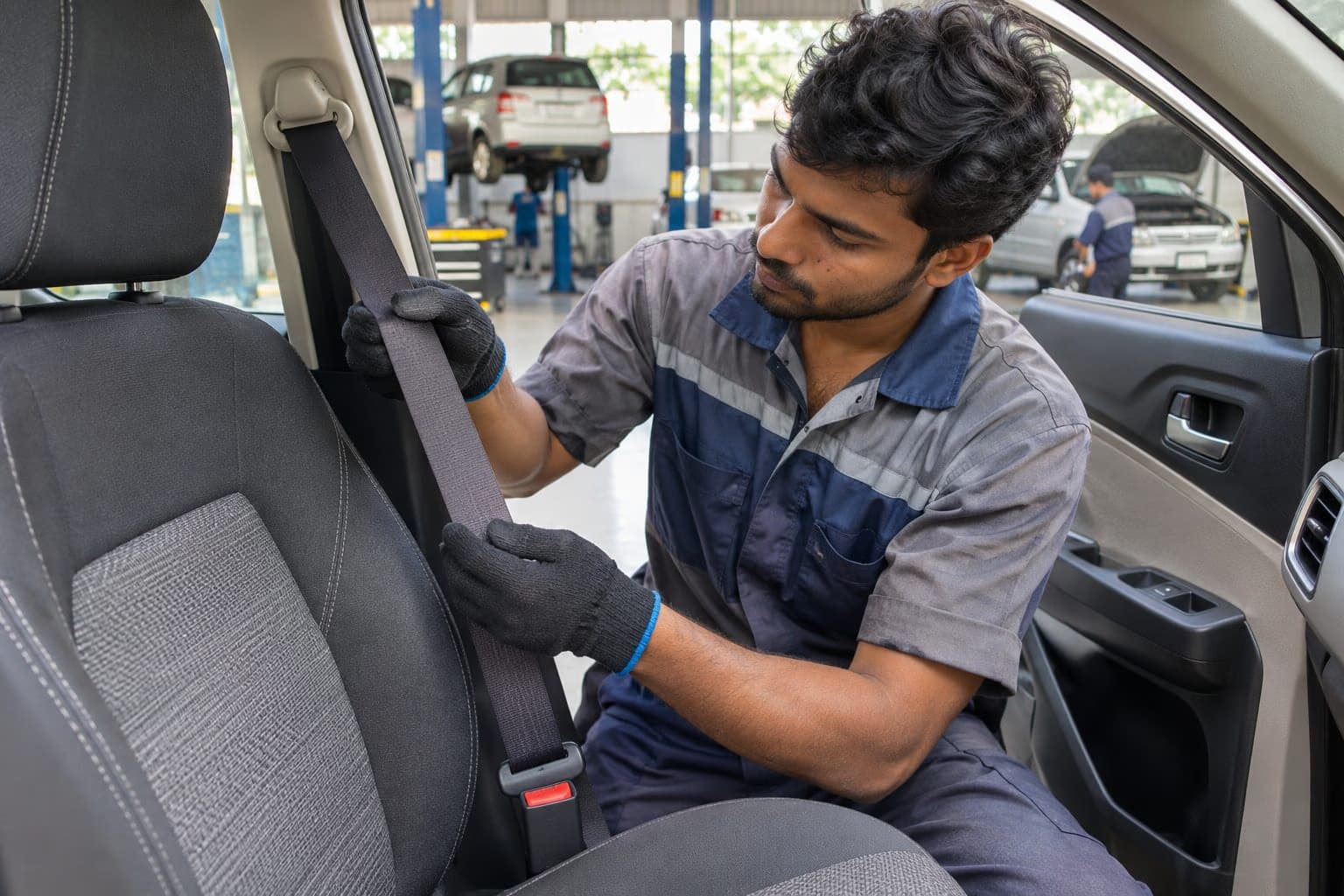
A workshop visit can leave the seat in a different position, and a seat cover can alter how you sit against the backrest. After collecting the car, recheck the driving position, belt path and head restraint. If a head restraint no longer locks, sits crooked or cannot move through its intended range, ask the workshop to inspect it. Avoid forcing it with tools. A seat mechanism that appears damaged after a collision needs professional assessment rather than a home adjustment.
On a used car, inspect both front and rear restraints for missing pieces, mismatched upholstery, bent posts and jammed height adjusters. These are reasons to ask questions about repair history and to request an inspection, not proof by themselves that the car has crashed. Test every occupied position. It is a small check compared with a full pre-purchase inspection, but easier to do before money changes hands.
A one-minute routine
- Set the seat and backrest for normal driving.
- Check that the head restraint is present, high enough and close to the back of your head under the car's manual instructions.
- Confirm its adjustment locks into place.
- Repeat for each passenger seat that will be occupied.
- Remove cushions or hung items that interfere with the designed seat and restraint.
Then fasten the belt and leave the safety system to work as designed. The restraint does not need constant attention during a drive; it needs an honest check when a different person uses the seat. That is especially relevant in family cars, taxis and shared vehicles where the previous occupant's setting may be entirely wrong for the next one.