Rear-seat safety is often reduced to one question: does the car have a warning chime? A reminder can be valuable, but it is only one part of a usable rear cabin. A family buyer should also check the number of proper three-point belts, head restraints, buckle access, child-seat fit and whether the middle position is genuinely practical for the people who will use it.
What a seat-belt reminder does
A seat-belt reminder is designed to alert occupants when a belt is not fastened. MoRTH’s AIS-145 standard describes warning logic for M1 passenger vehicles, including visual and audible warnings for driver and co-driver systems. Bharat NCAP also treats seat-belt reminder as part of its identified safety-assist technologies alongside systems such as electronic stability control and pedestrian protection.
However, a reminder does not make an unsuitable seating position comfortable or safe for every passenger. It is an alert, not a substitute for wearing the belt correctly.
Showroom checks for the rear row
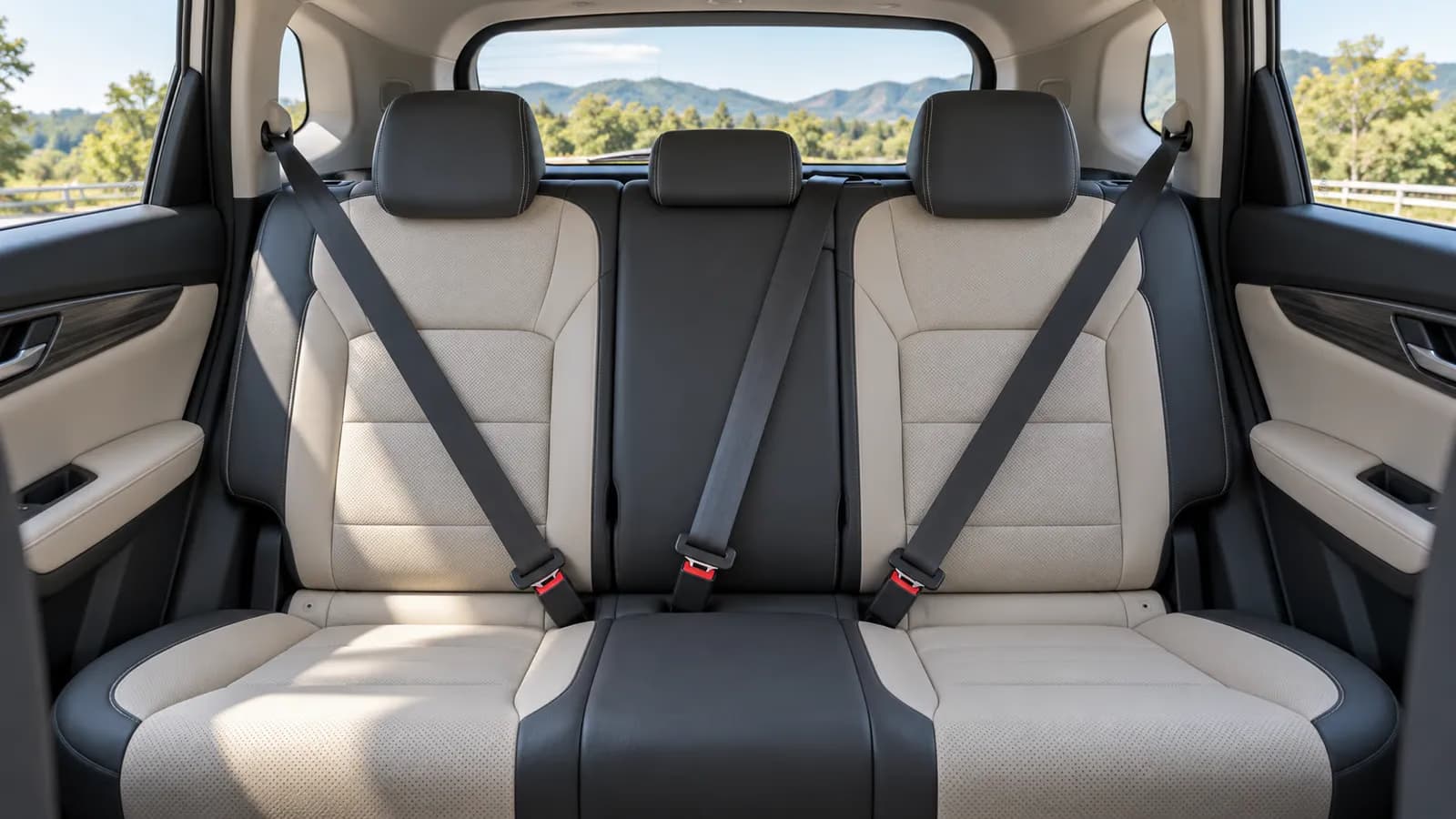
- Sit in every rear seating position, including the middle one.
- Fasten each belt with the seat adjusted for a real passenger, not an empty cushion.
- Check that the buckle is easy to find and use without digging through the seat base.
- Confirm head-restraint height and adjustment for the people who will sit there.
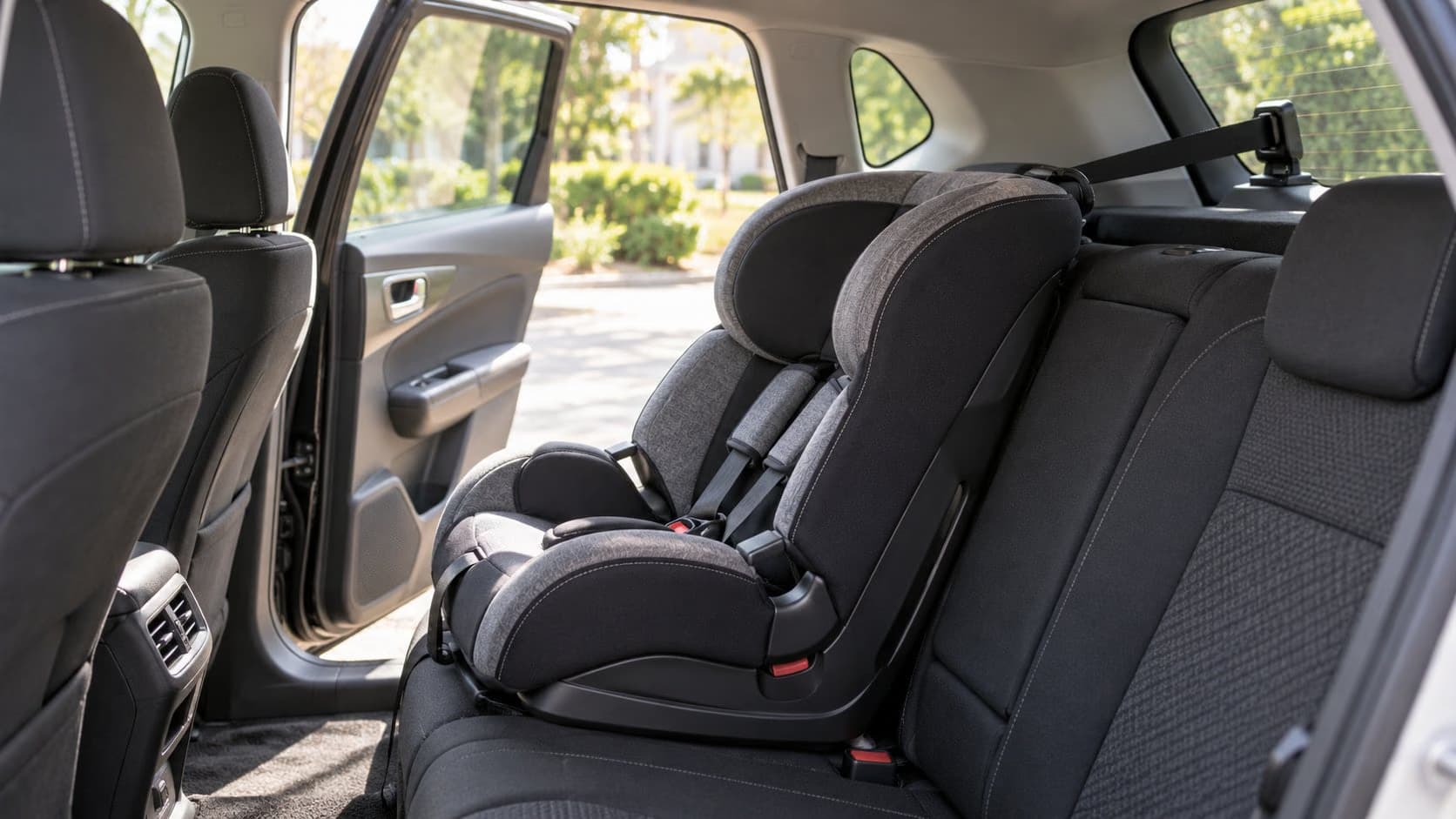
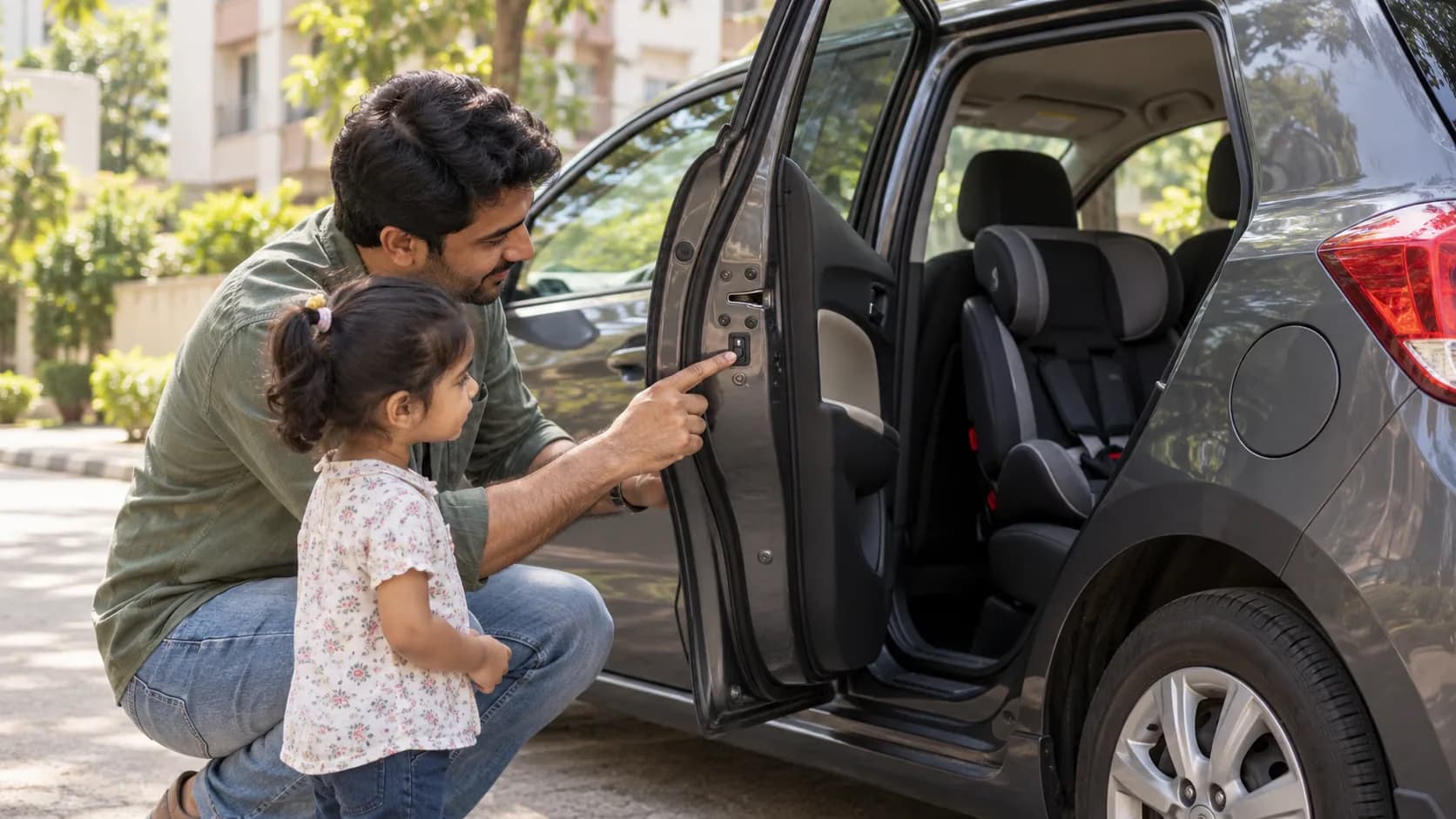
- If you use child seats, bring the actual seat or its dimensions and test ISOFIX/top-tether access where applicable.
Read the variant, not just the model name
Safety equipment can differ by variant and production period. Ask the salesperson to show the equipment list for the exact version you intend to book. If a reminder is mentioned, ask which seating positions it covers and how the warning behaves. A brochure icon alone is less helpful than a live demonstration in the vehicle.
Why the middle seat deserves attention
Many families use the middle rear seat occasionally, often for a child or an older passenger. Check whether the belt is a proper three-point belt, whether the head restraint is present and whether the seat shape allows someone to sit without being perched on a hard buckle. The answer can change a family’s real-world seating plan.
Use ratings correctly
A Bharat NCAP result is useful evidence, but it should be matched to the tested configuration and the safety equipment on the car you are considering. The programme’s public materials explain that safety-assist technologies, including seat-belt reminder, form part of the wider assessment. It is not a shortcut around checking the exact variant.
Buyer-first conclusion
Make rear-seat safety a hands-on test. Buckle the belts, fit the child seat if relevant and sit where your family will sit. A warning chime may prompt the right habit; a well-designed rear row makes that habit practical on every trip.
Sources: Bharat NCAP and AIS-145 seat-belt reminder requirements.