Child-restraint safety is not settled by spotting an ISOFIX badge. The seat, the vehicle, the chosen seating position and the installation method must all work together. A family buyer should use the car handbook and the child-seat manual as a pair of documents.
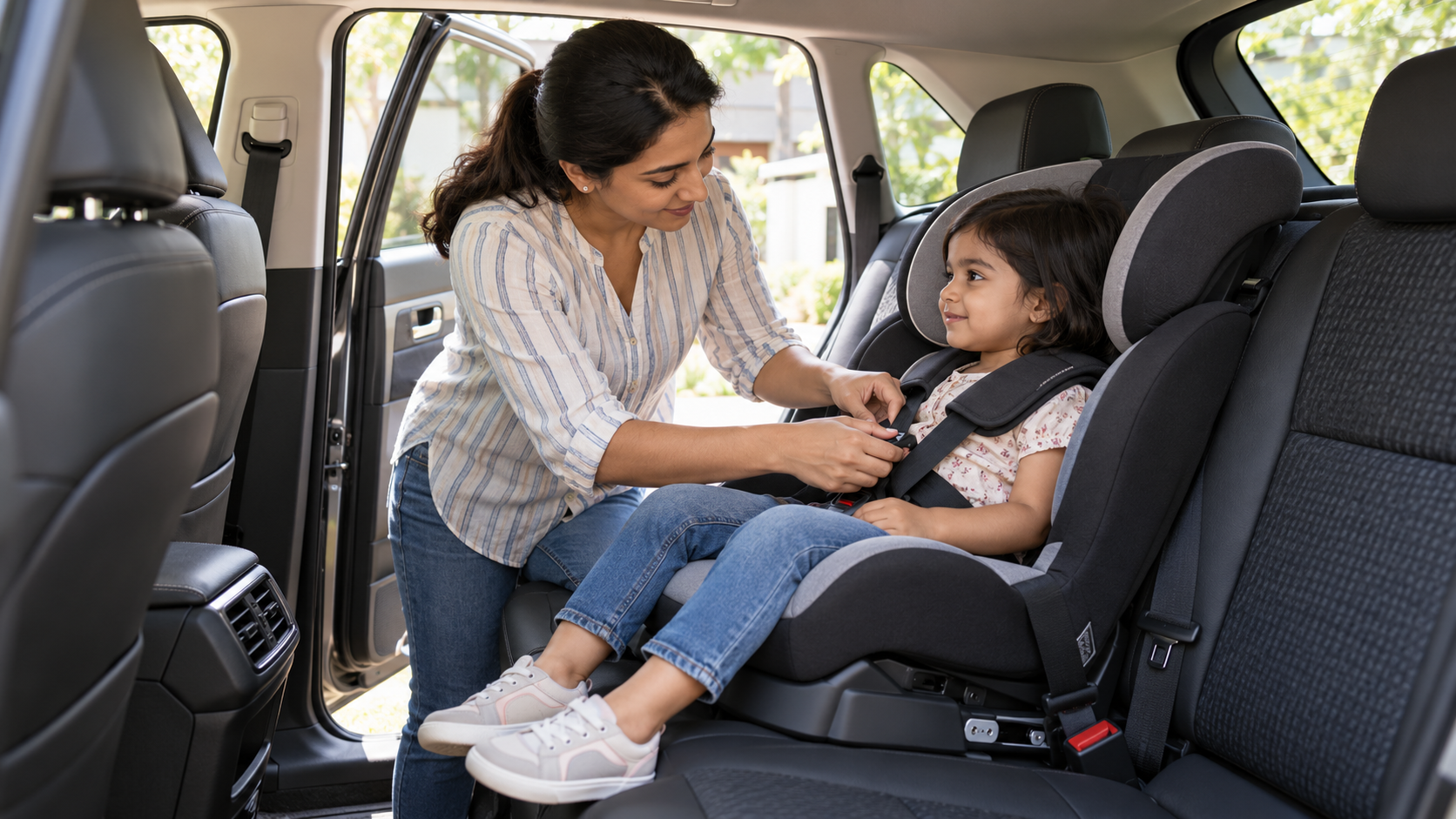
Bring the real seat to the showroom
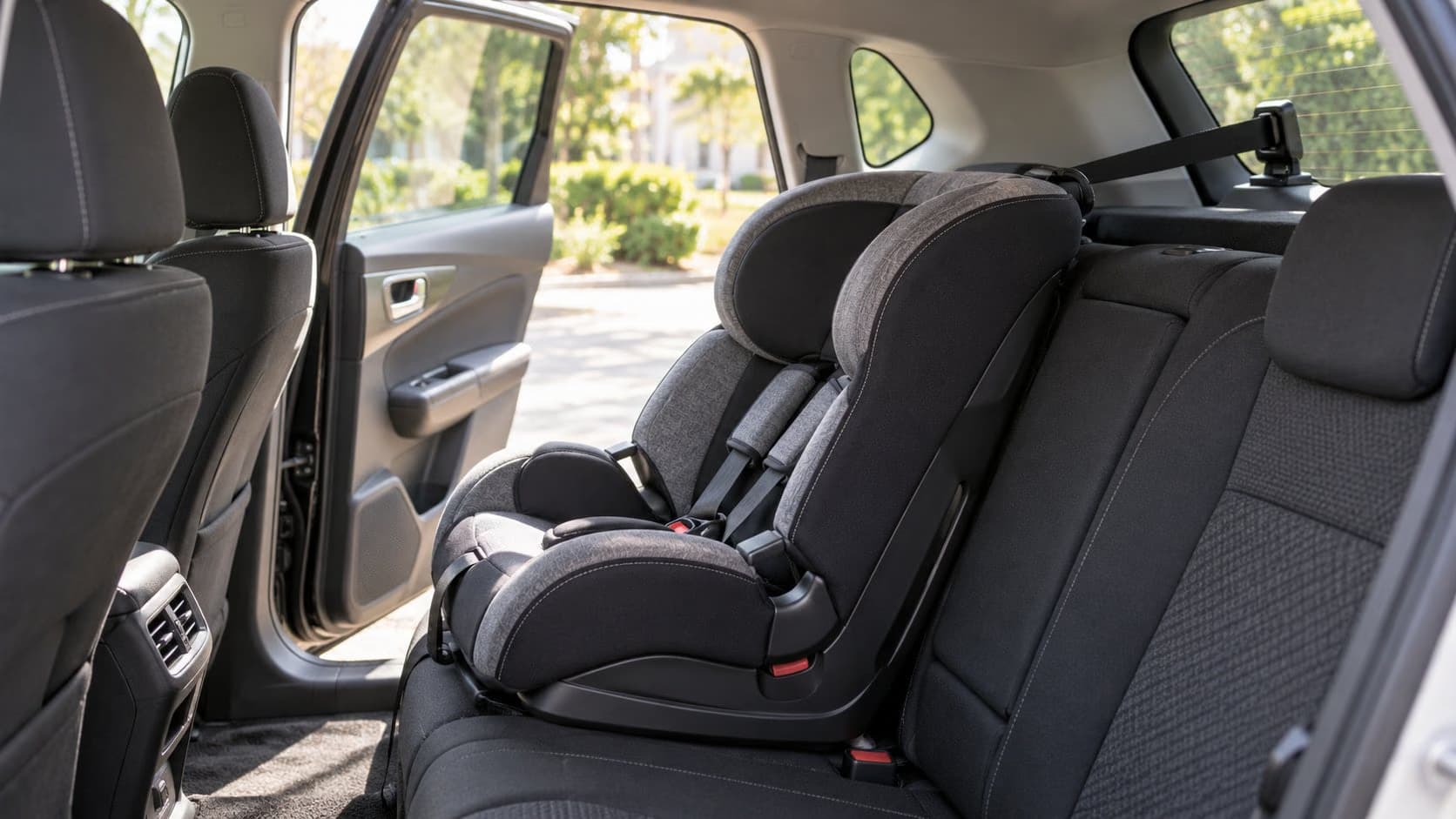
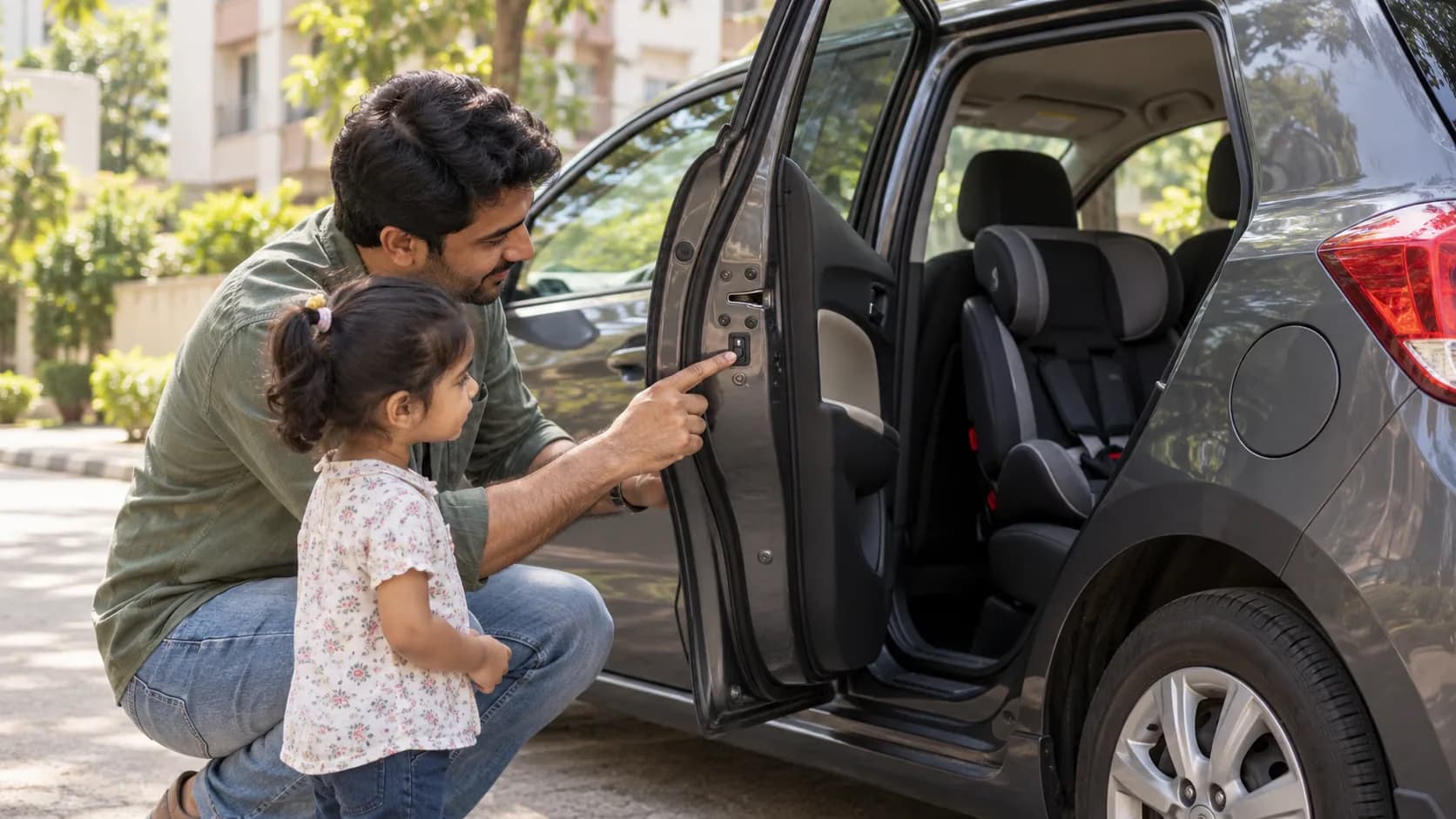
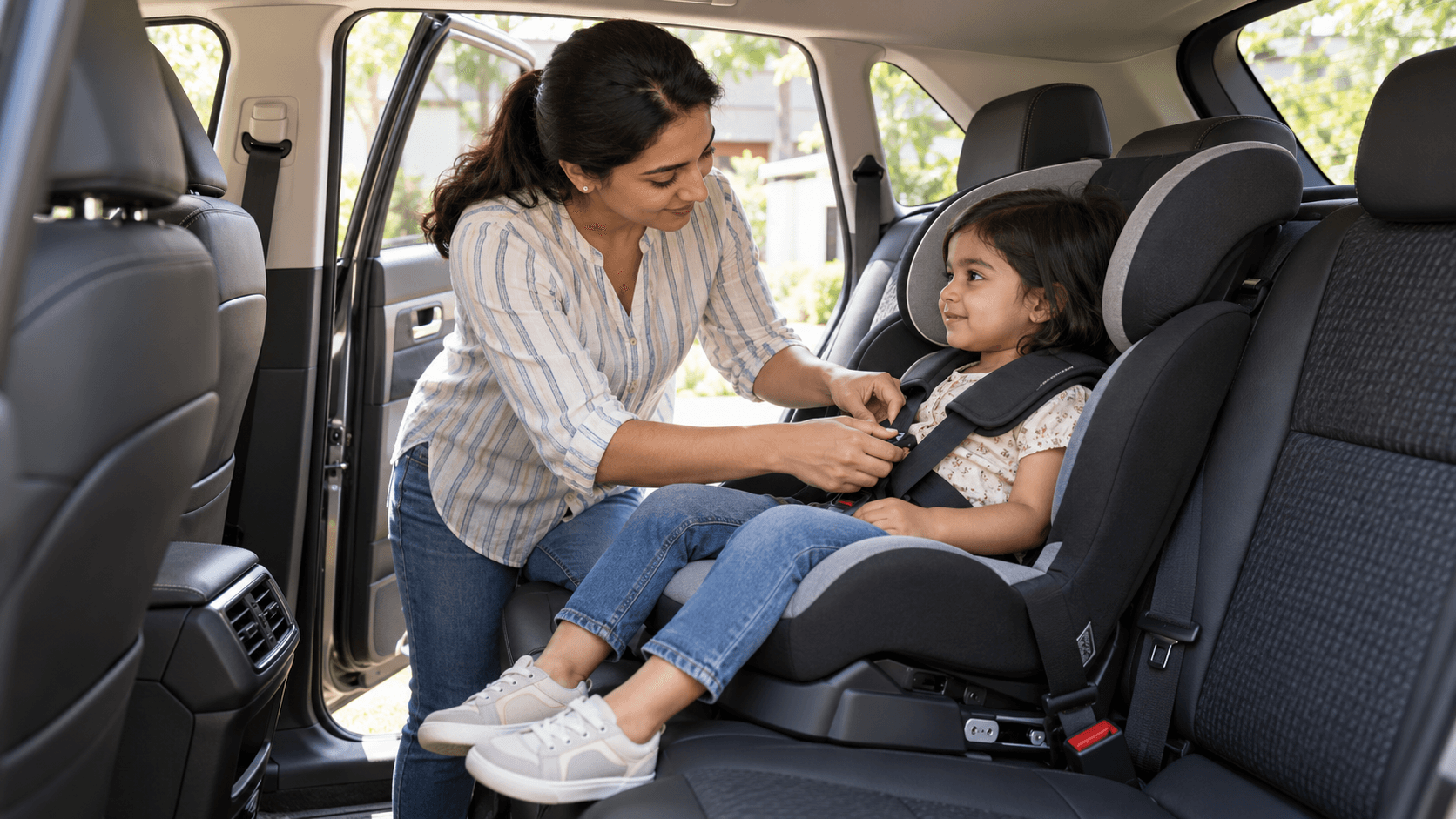
Try the restraint in the intended rear position. Check door opening, access, belt routing, ISOFIX engagement, top-tether or support-leg requirements and whether the front passenger's seat still has a safe usable position. These are practical questions that a brochure cannot answer.
| Check | Why it matters |
|---|---|
| Approved seating position | Not every rear location supports every type of child restraint. |
| ISOFIX or belt route | The chosen seat's installation method must match the car. |
| Top tether/support leg | Some seats have location-specific requirements. |
| Rear belt reminders | They support correct restraint use on ordinary journeys. |
Regulation is a baseline, not the whole answer
MoRTH's applicable requirements for M1 vehicles include rear-seat belt reminders for front-facing rear seats from the stated manufacturing date. That is valuable progress, but it does not install a child seat for you or make an incompatible seating position safe.
Write a family-use note before booking
Who sits where on school days? Can grandparents access the second row? Does the boot hold the stroller without placing loose items in the cabin? The safest family car is one in which every regular passenger can be restrained properly, comfortably and consistently.