A tyre that has never punctured can still be a poor partner in rain. The grooves in its tread help move water away from the contact patch. As the tread wears, that ability changes, and the car may be more vulnerable to a loss of grip on a wet surface. Pressure alone cannot tell you whether the tread is ready for monsoon roads.
There is no reason to wait for a dramatic skid to start looking. A slow inspection in daylight, before the rains, can reveal shallow grooves, one-sided wear or damage that a quick glance at a parked car misses.
What the grooves are for
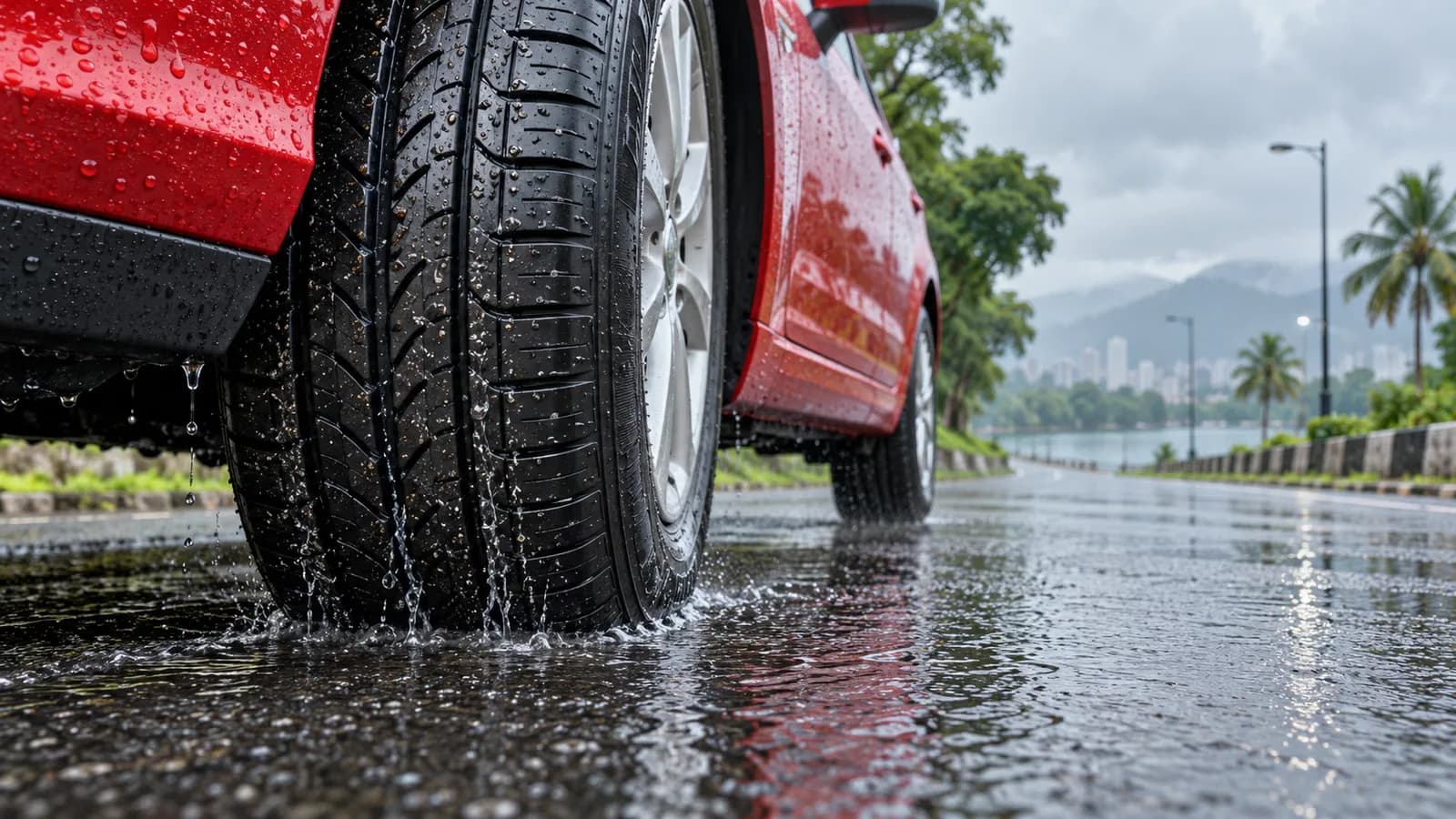
Tyres need to support the car, transmit acceleration and braking forces, and turn. In rain, tread grooves help move water away so rubber can maintain contact with the road. Michelin India explains the role of tread depth in water drainage and postponing aquaplaning. This does not mean a deep-looking tread makes any speed safe in standing water. Road texture, tyre design, load and water depth also matter.
A tread pattern may look busy from the side while the central grooves are worn. Inspect across the width and around the circumference, not just the easiest section to see. Turn the steering wheel while stationary and safe to view the front tyres better; do not put your hands under a moving or unsupported car.
Read the wear indicators
Many tyres have raised bars inside their main grooves. When the surrounding tread wears to the level of a bar, the tyre has reached its wear-indicator point and needs attention. Michelin's guide to wear indicators shows how to find and interpret them. Some tyres have additional markings, but their meanings vary by manufacturer. Use the tyre maker's instructions rather than assuming every small symbol says the same thing.
A small tread-depth gauge can give a more specific reading. Measure at several points and note the lowest credible result, not just the deepest groove. Check both front and rear tyres, including the inner shoulder that is harder to see. If the tread is uneven, seek a professional inspection rather than buying a replacement and ignoring the possible alignment, pressure or suspension cause.
Pressure and tread are separate checks
Inflation affects how a tyre contacts the road and wears. Use the vehicle's specified cold pressure, allowing for load instructions in the owner's manual or door label. Do not inflate to a number from the tyre sidewall as though it were the car's recommended setting. A tyre can be correctly inflated yet worn out, and a new-looking tyre can be underinflated. Both conditions deserve attention.
After checking pressure, look for cuts, bulges, embedded objects and cracks. A sidewall bulge or exposed cord is not a routine tread issue and warrants prompt professional advice. Avoid a high-speed trip while you are uncertain about structural damage.
Why one tyre may wear faster
Different axle loads, steering forces, brake use and driving patterns can produce different wear rates. A tyre may also wear more on one edge because of pressure or wheel-geometry problems. Do not diagnose alignment from tread alone. Compare all four tyres and ask a technician to assess the suspension and geometry when a pattern is clearly abnormal. If one tyre was replaced earlier than the others, note its age and size so you can interpret its remaining tread fairly.
Before a wet highway drive
- Inspect all four tyres and the spare or mobility kit supplied with the car.
- Find the wear indicators and check the main grooves at several points.
- Set cold pressures to the car's specified values for the expected load.
- Look for sidewall damage, uneven wear and a tread surface that has picked up stones or sharp debris.
- Reduce speed and increase following distance when roads are wet; tyre condition does not erase the risk of standing water.
Driving through a deep flooded section is a separate safety decision. A fresh tyre cannot reveal submerged holes or prevent a current from moving the vehicle. Turn back when water depth or road condition is uncertain.
Replacement decisions
Choose the manufacturer's approved size and load/speed specification. If you replace only part of a set, follow the tyre maker's and vehicle maker's guidance on mixing and position, particularly for all-wheel-drive cars. Compare wet-grip performance and actual availability, not just a discount. An old bargain tyre with the wrong specification is no solution to a wet-road concern.
Tread inspection is a small habit with a clear payoff: it tells you what remains between your car and the road. Do it before the journey, not after the first emergency stop in rain.
How to measure without fooling yourself
Park on level ground and make sure the car cannot roll. A simple tread-depth gauge should sit in a main groove, not on a raised wear bar. Measure several grooves across the tread and repeat at multiple positions around each tyre. Write down the readings by wheel position, because a single good point can conceal irregular wear elsewhere. If you cannot reach the inner edge safely, ask a tyre professional to check it on a lift.
Do not use a coin trick borrowed from another country as a substitute for a measurement. Coin thickness and markings vary, and it does not tell you whether one shoulder is nearly bald. A proper gauge is inexpensive compared with a tyre. Photographs of the wear indicator and any damaged area can help you explain a concern to a technician, but they cannot reveal internal damage.
Wet grip is more than the number of grooves
Tread depth matters because it creates space for water, but rubber compound, tyre design, temperature and road surface also influence wet grip. Two tyres with similar measured tread can behave differently. Do not infer that a sporty-looking pattern or an “all-season” label makes a tyre appropriate for every Indian road condition. Seek independent tests with clear methods where available, and use the manufacturer's approved specification for the vehicle.
On a wet road, the driver still has to adjust speed and following distance. A surface can be especially slippery just after rain begins, and painted markings or metal covers may offer less grip than surrounding asphalt. Standing water can hide a pothole or overwhelm a tyre's drainage capacity. No depth measurement removes that uncertainty.
What an uneven pattern can tell you
Worn edges on both shoulders may suggest a history of low pressure, while central wear can have other pressure-related explanations. But these are clues, not remote diagnoses. Alignment, suspension condition, tyre rotation, load and use all interact. Michelin's wear guide advises professional checks when wear is excessive or uneven. Fixing only the visible tyre without addressing the cause can waste the replacement.
If one tyre shows an unusual flat patch, cuts or a bulge, ask for immediate inspection rather than waiting for routine service. A vibration that appears with the damage is another reason to avoid a long drive. Keep the removed tyre available for discussion if a warranty claim is involved, and retain the shop's findings.
Make the check a repeatable habit
Look at tyres during monthly pressure checks and before a long trip. Record when a tyre was rotated or replaced so wear differences make sense later. Inspect the spare if your car carries one; a good set of road tyres is little comfort if the emergency spare is flat or damaged. A mobility kit has its own expiry and usage limitations in the vehicle manual.
For a buyer inspecting a used car, tyre wear is both a likely near-term cost and a clue to how the car has been maintained. A new-looking outer shoulder is not enough. Ask to see the full tread on all four tyres and consider an independent inspection if the patterns differ sharply.