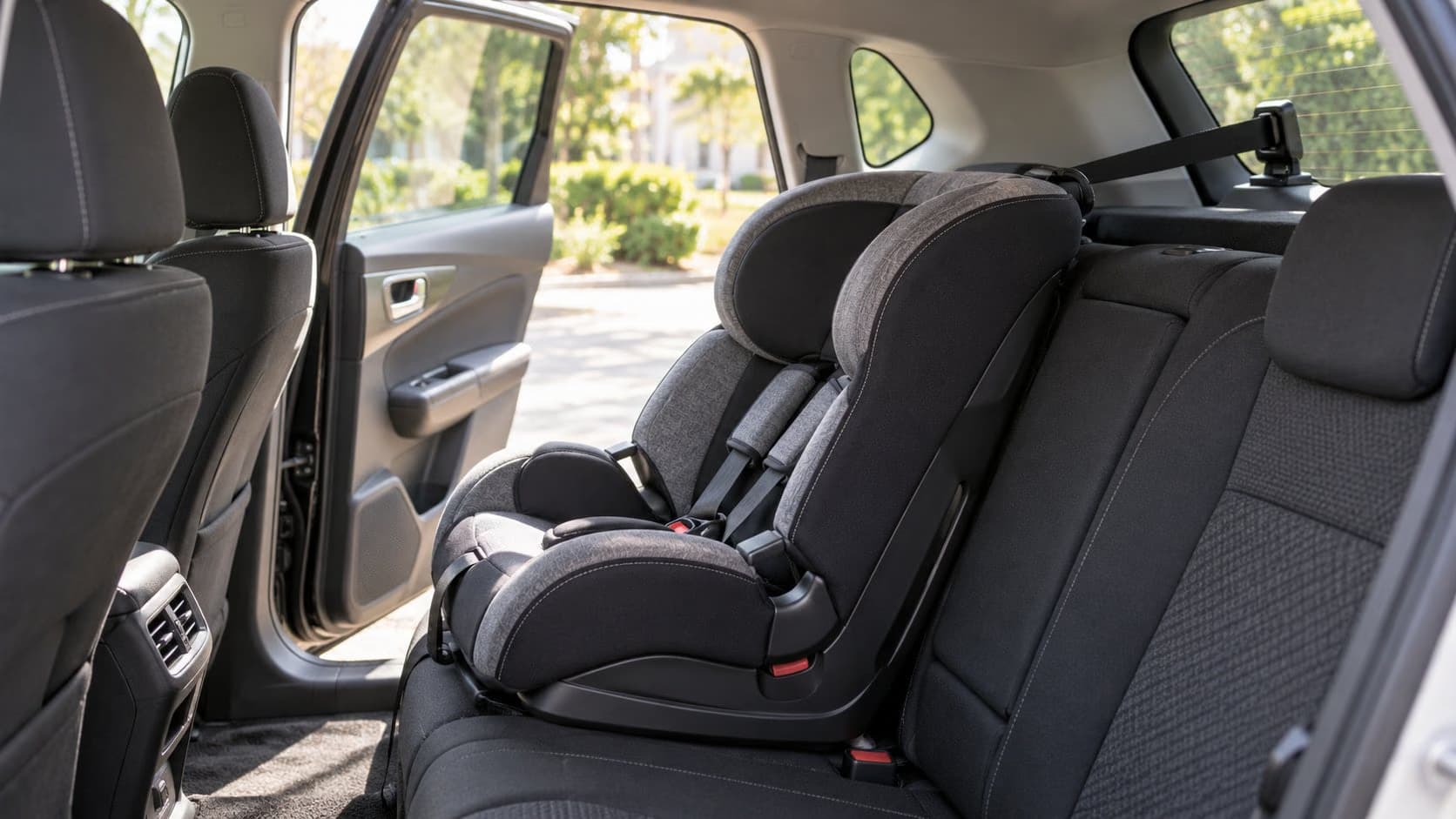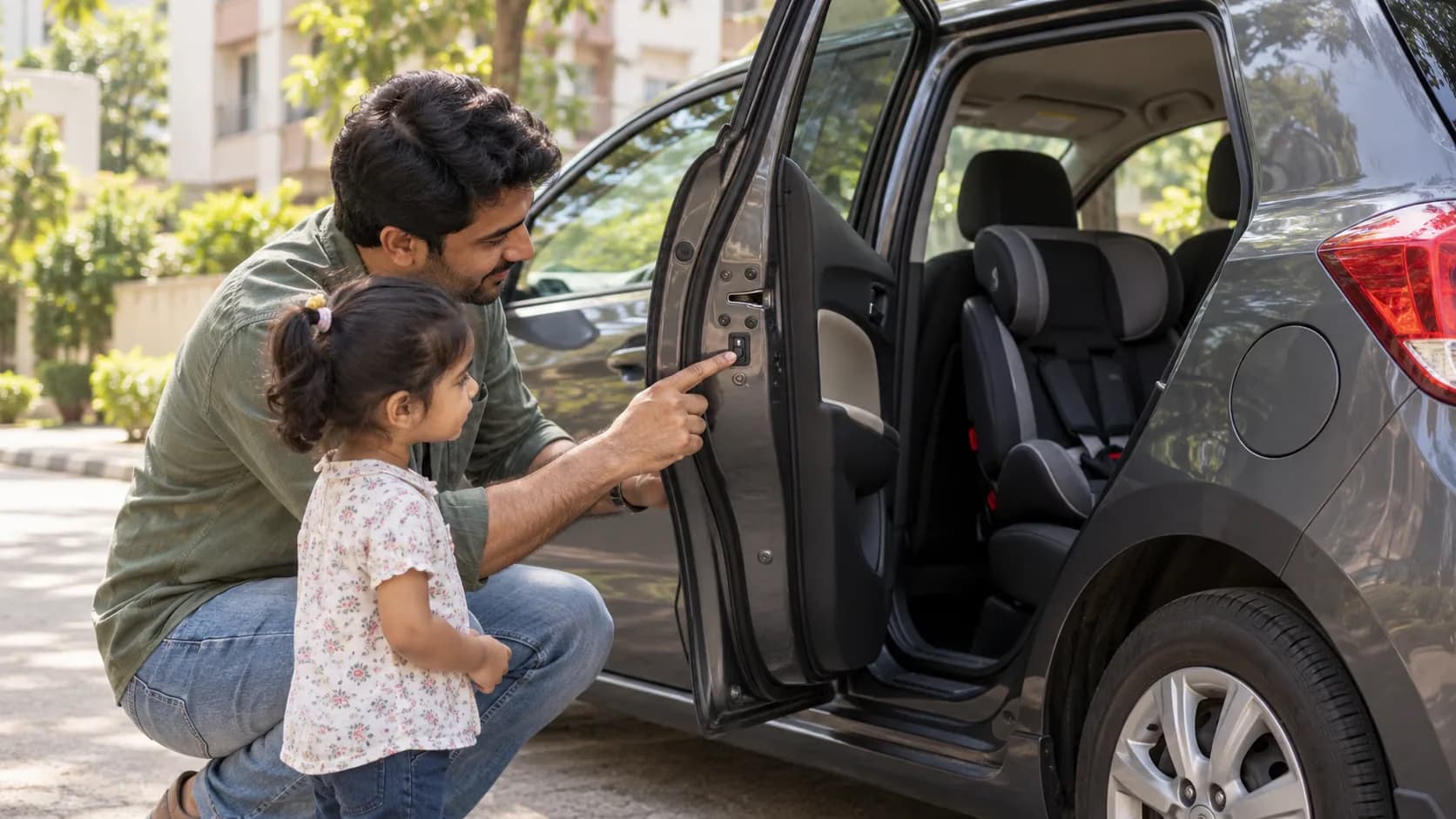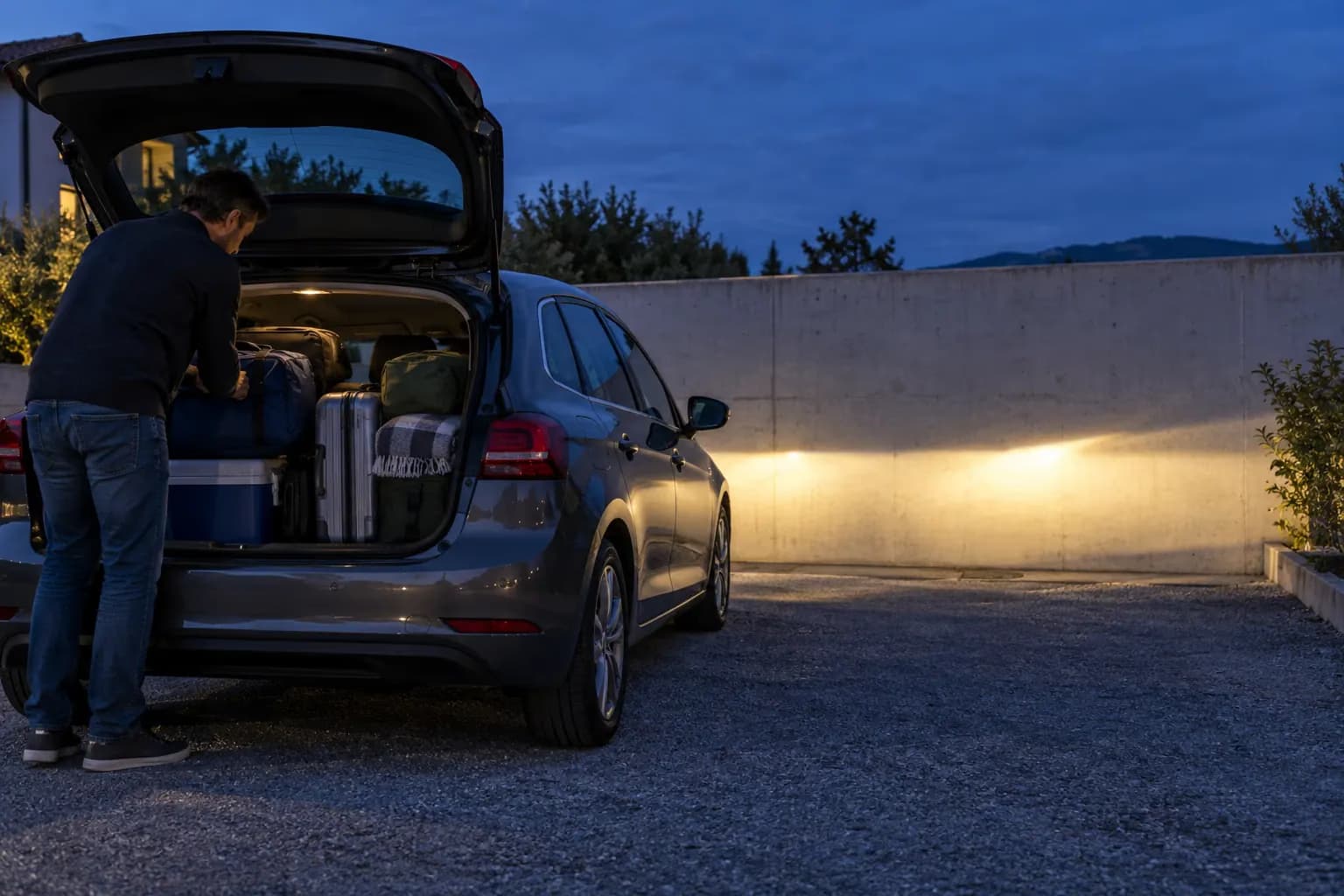
A car can leave home with correctly aimed headlights and still trouble oncoming drivers later that evening. Put people in the rear seats and heavy bags in the boot, and the vehicle's stance changes. On a car with manually adjustable headlamp range, the low beam may now need a different setting.
This is easy to overlook because the control is often a small numbered wheel or a menu item, not one of the obvious lighting switches. Volkswagen's Taigun owner manual instructs the driver to set headlight range according to load and warns that incorrect adjustment can reduce lighting or dazzle other road users. The exact numbers and symbols are vehicle-specific; use them as a guide to what to look for, not as settings to copy into another car.
What extra weight changes
Passengers and luggage can compress the rear suspension and alter the car's pitch. If the front of the car points slightly higher, the dipped-beam pattern can rise too. That may put more light into another driver's eyes while making the road immediately ahead less evenly lit. The amount varies with the vehicle, load and suspension. It is not something you can reliably judge by looking at a static photograph of the car.
The purpose of a beam-level control is to adapt the light cone to load. A Volkswagen Tiguan manual describes both manually adjustable and dynamic systems; with a dynamic system, the car may adapt the range automatically. That distinction matters. Do not search for a wheel that your car does not have, and do not assume the word 'automatic' on the main light switch means the beam height is self-levelling.
Find the instruction before setting off
Read the headlight-range table in your exact owner's manual. Many manuals describe scenarios such as front occupants only, all seats occupied, or a loaded boot. Translate your trip into the closest scenario and select that position while the car is safely parked. If the car offers an infotainment setting rather than a physical control, find it before dark, not while driving.
Check that the cargo itself is secured and within the vehicle's load limits. Beam levelling does not make an overloaded car safe. It also does not correct a headlamp that has been badly repaired or aimed incorrectly after an impact. If the pattern still looks wrong at the prescribed setting, have the lamps and vehicle inspected.
A useful night-drive check
With the car loaded as it will travel, park on level ground facing a plain wall, at a safe distance, and switch on dipped beam. You are not trying to carry out a workshop alignment with tape and guesses; you are confirming that both lamps work and that the pattern visibly changes when the manual control is used. If one lamp is markedly different, flickering or not working, address that before a long night journey.
While driving, resist the temptation to leave high beam on because dipped beam seems short. Use high beam only when appropriate and dip it for other road users. If visibility remains poor on dipped beam, slow down and have the lights checked. A beam-level wheel can help account for load; it cannot add light output or repair a damaged lamp.
Be precise about which automatic function the car has. An automatic headlight switch usually decides when the lamps turn on; automatic high-beam control may switch between high and low beam; automatic range adjustment changes beam aim to account for load. These are different jobs. Ask the dealer which of them is fitted on the exact variant, and verify the answer in the manual. An impressive lighting feature name in a brochure is not a substitute for understanding the control you will use.
A headlamp levelling setting should not be used to compensate for a badly installed bulb or an accident repair. If one beam points far higher than the other, or a sharp cutoff has disappeared, ask a qualified workshop to check aim and hardware. The road-facing lamps are part of a shared system: seeing farther is not an improvement if it blinds someone approaching from the opposite direction.
After unloading
The return trip may have a different load. Reset the control to the manual's position for the lighter configuration when passengers or luggage leave the car. Forgetting a heavily loaded setting after unloading can leave the dipped beam too low and shorten the useful view ahead.
This is a small habit with a clear purpose: matching the beam to the car's actual stance. Before a family night drive, check the load, check the manual's headlight-range table, set the control if your vehicle has one, and keep the beam pattern in mind. Courtesy to oncoming traffic and your own ability to see the road are the same problem viewed from opposite windscreens.