A cracked windscreen is usually treated as a glass job: choose the right screen, fit it, wait for the adhesive to cure and drive away. On a car with a forward-facing driver-assistance camera, the work may not end there. A replacement can alter the camera's position by a small amount, and the electronics need to know precisely where they are looking before lane warnings or autonomous emergency braking can be trusted.
Bosch Car Service lists windscreen replacement among repairs that can require ADAS calibration. The exact method belongs to the vehicle maker's repair instructions: some systems use a stationary target, others require a controlled drive, and some use both. The workshop should identify the car by VIN, follow the applicable procedure and document the result.
Ask before booking the glass
When requesting a quote, give the glass shop the exact model, year and trim, and explain that a camera sits behind the mirror. Ask whether the proposed screen has the correct camera bracket, optical area and any heating or acoustic specification. A screen that fits the opening is not automatically the correct part for an ADAS-equipped variant. Check the part number on the written estimate.
Then ask who will perform calibration, where and when. Some glass firms have their own equipment; others send the vehicle to an authorised dealer or specialist. If a separate trip is involved, include it in the quotation. A workshop saying that no warning light is on has not answered whether the manufacturer requires calibration after this repair.
Not every camera-equipped car uses the same process. The repair manual may specify different steps after glass replacement, camera removal, suspension work or a collision. Ask the repairer to show the vehicle-specific instruction or documented workflow. That is more useful than a generic claim that every car calibrates itself while driving.
What proper calibration involves
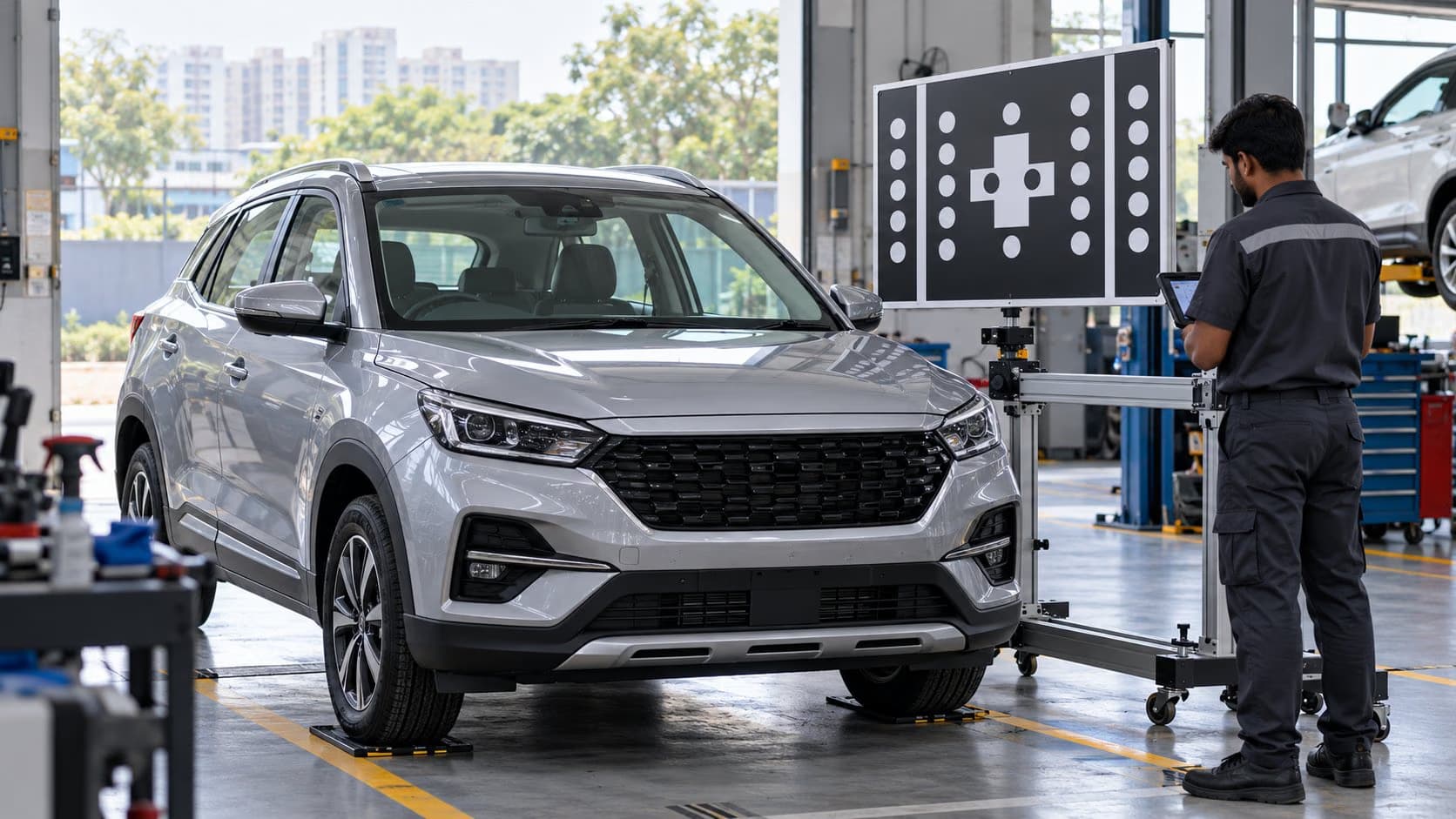
Calibration is a measurement task. Static procedures may need level ground, defined distances to a target, correct tyre pressures and a sound wheel alignment. Dynamic procedures may require clear lane markings, a particular speed and a fault-free drive. Ask what conditions the workshop needed for your car and whether they were achieved. A short drive around the block is not necessarily the manufacturer's required calibration.
The camera also needs a clean, unobstructed view. Adhesive, tint, a sticker or a poorly placed dashcam near the camera can undermine the installation. Photograph the original camera housing and windscreen markings before work. Afterwards check the camera cover, mirror mount, rain sensor, interior trim, wipers and screen sealing. A neat fit matters independently of the software result.
Bosch warns that a misaligned sensor may give false warnings or fail to react as intended. That does not mean every missed calibration will cause an immediate visible fault. It means the absence of a dashboard message cannot prove a camera is correctly aimed. Driver-assistance features remain aids even after a successful calibration; the driver still has to watch the road.
Include the work in the insurance estimate
If an insurance claim pays for the windscreen, ask the insurer and repairer to include manufacturer-required ADAS work in the estimate before approval. Confirm who pays for the diagnostic scan and calibration when the glass is fitted by one shop and calibrated by another. Keep the claim number, glass part number and calibration report together. A low glass quote can become misleading if this step is discovered only after installation.
Do not assume calibration is always covered or always excluded. The answer depends on the policy and claim circumstances. Ask for the written decision. If an insurer proposes a different glass specification, have a qualified repairer confirm whether it meets the vehicle maker's camera requirements.
What to collect before taking the keys
- An invoice identifying the glass part and vehicle.
- A work order stating whether the camera was removed, refitted and calibrated.
- The calibration or diagnostic record, including date and result.
- Confirmation of any remaining ADAS faults and the next action.
- A check of trim, sealing, wipers and rain-sensor operation.
A short drive can reveal wind noise or an obvious warning, but it cannot prove emergency braking will detect an obstacle at the intended moment. Never perform a dangerous test by approaching a car or pedestrian. The workshop record and manufacturer procedure are the evidence that the repair was completed.
If a warning appears later, record the exact message and conditions and return to the repairer promptly. Avoid relying on the affected feature until it has been checked. Calibration is not a lifetime guarantee: later impacts, alignment changes and component replacements may need another assessment.
One question cuts through most uncertainty at the counter: "For this VIN, what does the manufacturer require after replacing this exact windscreen, and will that step appear on my invoice?" Get the answer before the old glass is removed.