A car air conditioner can feel disappointing for several different reasons. Air from the vents may be weak; it may be strong but warm; or the cabin may cool normally on the highway and struggle while idling. These are not interchangeable complaints. In each case, paying immediately for an AC “gas top-up” skips the question that matters: which part of the system is failing, and what evidence supports that conclusion?
India's summer heat, dusty roads and stop-start traffic expose any weakness quickly. Before you take the car to a workshop, spend a few minutes recording the symptom. That short note can separate a simple filter inspection from a much more involved cooling-system diagnosis.
First distinguish airflow from cooling
Set the blower to a higher speed and feel the air coming from several vents. If the volume barely changes, investigate the cabin airflow path. If the volume is healthy but the air never becomes cool, the refrigerant circuit, condenser airflow or electrical controls may need checking. Compare left and right vents on a dual-zone system; a difference there is useful information for a technician.
A car parked in direct sun has to remove heat from seats, trim and glass as well as the air. It will not feel cool the instant you start it. Check that the AC compressor has been requested, temperature is set appropriately and the cabin recirculation setting suits the situation. For a hot parked cabin, briefly letting the hottest air escape before using recirculation can help. Then judge performance after a consistent period under similar weather and traffic conditions, rather than from a single unusually hot afternoon.
When a cabin filter is the likely starting point
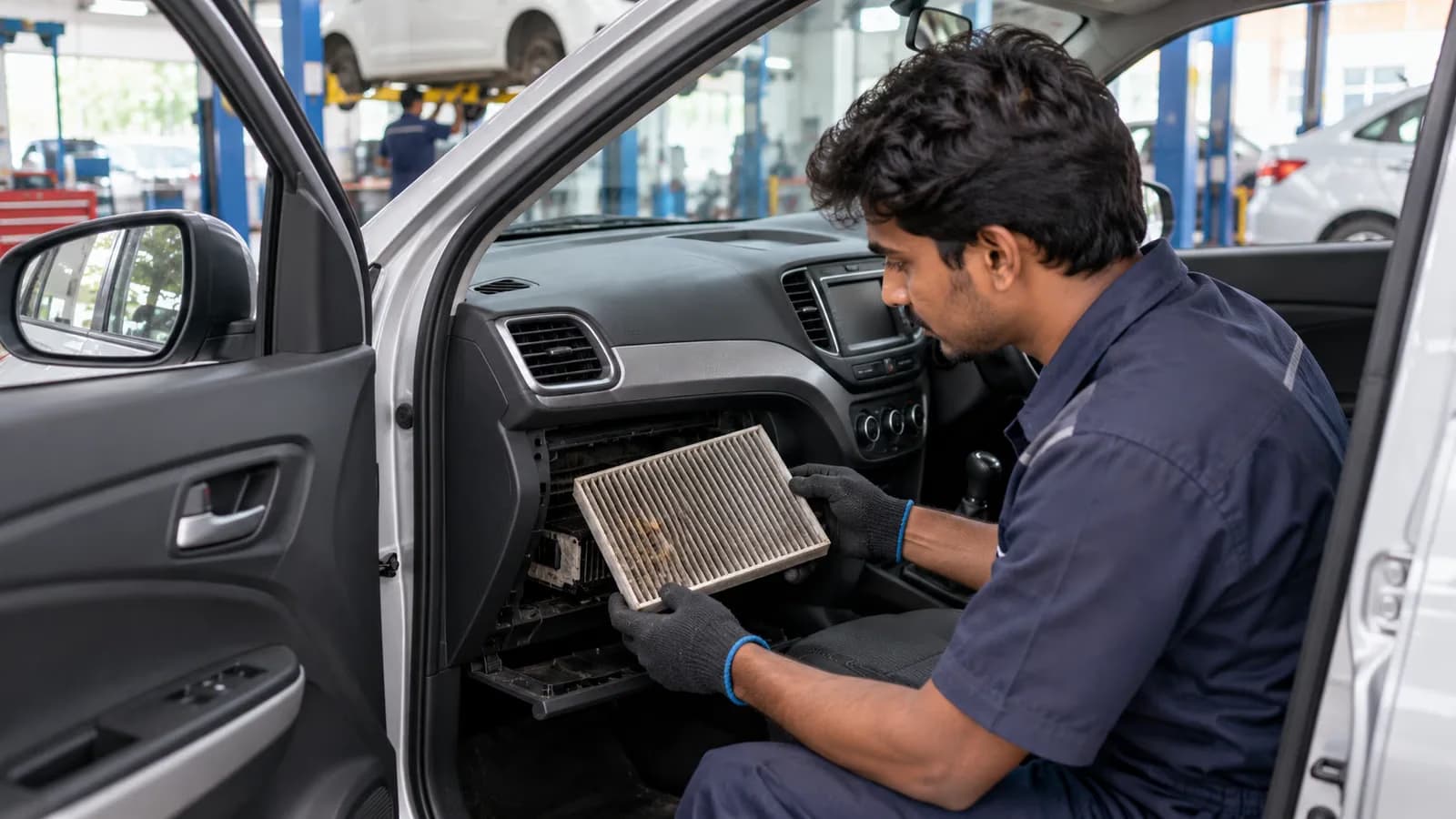
A loaded cabin air filter can restrict the amount of air reaching the vents. Dusty conditions can make inspection sensible earlier than a generic mileage interval. The filter also helps keep particles out of the cabin, though it is not a cure for every odour. Bosch Car Service India's AC guidance includes vent airflow, cabin-filter and evaporator-side checks when poor airflow is reported.
Ask to see the removed filter before approving a replacement. Check that the new part matches the car's specification and is installed in the correct direction. If the blower remains weak after replacement, the technician should look further rather than calling the job complete. An obstructed intake, fan problem or contamination elsewhere in the air path may be involved.
Strong air, little cooling: ask for a test
Refrigerant circulates in a closed circuit. If a workshop says it is low, ask how that was established and whether a leak has been investigated. A refill without finding a leak may offer only temporary comfort. Bosch's India service description explicitly mentions performance measurement, leak checks and appropriate recharge, not recharge as a universal first step. The correct refrigerant type and charge quantity are vehicle-specific; a technician should follow the manufacturer's procedure.
Cooling that improves while driving but worsens at a long signal can point towards condenser airflow or fan operation. That is not a certain diagnosis: ambient heat, compressor control and system charge also matter. A technician should reproduce the complaint, inspect relevant components and explain the measured finding. A service invoice saying only “AC gas” tells you little about why cooling failed.
Smells, moisture and noises deserve separate descriptions
A musty odour can arise when moisture and dirt collect around the evaporator or air passages. Replacing the cabin filter may help when the filter is dirty, but it does not necessarily clean the rest of the system. A sweet, chemical or burning smell is a different issue and should not be masked with perfume. Note whether the smell occurs only during the first minutes after startup or persists throughout the drive.
Water dripping outside beneath an operating AC can be ordinary condensation. Water accumulating inside the cabin, repeated unexplained fogging or a blocked drain needs inspection. Unusual compressor, belt or fan noise also deserves attention. Switch the system off if there is smoke, a burning smell or signs of an electrical fault, and arrange safe assistance rather than continuing to test it.
What to say at the workshop
- Describe the exact symptom: weak airflow, warm airflow, intermittent cooling or smell.
- Tell the technician whether it occurs at idle, in traffic, at speed, or only after a long hot soak.
- Ask for an initial performance and airflow check before any refrigerant work is approved.
- If a recharge is proposed, ask for the leak-check result, refrigerant specification and work recorded on the invoice.
- Ask to see any replaced filter or component and request an estimate separating diagnosis, parts and labour.
- After the repair, repeat a similar drive to confirm that the original symptom, not merely a dashboard warning, has gone.
For a recurring fault, keep the dates and invoices of prior refills. A pattern of rapidly weakening cooling is evidence that the underlying problem may remain. Repeatedly topping up an undiagnosed system is usually poor value.
What owners can safely do themselves
Check AC and recirculation settings, inspect the exterior grille for obvious blockage without dismantling anything, and note the last cabin-filter service. Keep the service schedule handy. Do not open the refrigerant circuit, mix refrigerants or use an unverified DIY charging kit. Proper handling and the correct equipment matter, and an incorrect charge may worsen performance or damage components.
The most useful AC service is an explanation you can understand: the symptom reproduced, the test that identified the cause, the repair made and how it was verified. A cool blast at collection time is encouraging, but a diagnosis that survives the next week of commuting is the real result.
Decision guide: what the pattern suggests
| What you notice | Useful first check | Do not assume |
|---|---|---|
| Little air at any fan speed | Filter, blower and air intake | Refrigerant is low |
| Strong but warm air | Cooling performance, controls and circuit diagnosis | A refill alone fixes it |
| Cold at speed, warm at idle | Condenser airflow and fan operation | The compressor must be replaced |
| Persistent musty smell | Filter, drain and evaporator hygiene | Perfume solves the source |
This table is a starting point for a conversation with a technician, not a diagnosis. Some cars use complex climate controls; an actuator fault may change airflow distribution without reducing total blower output. A fault code is useful only when it matches a reproduced symptom. Ask what the workshop observed rather than approving a part because a scanner printed its name.
How to compare a repair quote
Look for four separate elements: the diagnostic charge, any part required, refrigerant work if needed, and labour. If the quote includes “flushing”, “anti-bacterial treatment” or “gas refill”, ask exactly what each task addresses. An optional hygiene treatment should not be presented as the repair for a leaking condenser. Conversely, a real leak repair should include the procedure for restoring the correct refrigerant charge and confirming performance afterwards.
Ask whether the price is for the exact car and includes taxes. If a major component is proposed, request the observed evidence and whether other causes have been ruled out. A second opinion can be worthwhile when the estimate is large but the diagnosis consists only of “not cooling”. Keep the old invoice when a previous repair failed; it helps establish whether the symptom has recurred or a new fault has appeared.
Maintaining comfort without overstating maintenance
Follow the owner's schedule for cabin-filter service and avoid blocking vents with accessories or luggage. Keep the cabin recirculation flap and fan controls in working order. On a long drive, demisting the windscreen safely takes priority over maximising cooling; use the appropriate fresh-air and defog settings when visibility suffers. If you notice a gradual loss of cooling, book an inspection before the hottest travel period rather than waiting for a complete failure.
Regular use of the system may help keep seals and moving components in use, but no habit can prevent every leak or failure. Likewise, a car does not require refrigerant replacement merely because a calendar year has passed. Service should respond to the manufacturer's schedule, inspection results and actual symptoms. That disciplined distinction protects both comfort and the repair budget.