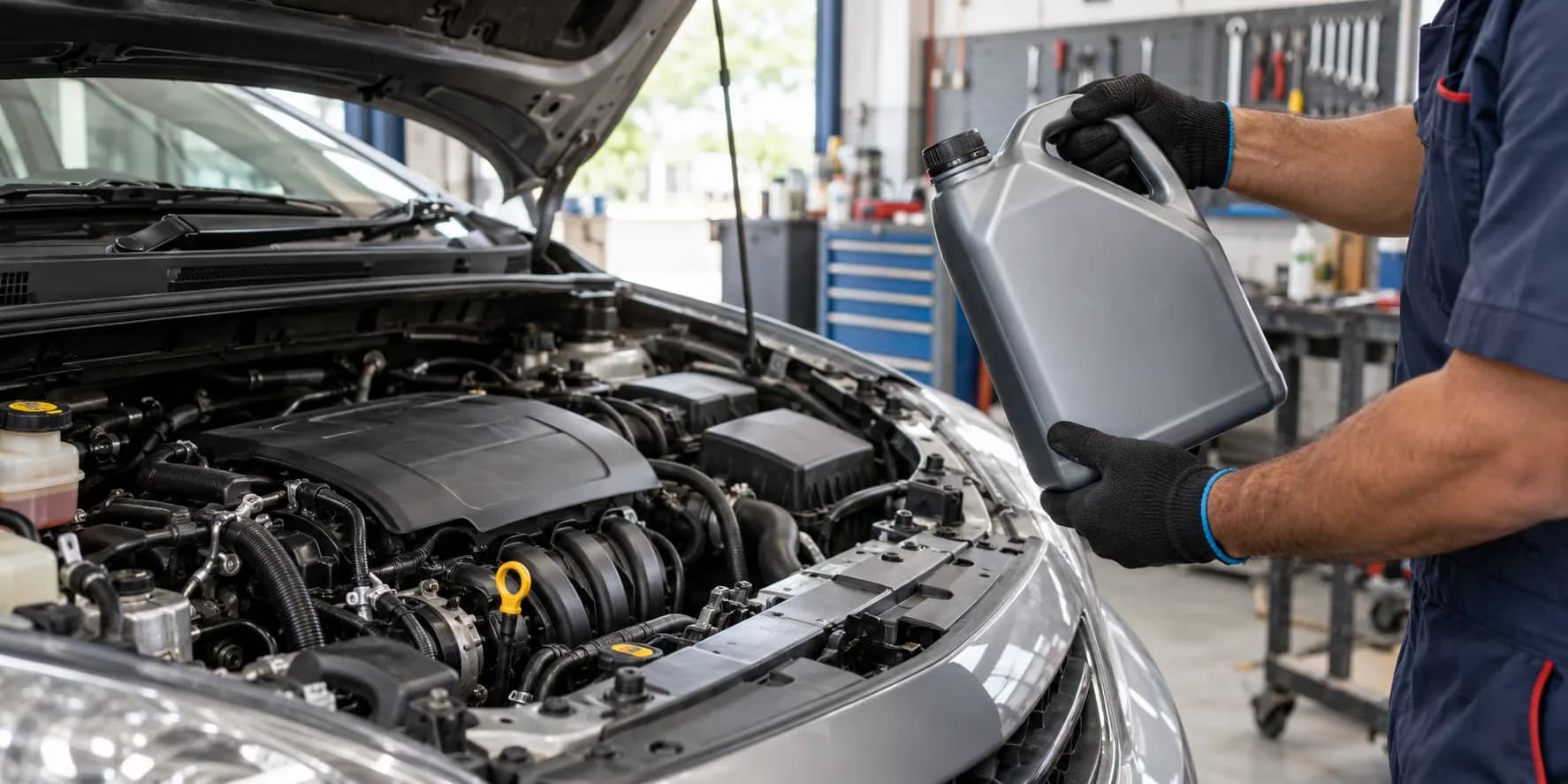
When a service adviser asks whether you want a "better" engine oil, the brand on the bottle is often the first thing discussed. It should be the last. The useful questions are whether the oil meets the viscosity and performance specification for your particular engine, whether it is genuine, and whether the workshop will fit a new filter and record exactly what went in. A costlier bottle with the wrong specification is not an upgrade.
Start with your car, not the shelf
Open the owner's manual for the exact engine and model year, then find the lubricants or maintenance section. Note the permitted SAE viscosity grades, the required quality or approval standard, the fill quantity and the service interval. Petrol and diesel versions of the same car can have different requirements. A turbocharged engine may have a more specific approval than a naturally aspirated one. A generic search result for the model name can easily describe the wrong powertrain or an older generation.
The American Petroleum Institute's oil-category guidance explicitly tells owners to consult the vehicle manual before using its category chart. Maruti Suzuki also directs owners to their manual for the recommended grade in its car-care guidance. The logic is simple: the carmaker knows the engine design, emissions hardware and service schedule that a general oil advertisement cannot account for.
What 0W-20 and 5W-30 actually tell you
Those characters are SAE viscosity grades, not a quality score. The number before W relates to low-temperature behaviour; W stands for winter. The number after the hyphen describes viscosity in the engine's operating-temperature test. A 0W-20 is not automatically a superior oil to a 5W-30, and a thicker oil is not automatically safer for an older engine. They serve different specifications. Changing grade on the assumption that Indian weather is hot can be a particularly expensive shortcut if the engine was designed for a lower-viscosity lubricant.
The grade alone is still not enough. Read the performance category and any manufacturer approval printed on the container. API, ACEA and individual carmakers use different specifications for different applications. The API motor-oil guide explains its certification marks and separates viscosity from performance. Match all of the requirements stated in your manual; do not assume that any oil sharing the same two numbers will do. If the manual lists several acceptable grades for different conditions, follow that chart rather than a workshop's rule of thumb.
How to handle an oil suggestion at the workshop
Ask for the proposed container before the job starts. Photograph the front and back label if you need time to compare it with the manual. Check the grade, the standard or approval, and whether the pack looks intact. Then ask for the oil name, grade, quantity and filter part number to be written on the job card or invoice. A good service adviser should be able to explain why a different oil is suitable for your engine without relying on "fully synthetic is always best" or "we use this in every car".
Base oil descriptions such as mineral, semi-synthetic and synthetic do not replace the required specification. Two products marketed as synthetic can still carry different approvals. Conversely, a correctly specified product from a less glamorous brand may meet the engine's needs better than an expensive product selected only by its marketing. If the workshop cannot show the specification, defer the change until you can check it.
Check the fill quantity against the manual, but allow for the service procedure and the fact that the exact drainable amount may differ from the nominal dry-engine capacity. More oil is not better. An overfilled engine can cause its own problems. Ask the technician to verify the level using the carmaker's stated procedure after the change. This matters especially where the vehicle has no conventional dipstick and uses an electronic level reading.
The interval matters as much as the bottle
Oil is not a fit-and-forget purchase. The change interval may be expressed in kilometres, time, or whichever comes first; severe-use schedules may differ. If a car spends much of its time doing short trips and idling in traffic, do not assume that low annual kilometres allow you to ignore the calendar. But do not accept an arbitrary shorter interval just because a shop prints a reminder sticker. The maintenance schedule for your engine is the starting point.
Replace the filter when the schedule calls for it and keep the invoice. For a used car with unclear service history, have a competent workshop establish a baseline rather than trusting an unverified previous sticker. If the oil-pressure warning lamp comes on while driving, treat it as a fault that needs immediate attention; it is not simply a reminder that an oil change is due. Safely stop and follow the manual's instructions. An oil-level reading and an oil-pressure warning are different pieces of information.
When the recommended oil is unavailable
Do not let a service slot force a guess. Check the manual for permitted alternatives and contact an authorised service centre or the manufacturer if the wording is unclear. The answer may depend on engine code, emissions equipment and ambient temperature. If a workshop proposes a substitution, ask it to identify the exact manual allowance or written manufacturer approval. Keeping a record of that advice is sensible for a car still under warranty.
For an emergency top-up, use only a product the manual permits and use the carmaker's level-check method. Do not pour in a random pack because the dashboard shows low oil; first establish whether it is a level warning, a pressure warning or a sensor fault. Never open a hot engine bay carelessly, and avoid overfilling. If the level keeps dropping, the useful next step is a leak or consumption diagnosis, not repeated top-ups without investigation.
Keep the right evidence after service
A sealed bottle shown at the counter is helpful, but it does not prove that the specified quantity reached the car. Ask for the empty container if the workshop's policy allows it, or at least for a line-item invoice identifying the exact product and amount. For oil dispensed from a bulk drum, request the drum's grade and approval details on the job card. Check that the service reminder has been reset according to the car's procedure without confusing that reset with the physical work.
If you service the car outside an authorised network, preserve the invoice and product specification alongside the dated odometer reading. This creates a useful history for a future buyer and helps resolve a dispute if engine trouble appears later. The record is especially valuable when two nearly identical variants use different engines. A vague invoice reading only "engine oil" makes a later verification much harder.
A five-minute check that prevents an expensive argument
Before approving the job, save the manual page on your phone and compare four things with the product offered: engine application, SAE grade, performance or OEM approval, and service interval. After the job, check that the invoice identifies the oil and filter, and that no warning lamp remains on. This is less about becoming a lubrication expert and more about making the service record specific enough to verify later.
There is no universal "best engine oil" for every Indian car. The right oil is the one that satisfies your exact engine's published requirements, comes from a trustworthy supply chain, and is changed correctly at the required interval. Once those boxes are ticked, brand and price become a sensible comparison rather than a gamble.