“What PSI should I keep?” sounds like a simple question, but a single number is often the wrong answer. The correct tyre pressure depends on the car, tyre size, axle load and sometimes the number of passengers or luggage. That is why the best source is usually already on the car: the tyre-information placard, commonly found around the driver's door opening, backed up by the owner manual.
Use the vehicle recommendation, not the tyre sidewall
The number moulded into a tyre sidewall is commonly a maximum rating, not the day-to-day pressure your vehicle should use. Copying a friend's setting, a petrol-pump suggestion or an online “universal” value can compromise ride, grip, tyre wear and efficiency. Find the specified cold pressure for your exact tyre size and follow the vehicle maker's load guidance where it is provided.
Why check tyres when they are cold?
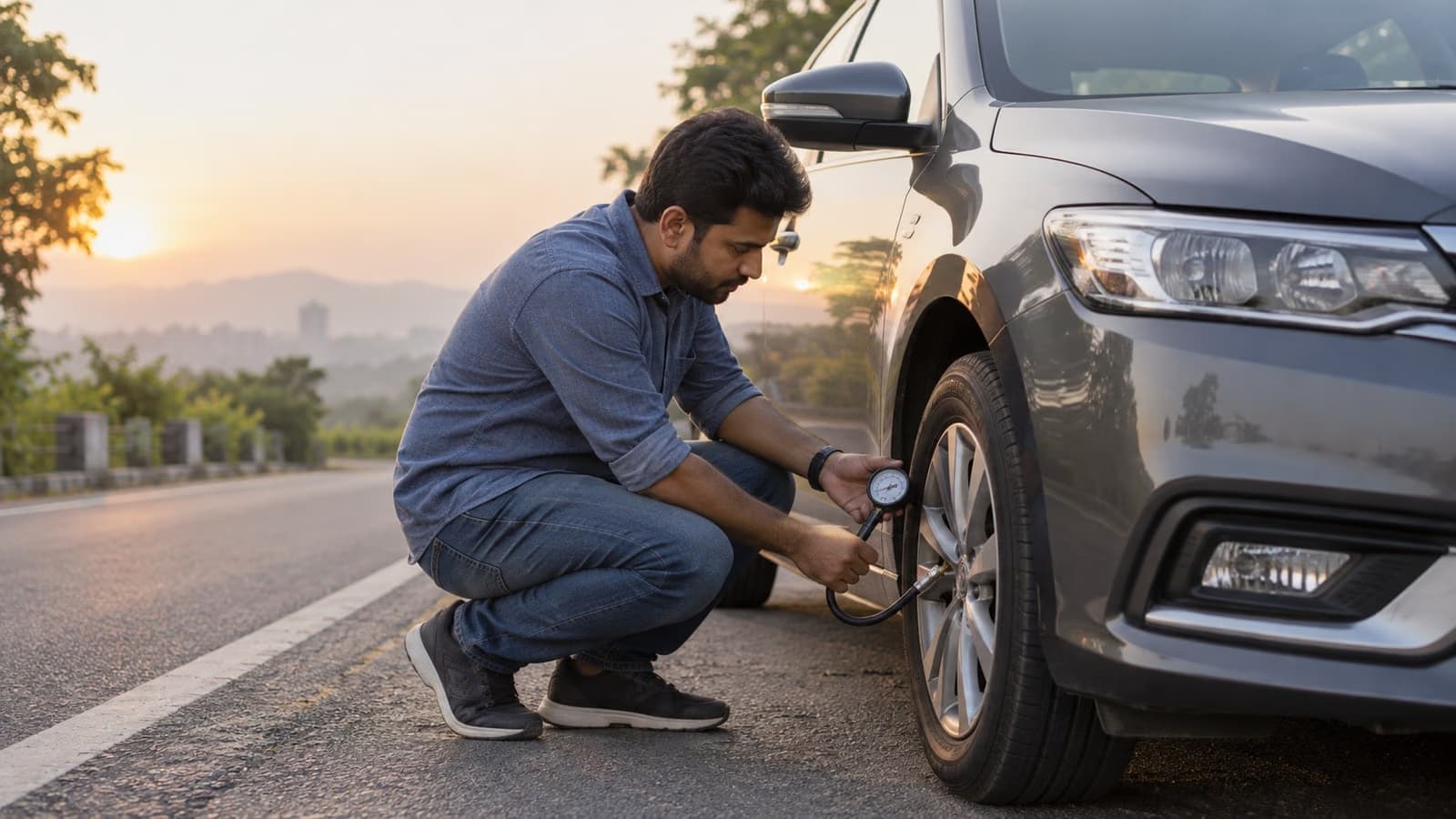
Driving warms the air inside a tyre and changes the measured pressure. Hyundai's owner-manual guidance advises checking each tyre, including the spare where provided, monthly when cold and setting it to the manufacturer's placard value. A cold reading usually means the car has been parked long enough to return close to ambient temperature, not that it has just rolled into a fuel station after a highway run.
| Situation | Best next step |
|---|---|
| Normal weekly use | Check pressure periodically when tyres are cold; monthly is a sensible baseline. |
| Long trip with full load | Read the placard or manual for any higher loaded-pressure recommendation. |
| Repeated low-pressure warning | Inspect for puncture, leak or wheel damage; do not keep topping up without diagnosis. |
| New tyres or a tyre-size change | Confirm the correct approved size and pressure with the manufacturer or authorised workshop. |
Pressure is only one tyre check
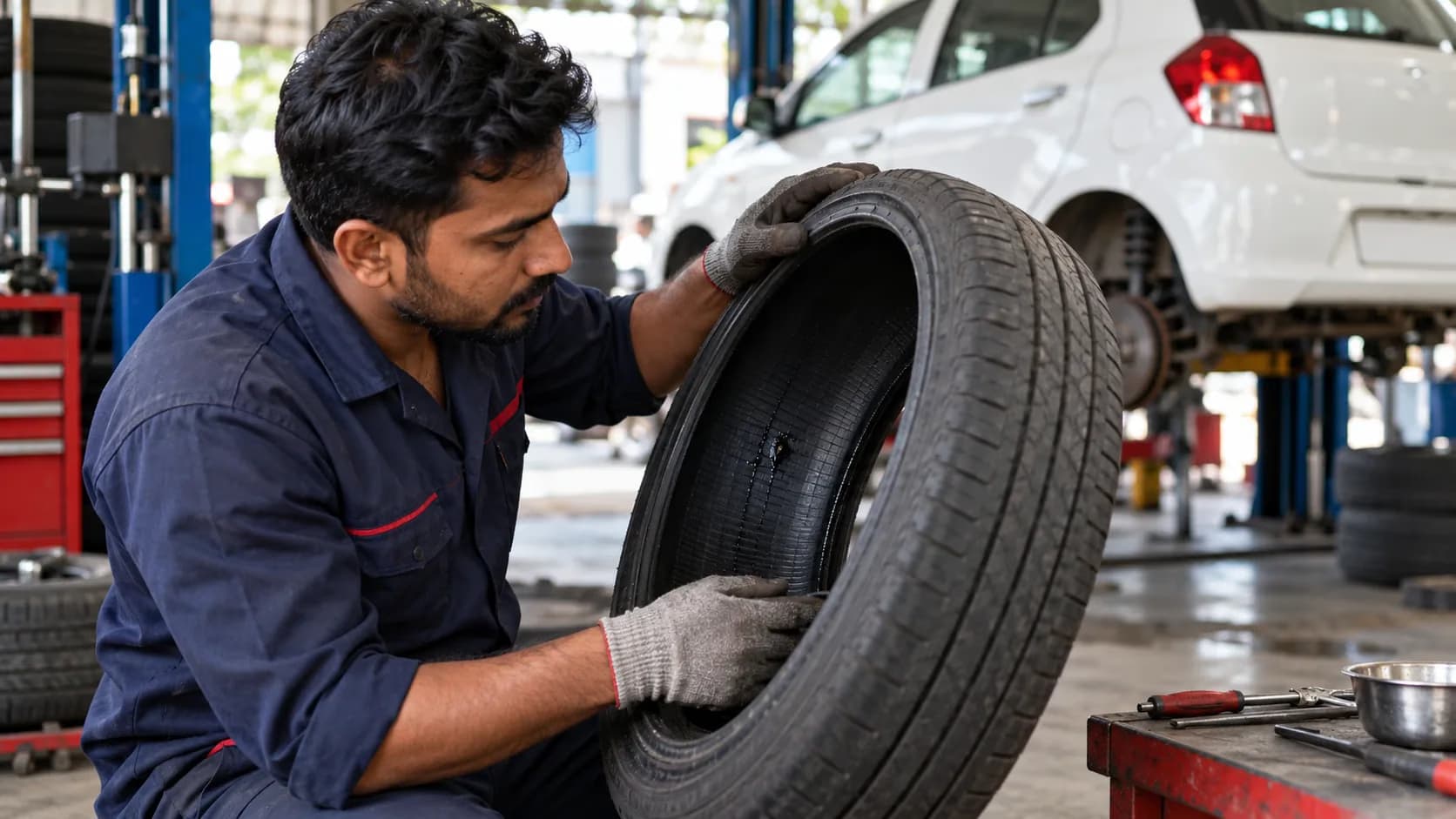
Walk around the car before a long trip. Look for cuts, bulges, unusual shoulder wear, a nail or screw, and damage to the valve cap or wheel rim. A pressure gauge cannot identify every problem. Likewise, a TPMS warning is useful but does not remove the need to inspect a tyre that looks damaged or keeps losing air.
Common mistakes to avoid
- Inflating every car to the same round PSI number.
- Using the sidewall maximum as the running pressure.
- Checking after a fast drive and treating the warm reading as a cold target.
- Ignoring the spare until the day it is needed.
- Over-inflating to chase mileage at the cost of ride and contact patch.
A small routine with a large payoff
Put a compact gauge in the glovebox, photograph the door placard, and check pressures before the next early-morning fuel stop or highway trip. It is a small habit that supports tyre life, predictable handling and the quiet confidence that the car is ready for the road.
Reference: Hyundai owner-manual tyre-pressure guidance.