A clear windscreen at the start of a trip can mist over after four people settle into the car on a wet morning. The instinctive move is often to wipe a small patch with a hand. It gives a few seconds of view and can leave another smear. The better answer is to find the source of the moisture and use the two glass-clearing systems for the jobs they were designed to do.
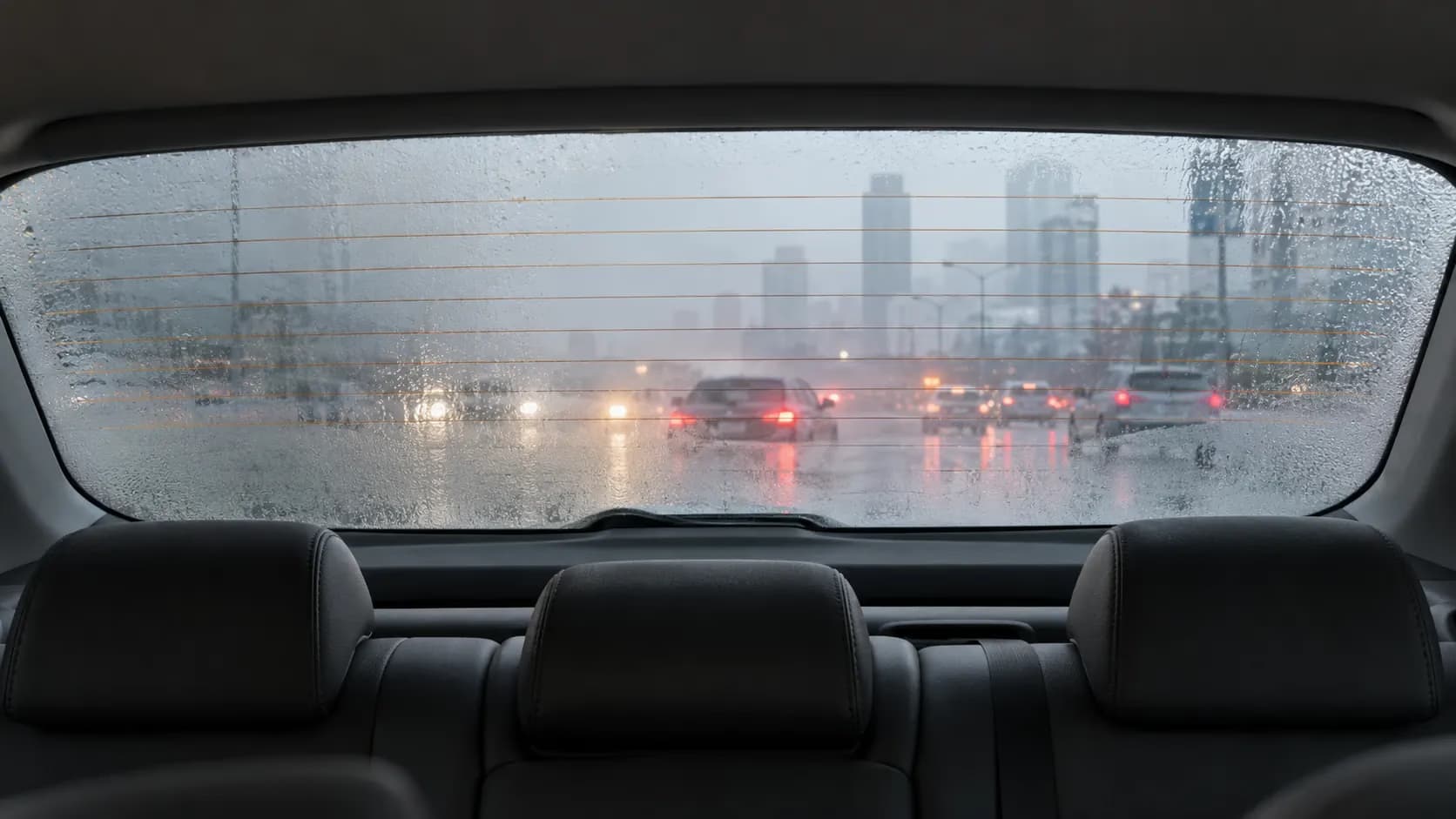
Front demisting uses the climate system and airflow directed at the windscreen. The rear defogger typically heats lines embedded in the rear glass. Hyundai's rear-window defroster instructions describe it as heating the glass to clear fog or frost. It does not blow dry air through the cabin. Pressing the rear button alone will not clear the front screen.
Clear the windscreen first
If visibility is poor, stop in a safe place before adjusting several controls. Select the front demist or defrost mode, turn on the fan and direct air to the windscreen. Many cars use the air conditioner to remove moisture even when you are not asking for cold air. Fresh-air intake rather than continuous recirculation often helps prevent a humid cabin from repeatedly fogging up. Hyundai's auto-defog explanation says its system can select fresh air, AC and defrost airflow when it detects moisture.
Follow the owner's manual rather than memorising a universal temperature setting. Conditions differ: condensation can form on the inner or outer face of the glass, and an air setting that clears one may not clear the other. Hyundai's Indian-market owner's guidance cautions that, in very humid weather, a large temperature difference can fog the outside of the windscreen. Confirm which side is wet before changing the climate setting.
What the rear button is doing
The rear defogger needs time to warm the glass. On some cars it also heats the outside mirrors; on others it does not. Check the equipment list and the specific manual. Avoid scraping or attaching stickers across the fine heating elements on the inside of the rear glass. If only one horizontal stripe remains misted while others clear, the heating grid may need inspection. If the entire window stays opaque, check that the function is operating under the car's required conditions before assuming the glass is faulty.
Do not confuse the rear-window wiper with the defogger. A wiper removes water from the outside; it cannot clear moisture on the inside surface. Likewise, the rear defogger can warm a fogged window but will not sweep away thick external rain or grime.
Why the fog keeps returning
Breathing adds moisture to a closed cabin, but persistent severe misting can have less obvious causes. Check for damp floor mats, wet umbrellas left inside, blocked or dirty cabin-air paths and water ingress around doors or the boot. Do not ignore a sweet smell or an unexplained wet carpet; have a workshop investigate rather than repeatedly masking the symptom with the fan. Clean glass also tends to be easier to see through when light catches it, though cleaning alone will not remove cabin moisture.
If you are comparing cars, try the controls while parked. Can you find the front demist button by feel? Is rear defogging distinct and clearly indicated? A climate screen with several taps may be workable once learned, but that is worth discovering before a rainy night drive, not during one.
A useful parked test is to identify which vents serve the windscreen and which buttons serve the rear glass and mirrors. Then work out how to leave recirculation and choose fresh air. Some automatic climate systems change these settings when demist is selected; others allow more manual adjustment. Knowing what the system has changed is more useful than memorising a single fan-speed recipe from someone else's car.
Condensation on the outside of the glass is a different clue. If the wipers clear the front screen briefly and mist returns, inspect the external surface and the air temperature setting. If a hand-wiped patch on the inside stays clear while the rest remains fogged, the cabin side is implicated. Make these checks while stopped. Trying to reach across the dashboard or rear window while driving creates its own hazard.
Persistent moisture deserves an ownership question too: did the car sit with wet mats after a wash, or does water enter after rain? A musty smell and damp carpeting warrant a careful inspection. Repeatedly blasting the demister may restore visibility for one journey without fixing a leak. The ventilation system and cabin filter also need the service attention specified by the manufacturer, particularly if airflow through the screen vents has become weak.
Keep the view through every window as clear as the weather allows, and pull over if visibility drops suddenly. The purpose of demisting is not to make the glass look neat; it is to restore a reliable view of the road and the vehicles around you.