A high-pitched noise when you touch the brake pedal deserves a look, but it does not automatically mean the car needs new discs, pads and fluid. The useful question at the service counter is more specific: which brake part has worn, how was it measured, and is the noise related to that wear? A photo and a thickness reading can be more valuable than an expensive line item labelled "complete brake job."
Brake work is safety-critical, so this is not a guide to postponing a necessary repair. It is a way to distinguish a proper diagnosis from replacing parts by guesswork. If the pedal feels abnormal, the vehicle pulls sharply under braking or stopping performance has changed, stop using it and have the system inspected promptly.
What the warning noise can mean
Many disc-brake pads contain a wear indicator that makes a high-pitched sound once the friction material reaches a specified point. Hyundai's owner's manual explains that the sound may come and go or appear with pedal application; it says to replace both left and right pads on the affected axle together. The exact construction varies by car, so consult your own manual.
Noise alone is not a complete diagnosis. Hyundai also notes in its Santro manual that some conditions or climates can cause a brief squeal on first or light brake application without indicating a fault. Surface rust after rain, contamination, a loose fitting or a worn pad can sound different but still require inspection if the noise persists. A grinding sound, especially with reduced braking, is more urgent.
Ask to see the wear, not just hear the verdict
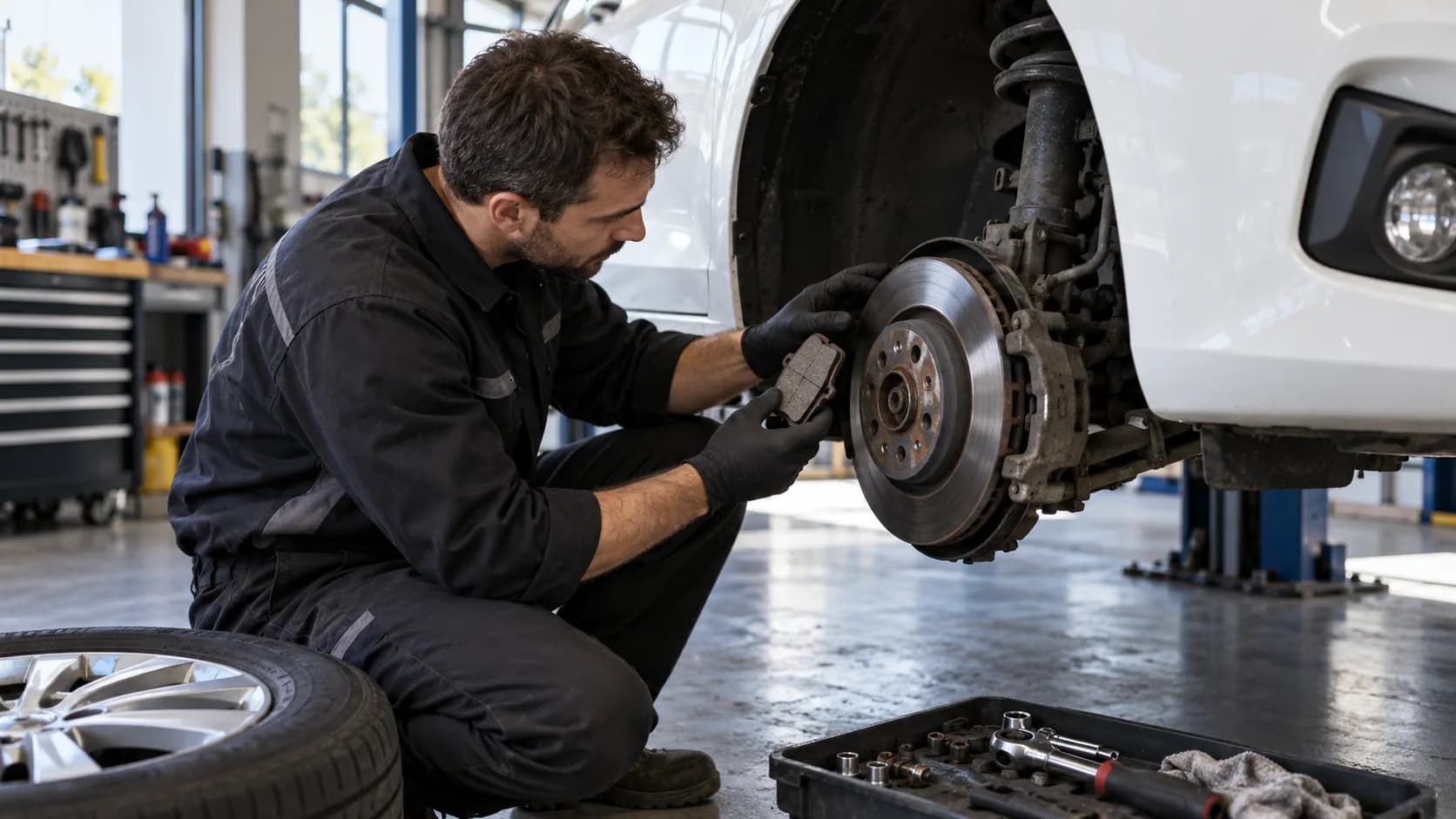
With the wheel removed, a technician can show the remaining friction material on inner and outer pads. The outer pad visible through a wheel is not necessarily the worst one. Uneven wear between inner and outer pads, or between sides, can point to a sticking caliper, slider or other issue that a fresh pad alone will not solve.
Request the measured pad thickness and compare it with the manufacturer's service limit. There is no single replacement mileage for all cars: traffic, load, driving style, terrain and brake design all matter. "It has done 30,000 km" is not a measurement. If a workshop cannot show why a part is at its limit, ask for a clearer inspection before authorising the work.
Remember that drum brakes on some rear axles have a different inspection method and may not have the same audible wear indicator. The service schedule and manual determine when those linings should be checked.
When does a disc or rotor need replacing?
A rotor has its own minimum thickness, typically specified by the manufacturer. Deep scoring, cracking, severe corrosion, excessive runout or thickness below the service limit may justify replacement. Ordinary polishing marks do not prove the rotor is unsafe. Nor is every brake vibration caused by a warped disc; tyre, wheel and suspension problems can also contribute.
Ask for the actual disc thickness and the applicable minimum. If resurfacing is suggested, the finished disc must still meet the minimum thickness and the manufacturer must permit that procedure. A very thin rotor should not be machined simply to save the purchase price of a replacement. Replace discs in the manner specified for that axle and model.
When a mechanic says "pads and discs are always changed together," ask whether that is the vehicle manufacturer's rule or a workshop preference. New pads can sometimes be fitted with serviceable discs, while badly damaged discs should not be paired with new pads and sent out. The answer depends on measured condition, not a universal bundle.
The quote needs more than one number
A useful estimate separates pads, discs, labour, brake fluid if required, and any additional hardware. It identifies front or rear axle and whether the parts are genuine, OEM-supplier or aftermarket. Check that the parts correspond to your exact variant and brake package. A small trim difference can bring a different disc diameter or caliper.
Brake pads are wear items rather than a blanket warranty repair. Hyundai India's warranty policy, for example, lists pads and linings among normal wear-and-tear exclusions. That does not mean a new-car owner must accept every premature failure as ordinary wear: a specific defect or uneven wear still deserves a diagnosis and documentation.
Ask whether caliper sliders, pins, boots and hoses were checked if wear is uneven. If a seized component is left untouched, the replacement pads may wear rapidly too. A workshop should explain the root cause rather than treating the pad as an isolated consumable.
Why brake fluid is a separate decision
Fluid change intervals are usually based on time or mileage in the maintenance schedule, not the thickness of the pads. Brake fluid absorbs moisture over time, so it can need replacement even when the pads have plenty of life left. Conversely, a pad replacement does not automatically prove fluid is due. Check the schedule for your model and the service history before approving a flush.
If a workshop has opened a hydraulic line, ask how the system was bled and tested. A soft pedal after brake work is not something to "drive in" casually. The final roadworthiness check should confirm pedal feel, absence of leaks, correct wheel installation and normal operation without warning lamps.
Collect evidence before leaving
Take a photograph of the worn parts beside the new ones if the workshop allows it. Keep the itemised invoice, part numbers and any measurements. Ask for a short explanation of any abnormal wear pattern. After collection, test the brakes gently in a safe place and follow the pad manufacturer's bedding instructions if supplied. Avoid aggressive braking solely to prove the repair works.
If noise persists after the repair, do not assume the new pads are defective or accept repeated replacements without diagnosis. Return with a description of when it occurs: first braking of the morning, light stops, reverse manoeuvres or after a long descent. That detail helps find the mechanism.
When a second opinion is worth the delay
A large brake estimate with no measurements, or a sudden proposal to replace all four discs on a car that brakes normally, is a good reason for another qualified inspection. Take the written quote and ask the second workshop to record pad thickness and disc condition independently. Do not delay if the car is grinding, leaking fluid or stopping poorly; in that case arrange safe transport rather than continuing to drive between workshops.
Different pad compounds can change dust and noise without being defective. If you are offered a cheaper alternative, ask whether it meets the vehicle specification and who stands behind the installation. A brake repair is not the place for an unidentified part in an unlabelled box.
On collection, note whether the steering wheel remains straight and the car brakes evenly under ordinary gentle application. A short, safe test with the workshop present is better than discovering a pull on the journey home. The brake pedal should not need pumping to feel firm. If anything feels wrong, return immediately and request a recheck before travelling at normal speed.
The best brake estimate is neither the cheapest nor the most comprehensive. It is the one that identifies a fault, shows the measurement or evidence behind each replacement, uses appropriate parts and leaves the car with verifiably normal braking.