Brake fluid is easy to forget because there is no engine-like noise or obvious odour announcing that it has aged. The fluid transmits force through the hydraulic braking system. Its condition matters even when the pedal feels ordinary in a short city drive. But a workshop's blanket instruction to change it at every visit deserves the same question as any other service item: what does this particular car's maintenance schedule require?
Why an interval matters
Many brake fluids can absorb moisture over time. That can reduce their boiling margin under repeated hard braking, and contamination can affect components. Bosch Car Service India's brake-fluid guidance advises replacement according to the vehicle manufacturer's maintenance schedule and notes that fluid may need changing even while the pedal feels normal. The exact interval and specification are vehicle-specific; do not transfer one model's schedule to another.
Check the owner manual or service booklet for your car and record the date of the last complete change, not merely a top-up. A car used infrequently can still reach a time-based interval. A car driven intensively on hilly roads may impose different demands from a low-mileage urban car. The manufacturer, not a generic online chart, should set the baseline.
A low reservoir level is a clue, not a top-up order
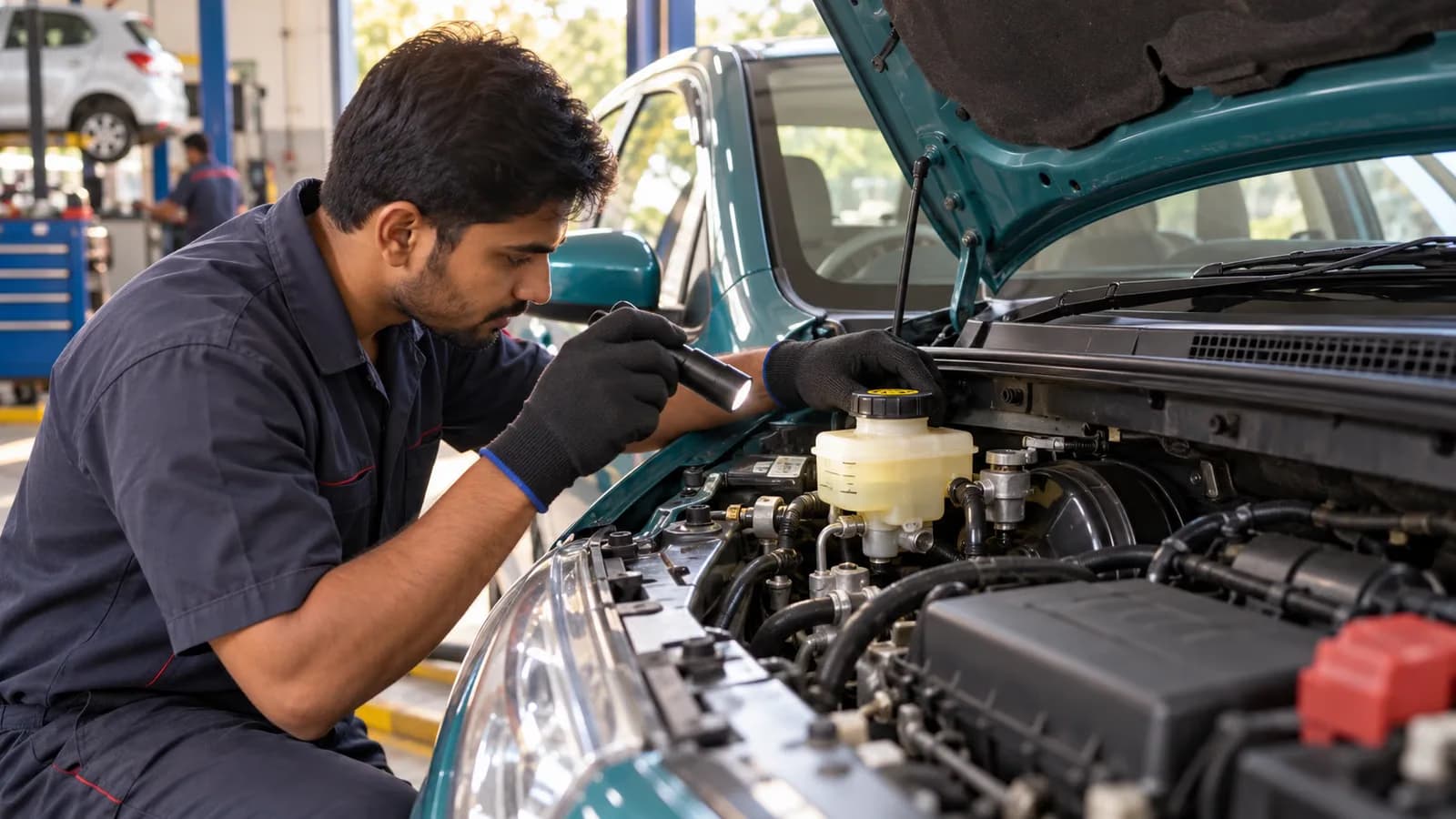
The level can change as brake pads wear, because the pistons sit further out. A sharp drop, visible leak or brake warning needs prompt professional investigation. Simply adding fluid without understanding the cause can hide a problem, and overfilling before pad replacement may create its own issue. Do not open the reservoir casually or allow dirt and water inside.
If the brake pedal suddenly feels soft, sinks unusually far, or braking performance changes, stop in a safe location and seek assistance. Do not drive around to “see whether it improves”. Brake system faults are a safety issue, and a remote description cannot identify the cause. The right response is inspection by a qualified technician.
What a proper service should explain
Ask the workshop which fluid specification the vehicle requires and how it will perform the change. Different brake-fluid grades are not interchangeable by guesswork. The technician should follow the manufacturer's bleeding procedure, including any model-specific steps for electronic braking systems. A receipt should identify the fluid used and the work performed. A quick syringe draw from the top of the reservoir is not automatically equivalent to changing fluid throughout the hydraulic circuit.
At the same visit, ask whether hoses, connections, calipers and the reservoir were checked for leaks or damage. If the car has a warning light or a pedal complaint, replacing fluid alone is not a substitute for diagnosis. You are paying for safe braking, not merely a fresh-looking reservoir.
Questions worth asking before approval
- What does my car's official schedule say about brake-fluid replacement?
- When was the last complete change documented, and was the fluid merely topped up since then?
- Which exact fluid specification will be used?
- If the level is low, were pad wear and leaks checked?
- Will the hydraulic circuit be bled using the procedure required for this model?
- How will the workshop verify pedal feel and braking after the job?
A visible test result, service history or clear schedule entry is a better basis for approval than an unqualified assertion that “fluid is old”. If a moisture test is offered, ask what it measures and how the result relates to the manufacturer's interval rather than treating a single handheld number as the entire diagnosis.
After the car is returned
Before joining traffic, press the brake pedal at a standstill and check that it feels consistent. Check that no brake warning remains and that the service record lists the work. Then make a cautious low-speed check in a safe place. Any unusual pedal travel, pulling under braking or leakage calls for immediate reassessment. Do not continue a long trip with uncertain braking because the invoice says the service is complete.
Brake fluid is not a glamorous maintenance item. That is exactly why the process should be disciplined: follow the model's schedule, investigate low level or symptoms, use the correct specification, and verify the system afterwards. Those four steps are more valuable than either neglecting the fluid indefinitely or paying for an unexplained change at every visit.
What the dashboard warning can and cannot tell you
A brake warning lamp can indicate several conditions depending on the car, including parking-brake status, low fluid or a system fault. An ABS warning is a related but different signal. Consult the owner's manual for your exact icons rather than assuming that any red or amber symbol merely means “service due”. If braking effort feels altered, stop safely and arrange assistance even if the warning disappears on restart.
Fluid colour seen through a reservoir is not a complete quality test. Age, moisture content and the manufacturer's interval matter. At the same time, an unexplained low level must not be dismissed simply because the fluid looks clean. A technician should inspect pad wear and hydraulic integrity.
Common service misunderstandings
“Topped up” and “changed” should be separate entries in your maintenance record. A top-up may restore the reservoir to the marked level but leaves most old fluid in the circuit. A complete service, performed to the vehicle's procedure, replaces fluid through the relevant hydraulic paths and removes air. If a bill claims a full change yet no bleeding or verification is described, ask for clarification before assuming the job was completed.
Adding a higher-numbered fluid designation without checking compatibility is not a performance upgrade. Specifications concern chemistry, viscosity and system design as well as boiling characteristics. Use the fluid specified in the owner's manual or by an authorised technical source for that vehicle. A garage should be able to show the sealed container used and its label.
If your car is newer or electric
Regenerative braking in a hybrid or EV does not eliminate the conventional hydraulic brake system. The car may use friction brakes less often in some conditions, but it still needs inspection and fluid service according to the manufacturer's schedule. Some electrified vehicles also have special electronic brake procedures. The technician should know and follow them rather than using a generic bleeding method.
For a new car under warranty, retain the service record and follow the prescribed interval. If an independent workshop performs the job, obtain an itemised invoice and the exact specification used. This is especially helpful if a later braking concern needs investigation.
Simple owner record
Keep the fluid-change date, odometer reading, workshop, fluid specification and invoice together. At every periodic inspection, note any reported level change or leak finding. This small record prevents the “we may have changed it last year” uncertainty that leads either to neglect or unnecessary repeat billing. It also gives the next technician a much clearer starting point.
What not to do between services
Do not mix an unidentified bottle into the reservoir, use fluid from a container left open for a long time, or treat a warning light as a request for a casual top-up. Brake fluid can damage painted surfaces, and contamination in the hydraulic system is costly to correct. If a level check is needed, follow the owner's manual and leave any uncertainty to a qualified workshop. A clear service history is far safer than improvising with an unfamiliar fluid beside the road.