A used strong hybrid may drive away quietly on electric power and return excellent city mileage, but a short test loop cannot tell you everything about the battery and powertrain. It also does not need a home charger, which makes it a different purchase from a used battery-electric car. The checks should cover the petrol engine, electric drive, high-voltage system, ordinary 12-volt system and the warranty attached to the exact VIN.
That sounds complicated only when it is treated as a mysterious "hybrid health" score. A more useful approach is to collect documents, observe the car through several driving conditions and have the manufacturer's service network inspect any warnings. The seller should not have to promise an impossible battery percentage to make the car attractive.
Confirm it is the strong-hybrid variant
Some models are sold with mild-hybrid, strong-hybrid and conventional petrol powertrains under similar names. The strong hybrid can use electric drive for short periods and recover energy during slowing, while a mild-hybrid system generally serves a different supporting role. Check the VIN, variant code, registration description and original invoice before valuing the car as a strong hybrid.
Maruti Suzuki's strong-hybrid explanation describes an engine, electric motor and battery working together, with no external plug required for charging. That does not mean the battery can be ignored; it means charging behaviour is managed by the vehicle rather than a home wallbox.
Read the battery warranty by VIN
High-voltage battery coverage is often separate from basic vehicle coverage. Toyota India's current warranty page lists a hybrid-electric vehicle battery term of eight years or 1,60,000 km, with qualifications for some usage categories. Maruti Suzuki's Grand Vitara launch information described an eight-year/1,60,000-km lithium-ion battery warranty for that strong-hybrid model. These examples are not a blanket warranty for every used hybrid.
Ask the manufacturer or authorised dealer for the actual warranty start date, remaining time and kilometres, exclusions, service requirements and whether cover continues for a subsequent owner. Do not confuse a battery warranty with a promise that every hybrid component is covered for the same duration. If the battery was replaced, obtain the repair order and ask what warranty applies to the replacement.
What the test drive can and cannot prove
Drive in normal city traffic and on a faster road if it is safe and permitted. Observe smooth transitions between engine and electric assistance, normal response to acceleration and braking, and the absence of warning lamps. A hybrid's engine may start and stop frequently by design; that alone is not a fault. Also test the air conditioner and other electrical loads, since a seller's brief low-load demonstration may not reflect your daily use.
Do not force the car into electric mode or deliberately run its battery down to "test capacity." The system decides how to use energy based on conditions. Dashboard battery bars are a state-of-charge display, not a certificate of long-term battery health. The driving-mode logic may vary by model. If an EV mode button exists, follow the manual for what it permits.
Have an authorised diagnostic check
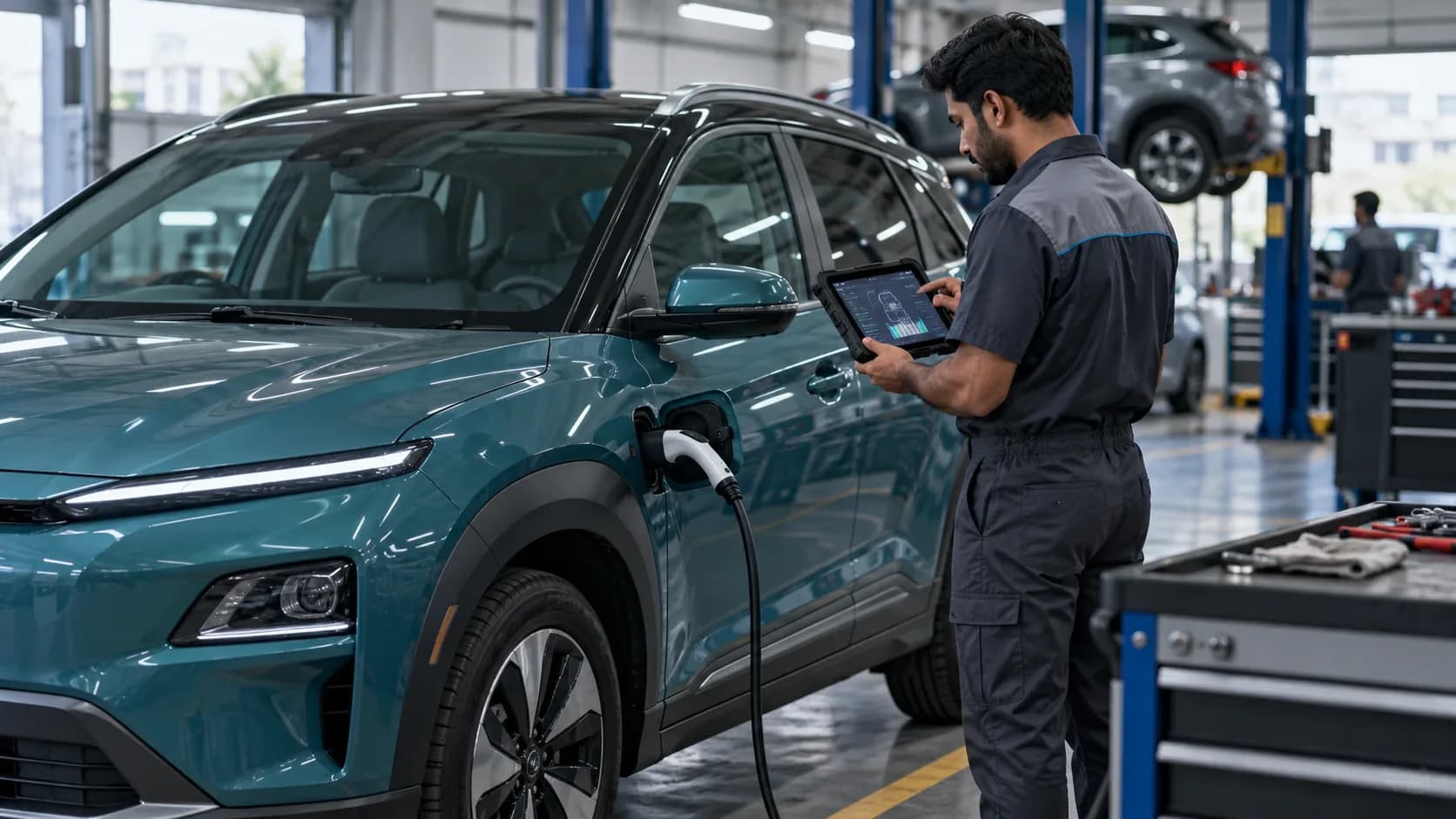
Request a pre-purchase inspection that includes the hybrid control system, high-voltage battery and any stored fault codes, not just an oil and brake check. Ask for a dated report tied to the VIN. The scope of available battery information varies by manufacturer; a generic scanner's "all clear" is less persuasive than a model-specific service check. If the seller will not allow this, price in the uncertainty or choose another vehicle.
High-voltage parts are not a DIY inspection area. Orange cables, battery covers and interlocks should be left to trained personnel. A visible underbody impact, water ingress or tampered casing is a reason for professional assessment, not a quick reassurance that the car still drives. Check for recall or service campaigns through the authorised network.
Do not forget the petrol-car costs
A strong hybrid still has an engine, fluids, filters, exhaust system and conventional wear items. Check the scheduled service history, tyre condition, brakes, body repairs and 12-volt battery. A long period of low mileage may still leave time-based maintenance due. Compare service invoices with the exact model's schedule rather than assuming an efficient hybrid has almost no maintenance.
The fuel-economy advantage also depends on your route. A car used mostly in urban stop-start traffic may show a different benefit from one driven steadily on the highway. Do not accept a seller's dashboard average as your guaranteed outcome. Note the distance, road type and recent driving period behind any displayed number, then compare the asking price with your likely fuel savings.
Compare the complete ownership proposition
Record the price premium over a similar used petrol variant, remaining battery warranty, routine maintenance, insurance and likely annual kilometres. A used strong hybrid can make sense without home charging, but its purchase price must still work for your use. If a battery warranty is near expiry or the service record is thin, a large claimed fuel saving should not erase that risk.
Hybrid behaviour is not a battery-health percentage
The instrument cluster may show energy flowing from engine to battery, from battery to wheels and back under regeneration. It is a useful way to understand normal operation, but a short animation cannot quantify remaining battery capacity. Ambient temperature, air-conditioning demand and the system's control strategy change when the petrol engine runs. Ask the service centre what diagnostic evidence it can provide rather than inferring battery condition from a few electric-only metres.
Pay attention to warning history. A past warning that was repaired with an invoice is different from a currently illuminated hybrid-system message. If a seller says the warning appeared only after the 12-volt battery went flat, request the diagnostic report and the repair outcome. The claim may be true, but a cleared warning without a recorded cause is not strong evidence.
Check the practical packaging
The hybrid battery may change boot-floor height or spare-wheel provision compared with a petrol version. Test your own luggage and check the supplied emergency tyre equipment rather than relying on the model's advertised boot capacity. Also confirm the exact variant's insurance quote and replacement tyre specification. Those ordinary ownership details can affect value as much as a claimed fuel-economy advantage.
Finally, do not let a battery warranty hide a poor overall car. A healthy hybrid battery is little comfort if the suspension, body or cooling system needs immediate costly work. Assess the complete vehicle and the price together.
For a household deciding between a used strong hybrid and a battery-electric car, charging access is a genuine dividing line. The hybrid refuels like a petrol car and does not need a wallbox, but it still burns petrol. The EV may have lower day-to-day energy costs where reliable charging exists, but it requires a different route and charging check. Avoid comparing one seller's best dashboard mileage with another vehicle's brochure number; calculate your own annual use instead.
The sensible purchase is one with a verified variant, documented warranty, clean hybrid-system inspection and a price that reflects the car's age and condition. Quiet electric running on a five-minute test drive is pleasant; it is not the whole due diligence.