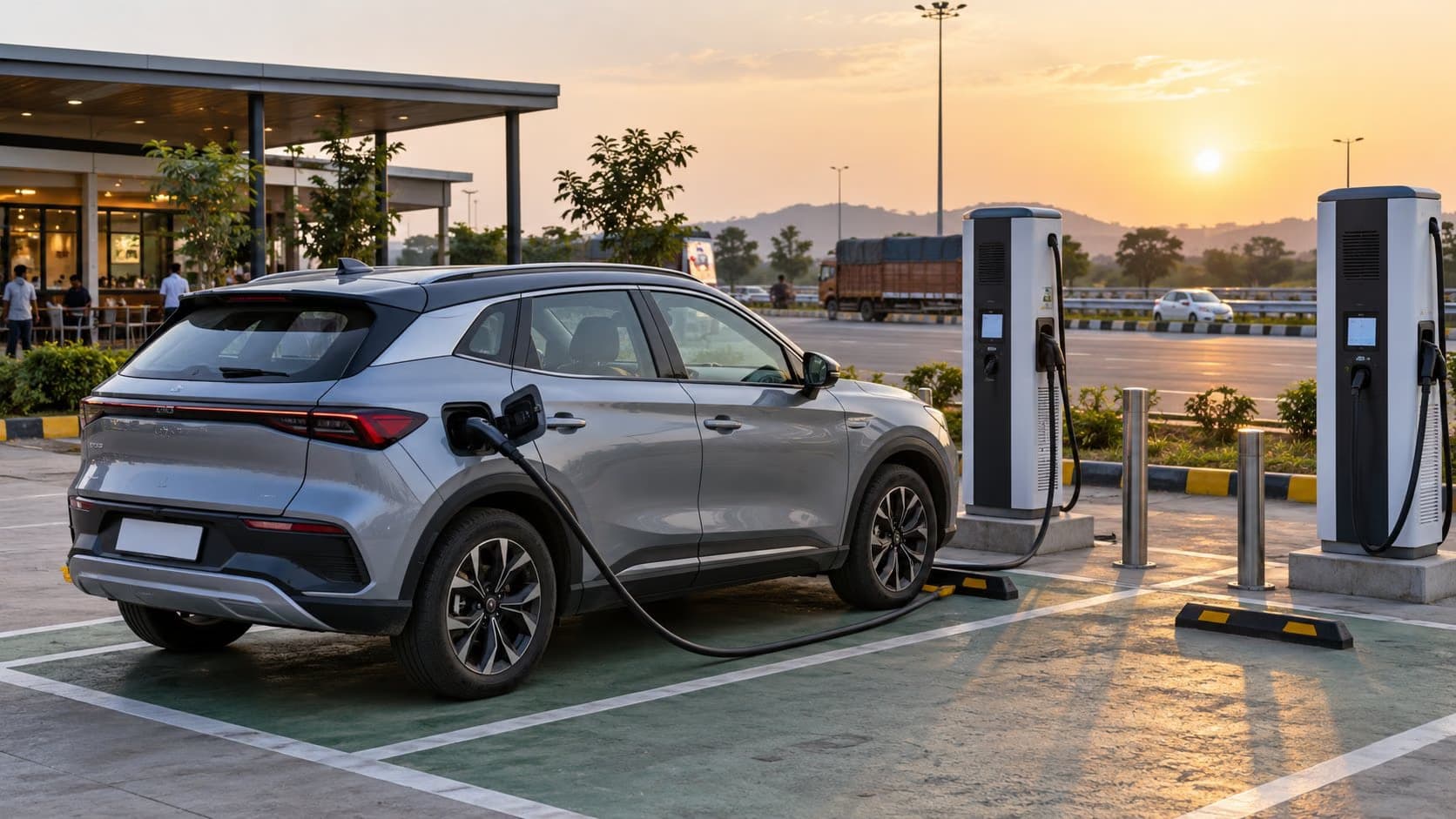
A used electric car can show a full battery icon and still deliver less usable energy than it did when new. That is why a seller's photograph of "100% charge" is not a battery-health report. Charge level tells you how full the pack is at that moment; state of health tries to describe its remaining capability relative to a reference when new. A careful buyer needs the report's definition, date and method, not just a reassuring percentage on a sales listing.
This is particularly important in India, where an EV may have had years of fast charging, heat exposure, long storage periods or intensive commercial use. None of those facts alone proves a pack is damaged. They are reasons to inspect the actual vehicle and its records, not to assume a battery verdict from mileage or age.
What a state-of-health number means
Different manufacturers and diagnostic systems may calculate state of health differently. Some report usable energy, others capacity estimates or a pass/fail threshold. BMW's battery information defines its state-of-certified-energy measure as the momentarily available energy compared with the maximum usable energy of a new vehicle. That is a specific definition for a specific system; do not assume every third-party scan uses the same baseline.
The displayed percentage is not a promise of identical range in every season. Speed, tyres, load, air conditioning, elevation and driving style affect energy use. Nor is one short test drive enough to calculate the pack's true usable energy. You can use a test drive to spot obvious warnings and charging problems, but the formal battery assessment belongs with a qualified diagnostic process.
Ask for a dated, vehicle-specific report
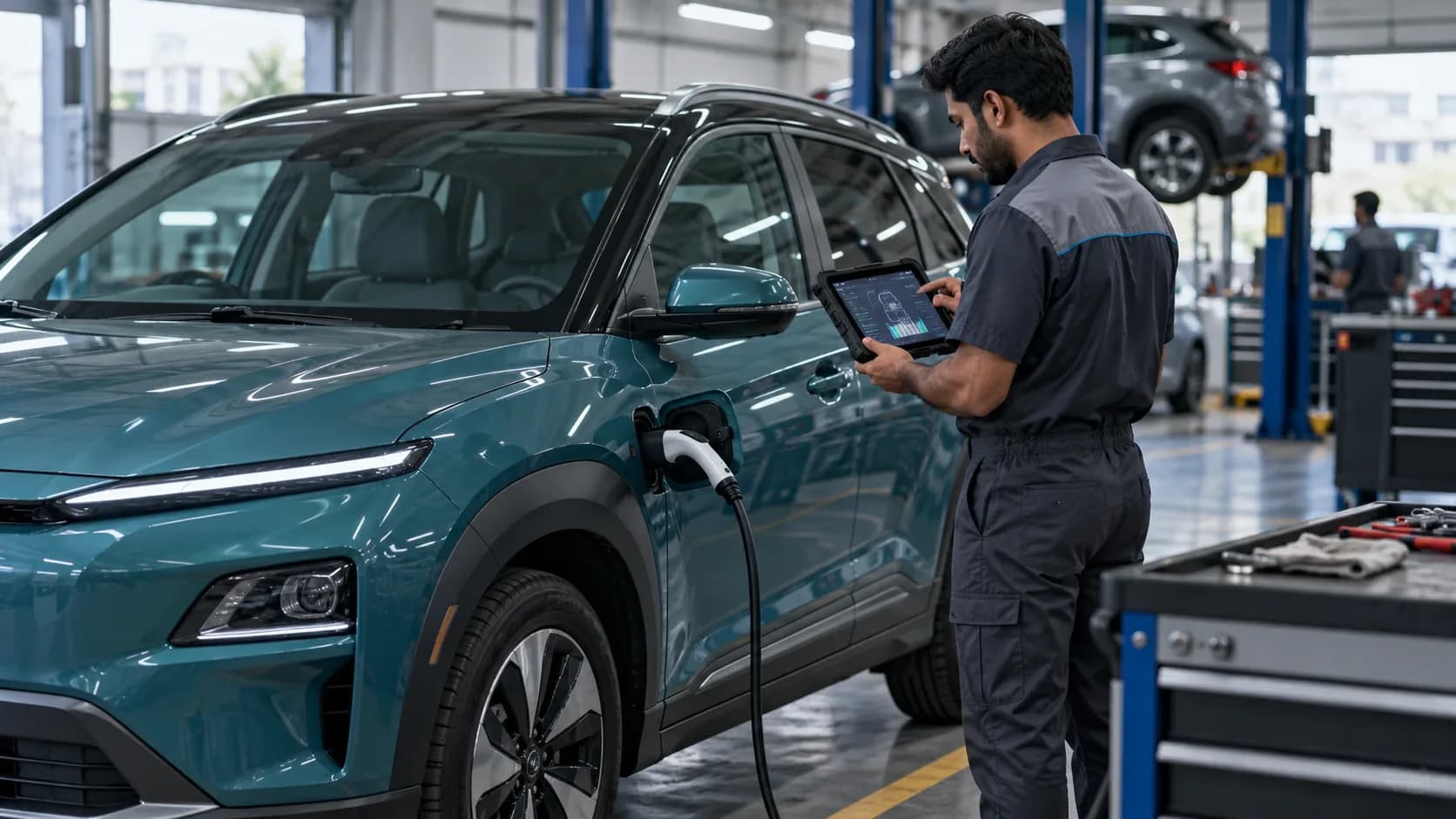
Before paying a booking amount, ask whether an authorised service centre can provide a battery-health assessment linked to the VIN. Obtain the date, odometer reading and the method or tool used. Is it a manufacturer diagnostic result, a third-party estimate or a dealer's handwritten claim? Are there current fault codes, battery-management warnings or previous high-voltage repairs? A percentage without those details has limited value.
Compare the VIN on the report with the car's documents and chassis plate. Check the service history for battery or charging-system work, any campaigns and software updates. If the battery or module was replaced, ask for the invoice and the exact warranty position. Replacement may be good news, but it should not be hidden or assumed to restart every warranty term.
Read the battery warranty, not the sales pitch
Battery warranty conditions differ by manufacturer, model, ownership type and date. For example, Mahindra's BE 6 warranty guide specifies a minimum 70% state-of-health threshold under its stated battery-warranty conditions. That is not a universal guarantee for all EVs. The document also defines the relevant warranty period, service requirements and exclusions; a buyer must read the terms applicable to the actual car.
Get the original purchase invoice and warranty booklet. Confirm whether the high-voltage battery warranty transfers to subsequent owners, how claims are tested, and whether coverage depends on authorised servicing or records. Ask the manufacturer or dealer to confirm the remaining term using the VIN in writing. An advertisement saying "battery under warranty" is not a substitute.
Separate range display from condition
The predicted range on the dashboard is usually influenced by recent use and conditions. A car driven gently around town may display a high number; a motorway drive or hot day can pull it down. A screenshot at 100% charge does not establish pack condition. More useful is a consistent set of observations: actual energy added during charging where measurable, starting and ending state of charge, distance, ambient conditions and the way the car was driven. Even then, a brief session cannot replace a controlled diagnostic test.
Ask to see normal AC charging, and if the vehicle supports it, an appropriate DC charging session where practical. Check that the port, cable lock and charge communication behave normally and that the vehicle does not show warnings. Avoid using a single peak-power figure from a charging app as a health test; charging speed depends on pack temperature, state of charge and the charger as well as the car.
Inspect the ordinary car too
EV-specific anxiety can distract from familiar used-car costs. Check tyres, brakes, suspension, body repairs, accident history and water ingress. The underbody and battery enclosure deserve a professional inspection for damage, corrosion or signs of impact. Do not touch high-voltage cables or dismantle protective panels yourself. A specialist should decide whether a mark is cosmetic or requires further inspection.
The 12-volt battery can also cause starting or electronics problems on an EV, but it is separate from the traction pack. A flat auxiliary battery should not be reported as a failed high-voltage pack, and a healthy auxiliary battery proves nothing about traction capacity.
When to walk away
Be cautious if the seller will not allow an independent inspection, the diagnostic report has no VIN or date, the car shows active high-voltage warnings, or the service history does not reconcile with a claimed battery replacement. A low price can be rational if a known issue is disclosed and priced accurately; an unknown issue is different.
What to compare between two used EVs
Two reports that both say 90% may not be directly comparable if they come from different tools or different battery generations. Compare like with like: same model, battery version, reporting method and ideally a similar service history. Ask whether the diagnostic was performed after a recent software update, and whether the report is a calculated estimate that may change after normal use and recalibration. A seller who can explain these limits is more credible than one promising a permanent range figure.
Work out your own route before paying. If your regular day needs a substantial share of the car's usable range, leave a sensible margin for air conditioning, detours and ageing rather than using the dashboard's best-case estimate. Confirm where you can charge reliably and what connector the car uses. Even an excellent battery-health report cannot make an unsuitable charging routine convenient.
Price the uncertainty honestly
A seller may say the pack is "like new" because the car still covers their commute. That anecdote may be genuine, but their commute may be much shorter than yours. Use a documented diagnostic and your own travel pattern to estimate whether the vehicle is suitable. If the seller will not permit a battery check, do not translate that absence of evidence into an assumption of excellent health. Either price in the uncertainty or choose a car with clearer records.
Ask the workshop whether the reported figure concerns the full pack or only what the battery-management system currently permits. Software, temperature and calibration can influence a displayed number. A professional should explain the method and limits in plain language; a bare screenshot is not a certificate.
Do not demand a magic number in isolation. A battery-health report is one piece of evidence alongside warranty status, charging behaviour, service records and the rest of the car. The right purchase question is whether the remaining capability and risk fit your daily route and the price you are paying, with evidence strong enough to make that judgment.