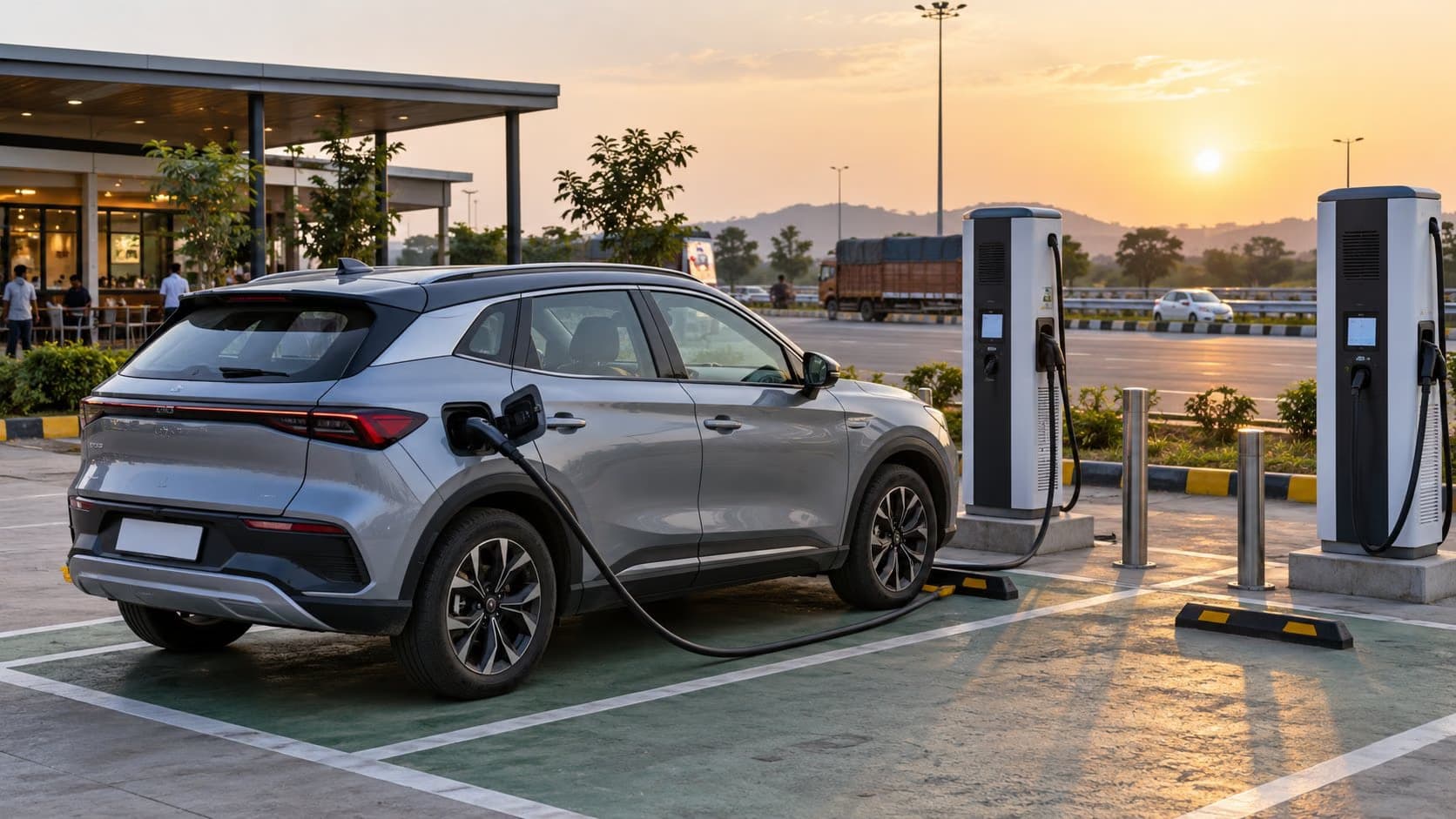
At a public charger, the number that catches your eye is usually the price per kWh. It may not be the number that explains the final bill. A charging stop can involve electricity, a network or session charge, parking at the site and a fee if the car remains connected after the session ends. The combination varies by operator and location. A cheaper-looking charger can therefore cost more once you account for the stop as a whole.
This is a practical issue for a family on a highway break, not an argument against public charging. The fix is to read the tariff screen before pressing Start, check the parking rules at the venue and return to the car when charging is complete. Tata Power's station-selection guide explicitly notes that some sites levy idle fees and that operators may use different pricing units. It is a reason to check the particular station rather than rely on a national average.
Read the tariff as separate lines
Start with the energy charge. A per-kWh tariff bills the electricity measured for the session. A per-minute tariff makes time important, especially if your car accepts power slowly or the charger reduces output. Some networks may also apply a session or service charge, and applicable taxes can affect the total. The operator app should disclose the current basis before you commit. Save a screenshot if you are charging at an unfamiliar station.
Next look for parking. A charger inside a mall, hotel, airport or commercial car park can sit behind a separate parking gate. The charger operator and property owner may have different billing systems. A charging receipt may show only the energy cost while the parking ticket is paid at exit. Ask whether parking is waived or validated for charging customers, and what evidence is needed to obtain that benefit.
Finally, check for an idle or overstay rule. An idle fee is generally meant to free a charging bay once a session has finished; it is not another way of selling electricity. The trigger, grace period, rate and whether disconnection alone is enough can differ. Some sites expect the vehicle to leave the bay, not merely unplug. Read the current operator terms shown for that station. Do not assume a grace period from an article about another network.
A simple example without a misleading 'typical' rate
Suppose an operator charges by energy and you add 20 kWh. The energy part is 20 multiplied by the displayed per-kWh rate. If the venue also charges a fixed parking amount, add that separately. If the app shows a session fee, include it. If you return late after charging stops and an idle charge applies, add the minutes beyond the permitted period according to the actual rule. Taxes may be included in displayed prices or shown separately. The arithmetic is easy; finding every line of the tariff is the real work.
Do not estimate the bill by multiplying your car's advertised battery capacity by the charger rate. You rarely arrive at zero or leave at 100 percent, and energy measured at the charger can differ from the change displayed in the battery due to losses and auxiliary use. The final session receipt is the definitive record for that transaction. Statiq's October 2026 charging-cost explainer also stresses that public charging prices vary with operator, location and charger type.
Why the quickest charger is not always the best stop
A high-power DC unit is useful when your car can accept that power and you need to move soon. If the car's charge rate falls sharply at a high state of charge, the last portion of a session can take disproportionately long. That matters especially where billing is time-based or another driver is waiting. Follow your car maker's guidance on charging targets, and plan to leave with enough range for your next reliable stop rather than chasing a round number.
Conversely, an AC charger can make sense if the car will be parked for several hours anyway. The question becomes whether the bay is available for the full stay, whether the property charges for parking and whether the car's onboard charger matches the unit. Compare total stop cost and time, not only charger nameplate power. An inexpensive unit that adds too little energy for the next leg is not a bargain.
Before setting out, check the station's live status in the operator app, its connector, opening hours and payment method. Tata Power says its app can show availability, session data and payment details where supported. This is helpful, but live status can change before you arrive. Keep a second station on your route, particularly on a long trip. A charging pin on a map is not a guarantee that the connector will be free or operational when you get there.
Set a return time you can actually meet
When the session starts, note the estimated finish and enable notifications in the car and operator apps. Do not leave for a long meal without checking whether the car will stop charging first. Mobile coverage may be poor, notifications can be delayed and a restaurant queue can outlast the remaining charge time. A phone alarm based on a conservative estimate is a useful backup.
If charging completes early, return and follow the site's procedure to stop the session, disconnect and move the car. Leave the space for the next driver. Tata Power's charging-etiquette guidance notes that some networks track idle occupancy and apply fees. The courtesy is also practical: a driver waiting with a low battery has fewer alternatives than someone who can move a fully charged car into an ordinary parking bay.
Do not pull another vehicle's connector or try to force a locked cable. If a car appears abandoned at a charger, use the operator's support channel. Likewise, if the charger reports a finished session but your cable remains locked, follow the car and charger instructions; a support call is preferable to damaging the inlet.
Compare two stations on total cost
If two compatible chargers lie along your route, compare the cost of the energy you need, any fixed session charge and the parking arrangement. Add a realistic stop duration. A station with a slightly higher energy rate but free parking and easy access may be cheaper overall than a low-rate unit behind an expensive gate. On a trip, a reliable working charger with a restroom may be worth a modest premium over a cheaper location that creates a long detour.
Do this calculation before departure, then recheck the tariff immediately before starting. Offers and operator terms change. A saved screenshot from last month is useful as a record of what you once saw, not as a guarantee for today's transaction.
When the receipt looks wrong
Keep the session ID, start and end times, energy delivered, tariff screenshot and parking receipt. Compare the app's session summary with the invoice. A difference may come from taxes, a session charge or an idle rule you missed; it may also be an error. Contact the operator with the transaction details promptly. Avoid public posts containing your full account information or payment details.
For a new EV buyer, run this exercise on a charger you would genuinely use twice a month. That tells you more about public-charging costs than a headline rate. Home charging may remain your main source of energy, while public stations are for trips and exceptions; the right ownership estimate depends on your actual mix. Read the specific tariff, plan the stop and move the car once it is done. The bill then becomes understandable before it arrives.