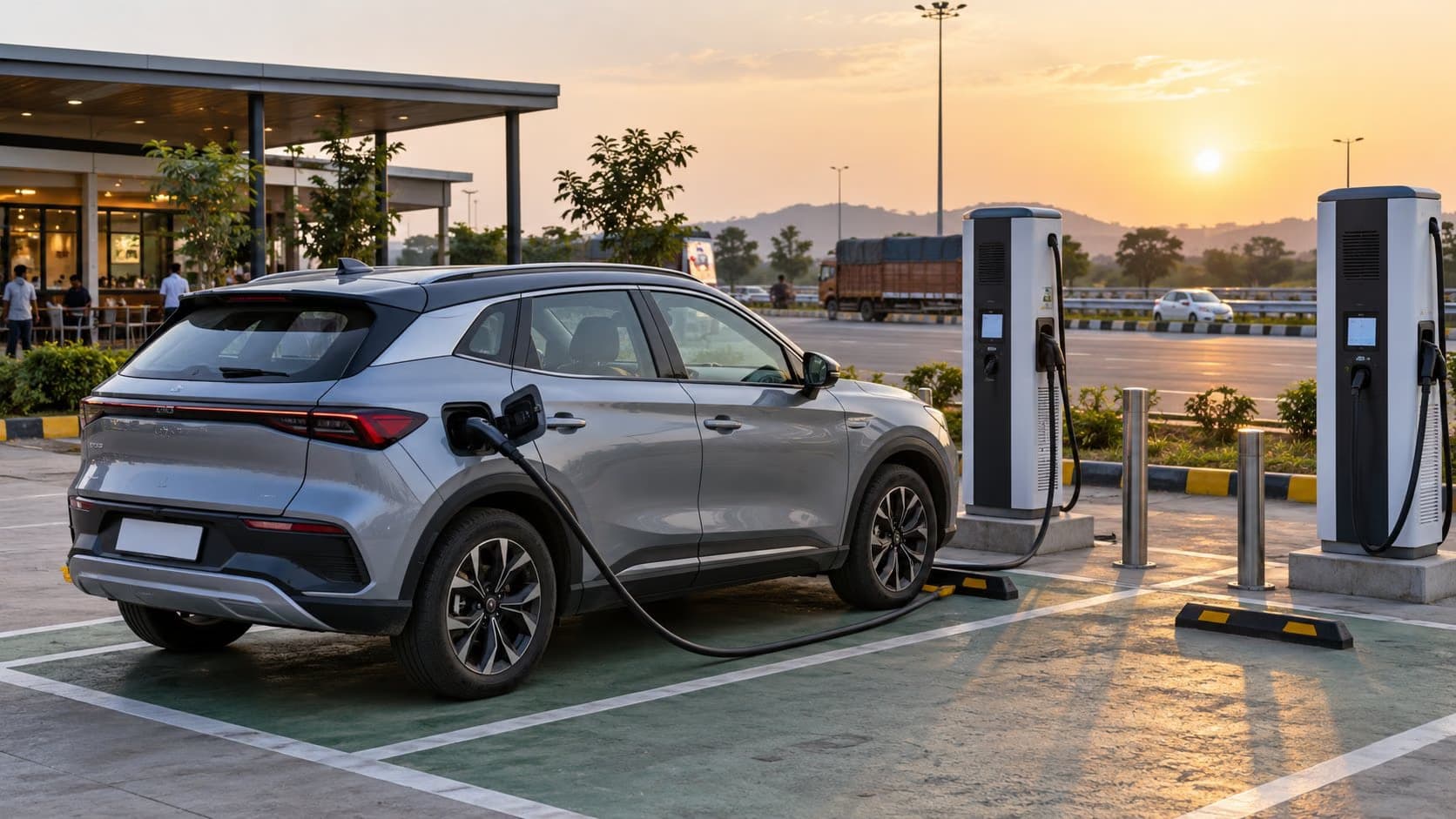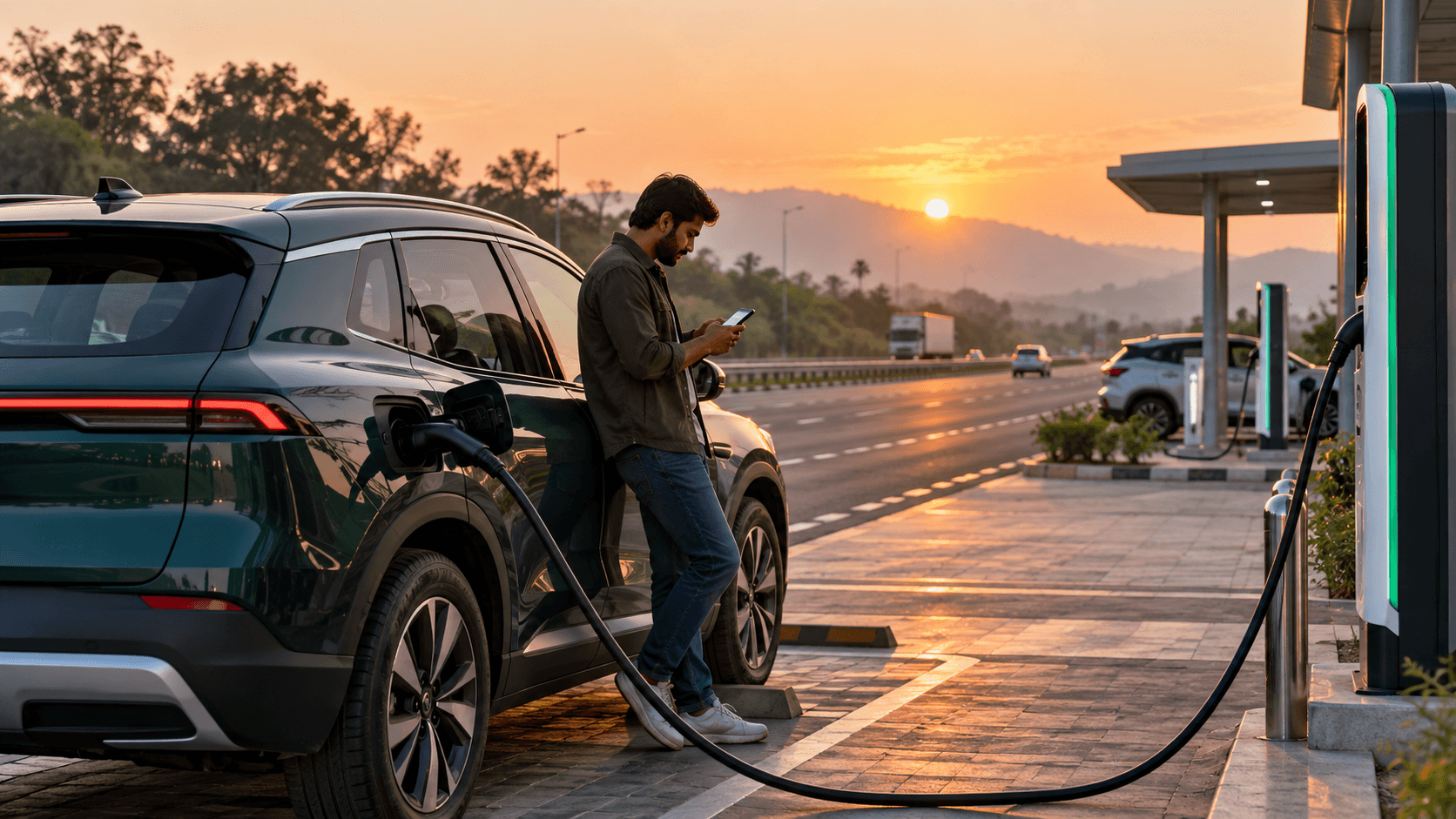
Public charging has made longer EV trips far more practical, but a map pin is not a travel plan. It does not tell you whether the compatible connector is working, a bay is occupied, access is restricted or your actual energy use has climbed because of weather and traffic.
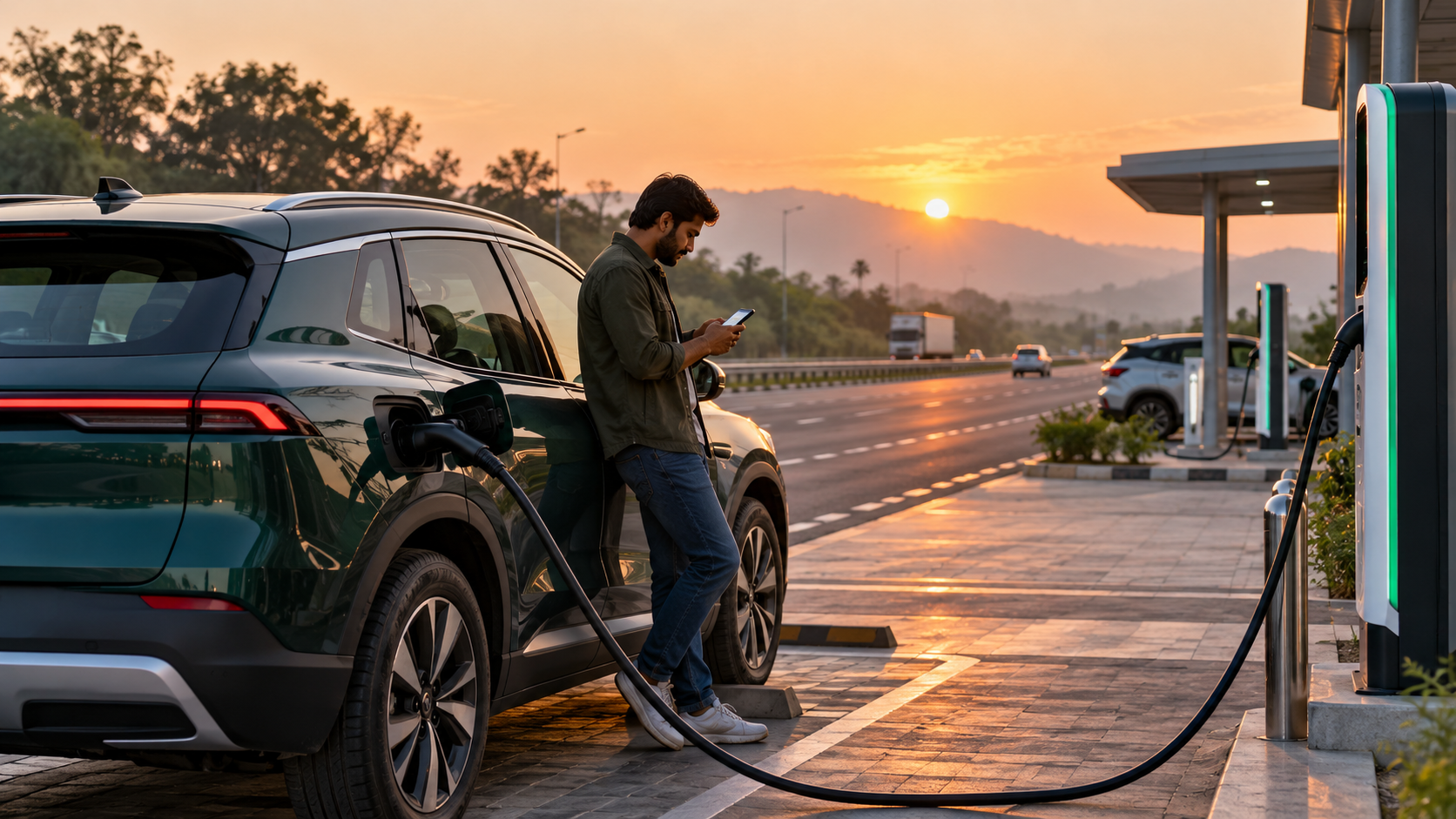
Plan every stop twice
| Before leaving | At the charger | Fallback |
|---|---|---|
| Check connector, station access and recent status | Confirm the session starts and watch charging power | Keep one compatible station inside your reserve |
| Set a conservative arrival buffer | Charge enough for the next leg plus margin | Know the nearest food, parking and service option |
Use the right definition of range
Claimed range is a test-cycle figure, not a promise for every highway day. Plan from the car's recent consumption, traffic speed, passenger load, elevation, air-conditioning and weather. The reserve should grow when those variables become uncertain.
What the policy framework does, and does not, promise
The Ministry of Power's charging-infrastructure guidelines support interoperable, connected charging networks and formalise parts of the ecosystem. They do not guarantee that a particular unit will be vacant or fault-free at your arrival. The driver still benefits from checking provider updates and carrying a second option.
At the bay
- Park only after confirming the connector and payment flow.
- Do not leave the car longer than the charging plan requires.
- Keep the cable and bay clear for the next driver.
- Report a failed session with the time, location and error message.
A route with two sensible stops is calmer than a route built around one optimistic one. Public charging works best as a system, not a gamble.