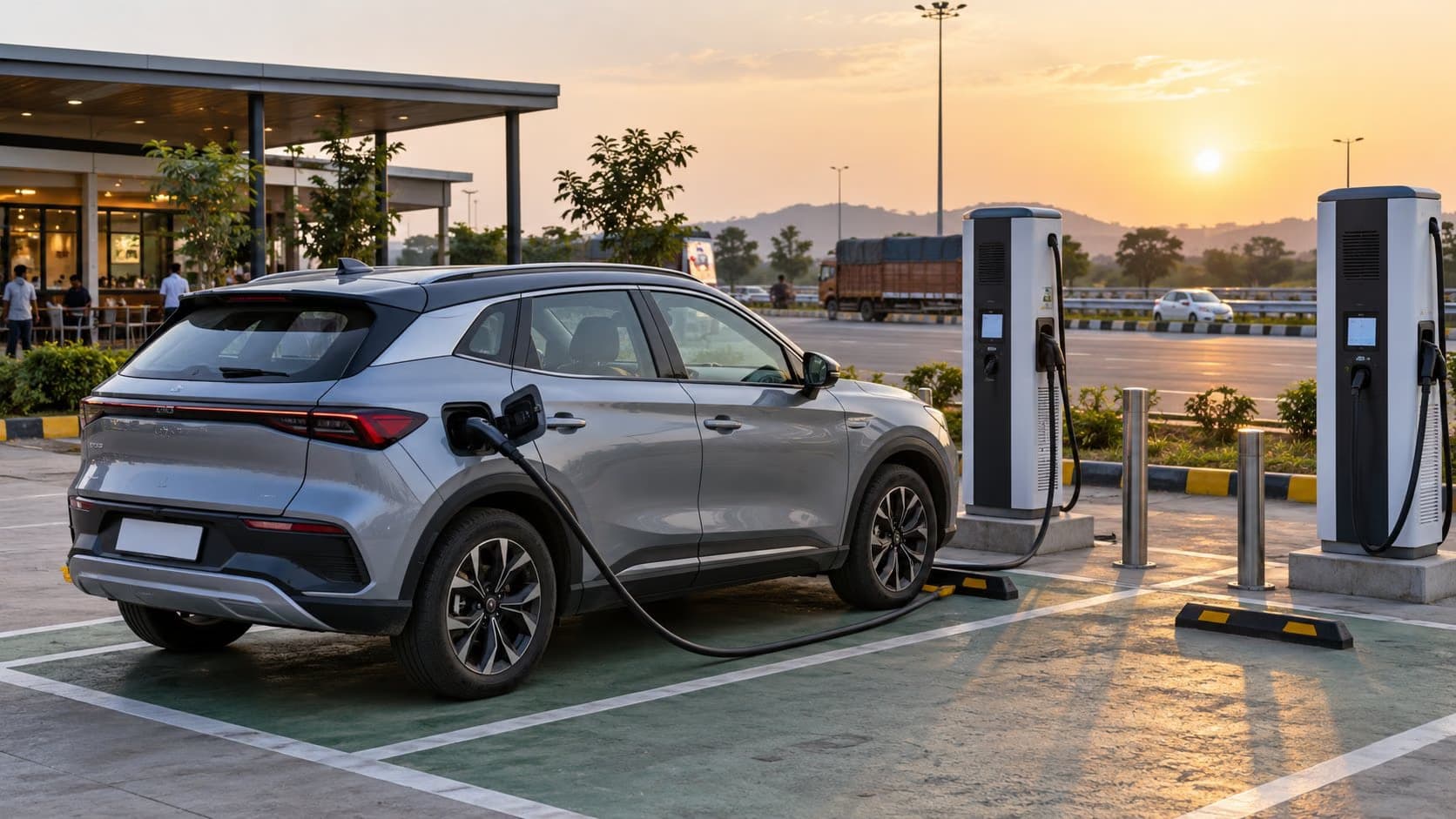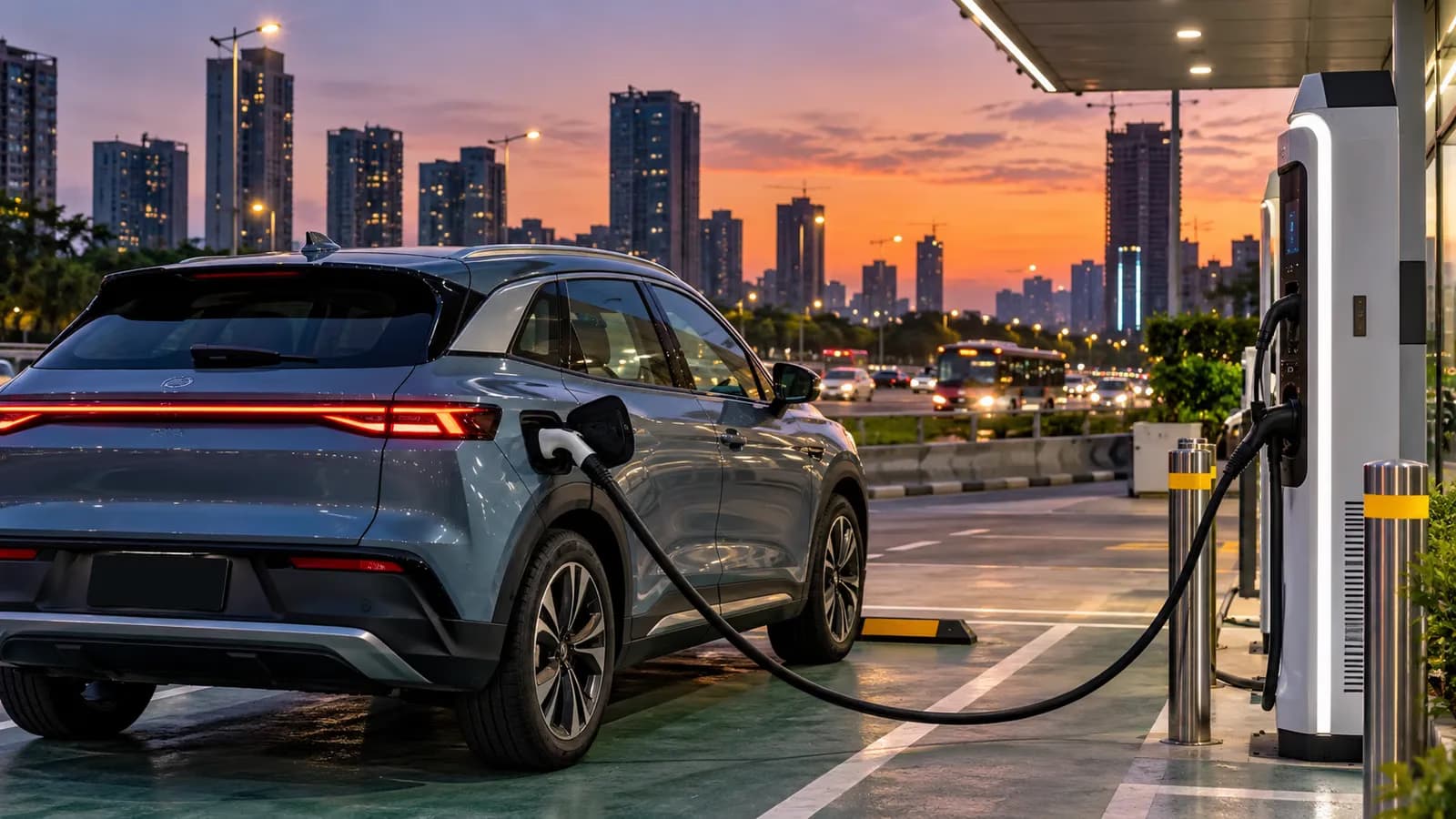
The useful public charger is not necessarily the fastest one on an app. It is the charger that matches your car, is available when you arrive, fits the time you have and leaves a sensible energy reserve for the next leg. That sounds obvious, but it is why a quick pre-drive check matters more than a headline charging speed.
Begin with the car, not the charging station
Your vehicle handbook and manufacturer app should tell you the supported connector types and the maximum AC and DC charging capability. A higher-rated public charger does not force the car to accept more power than it is designed to take. Likewise, an AC connector and a DC connector solve different jobs.
The Bureau of Energy Efficiency’s EV guidance lists charging infrastructure categories including CCS fast charging for four-wheelers and Type 2 AC charging. It also notes that charging time depends on the battery and charger rather than a single universal number.
AC and DC: choose for the stop you have
- AC charging: often suits a longer halt where the car’s onboard charger manages the conversion.
- DC fast charging: can be useful on a highway journey, but the car’s charging curve, battery temperature and state of charge can reduce the rate well before the battery is full.
- Home or destination charging: remains the most predictable option for many owners because it fits the parked time rather than a travel deadline.
Plan the first public-charging trip conservatively
- Confirm your connector and account/app requirements before leaving.
- Choose a primary stop and at least one practical backup on the same route.
- Arrive with a reserve rather than planning to reach a charger at zero.
- Check operating hours, access restrictions and recent user-status information where available.
- Use the time at the stop to reassess the onward route instead of blindly targeting a percentage.
Why the last part of charging can take longer
Charging speed is not a straight line from empty to full. Vehicles typically manage battery temperature and reduce the rate as state of charge rises. That is why a journey plan often works better with a shorter charge and another stop than with a long wait for a very high percentage. The exact behaviour is vehicle-specific; use the manufacturer’s guidance for your car.
Safety and etiquette are part of the plan
Follow the charger operator’s instructions, inspect the connector before use and do not use damaged equipment. Once the planned charge is complete, move the car if the station requires it so another user can access the bay. A charging bay is not an all-day parking space.
Use authoritative information
The BEE EV FAQ and charging guidance is a good reference for infrastructure categories and government guidance. For the exact connector, charge limit and battery-care advice, the owner’s manual for your specific vehicle is more important than generic online tables.
The practical conclusion
Public charging becomes routine when it is treated as route planning, not a gamble. Know the car’s capability, select a charger that suits the stop, keep a backup and leave margin for a charger that is busy or unavailable. That approach is calmer, faster and kinder to the battery than chasing the biggest kW number on a map.