For many EV buyers, the crucial feature is not inside the car. It is the reliable charging point where the car parks overnight. In an independent home this may be straightforward; in an apartment, the bay, electrical route and society process need to be agreed before delivery day.
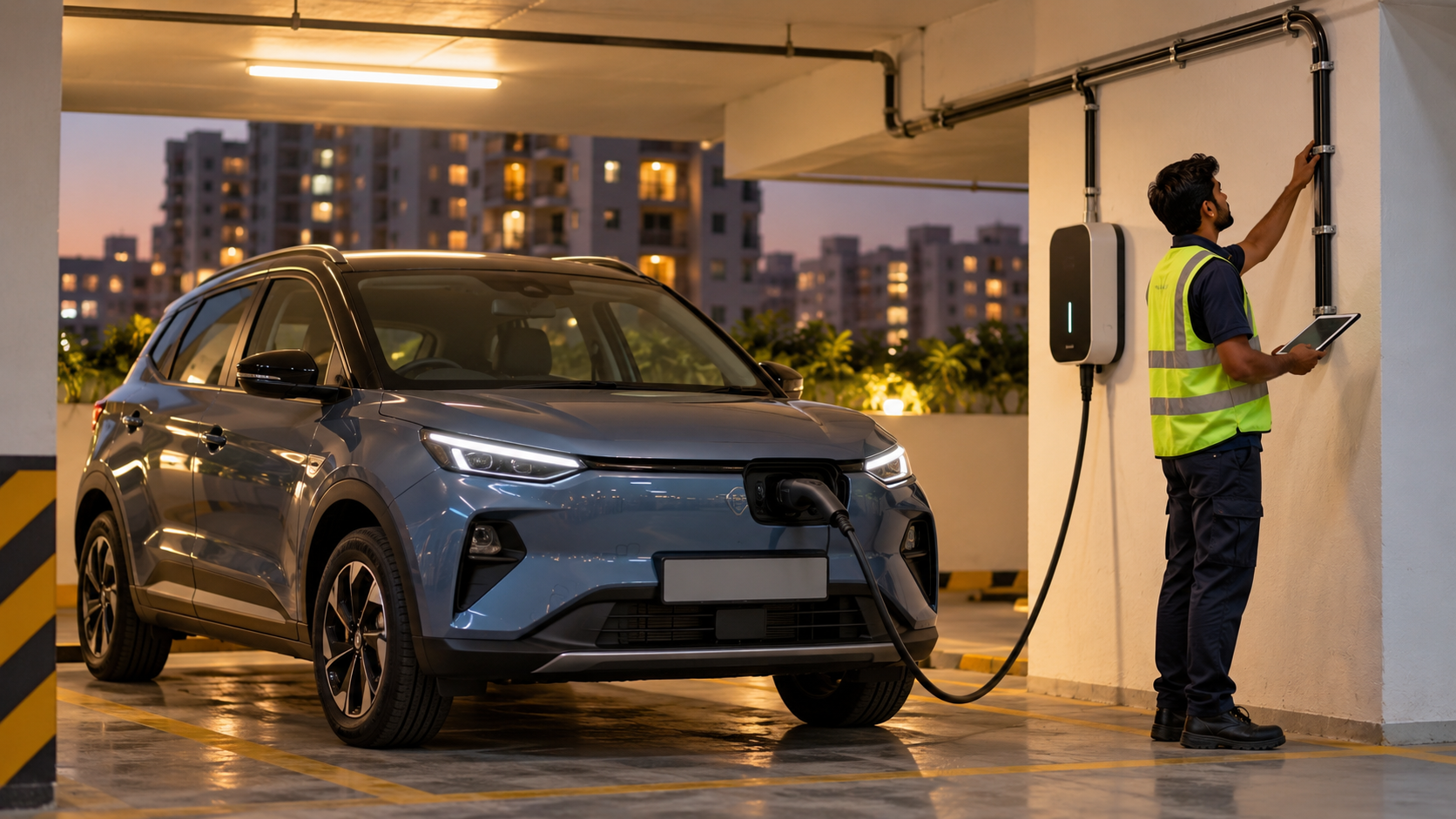
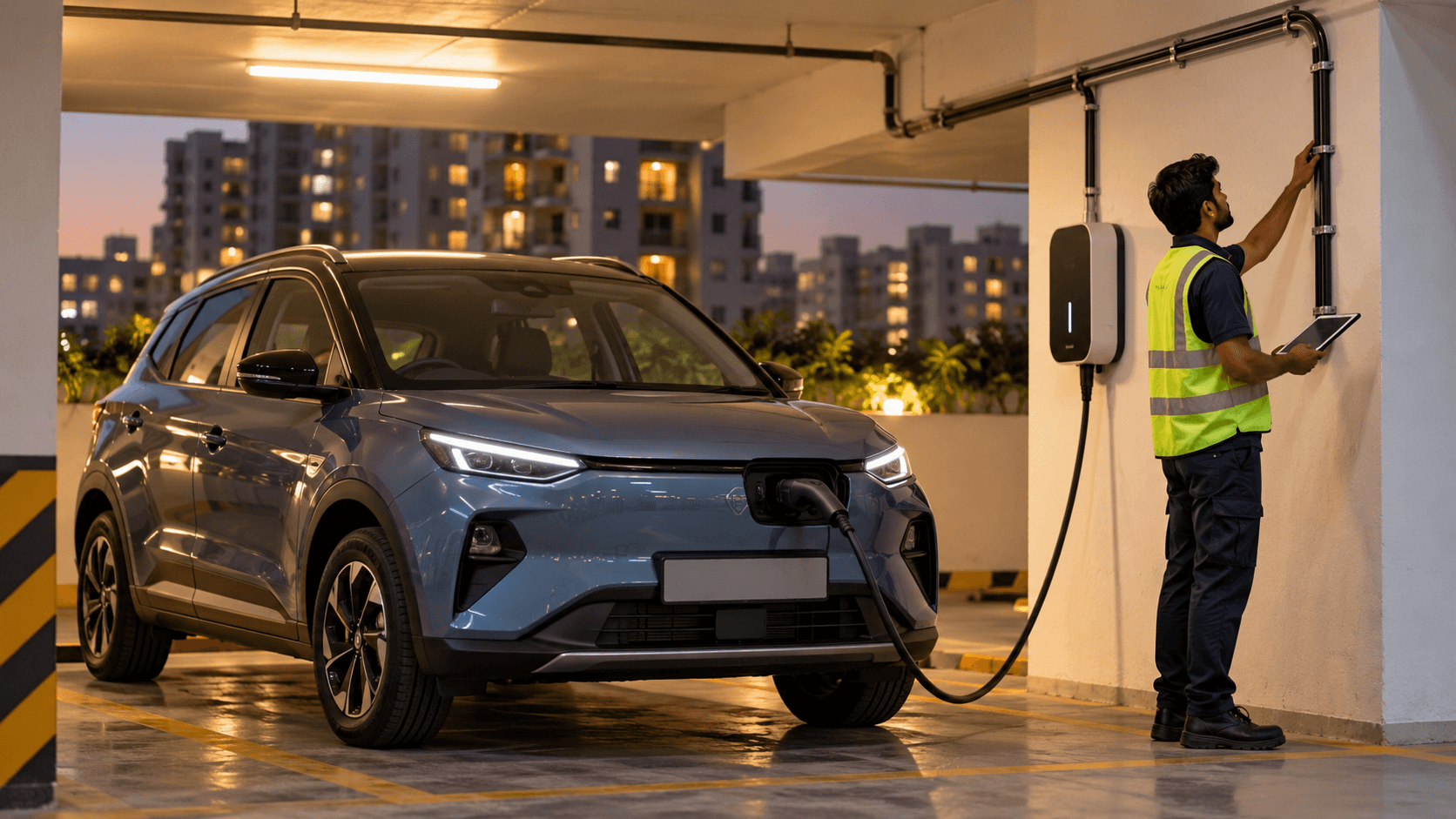
Walk the cable route, not just the parking bay
Stand in the allotted space and trace the practical route to the meter or distribution point. Look for shared driveways, fire exits, exposed sections and places where the cable needs protection. A good plan has clear ownership, a fixed cable route and no improvised extension lead.
| Area | Question to settle | Record to keep |
|---|---|---|
| Parking | Is the bay allotted and accessible every day? | Written society or owner approval |
| Electrical supply | Can the sanctioned load support charging? | Meter details and electrician assessment |
| Installation | Who supplies the breaker, cable and charger? | Itemised scope and equipment warranty |
| Billing | How will energy use be measured? | Metering or reimbursement arrangement |
Use qualified equipment and installation
Follow the vehicle manufacturer's charging guidance and use a qualified installer. Do not route a makeshift lead through a common driveway or modify shared supply without approval. Ask how earthing, protection devices and weather exposure are handled.
Useful official context
The Ministry of Power guidelines allow residential owners to use an existing connection for EV charging or to obtain a separate metered connection under the relevant tariff. Local electricity-distribution and building processes still matter, so start with your property rather than a generic promise.
When home charging is settled before booking, EV ownership gets its biggest convenience benefit. When it is not, the purchase can become dependent on public infrastructure for an ordinary weekday.