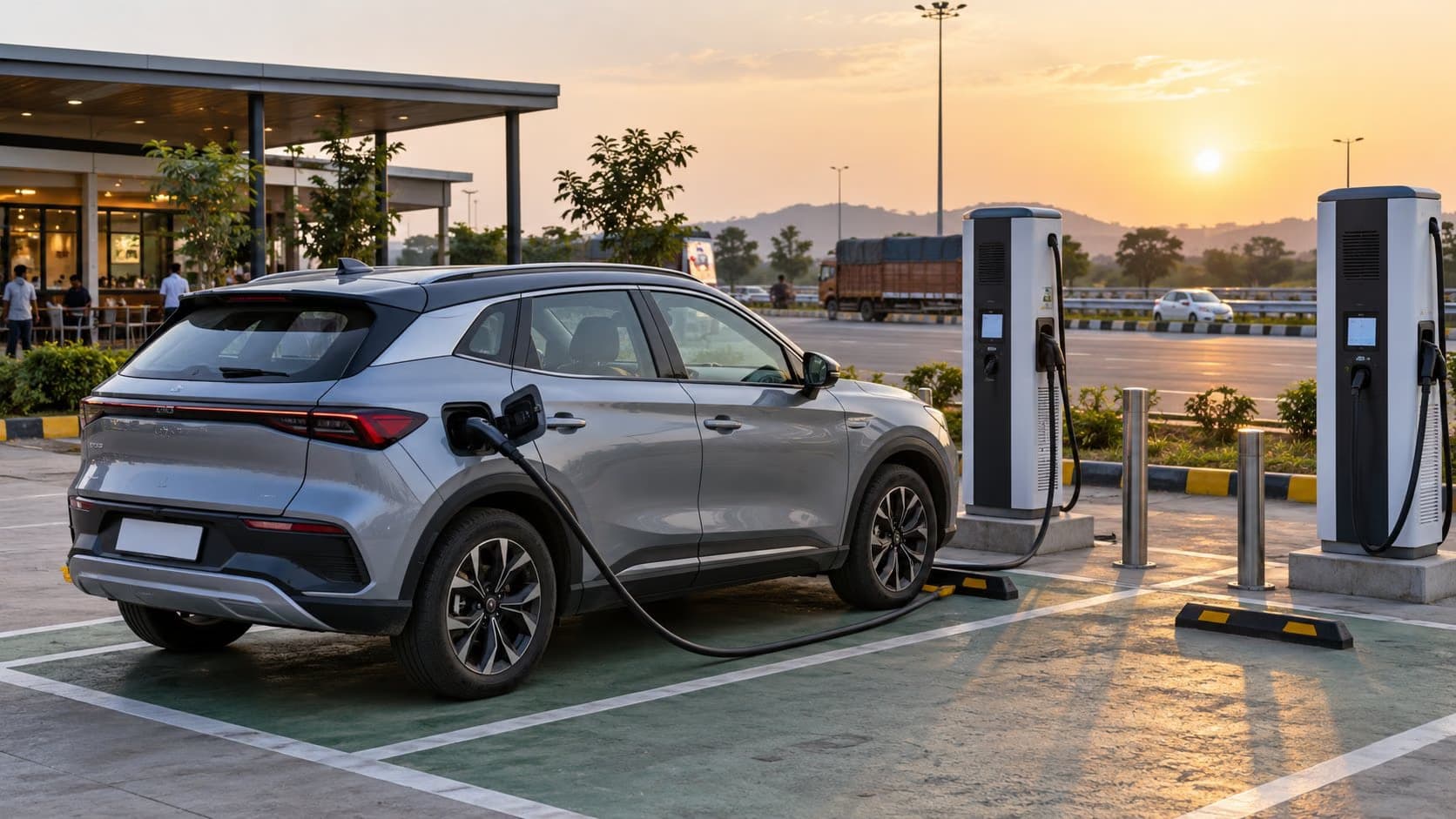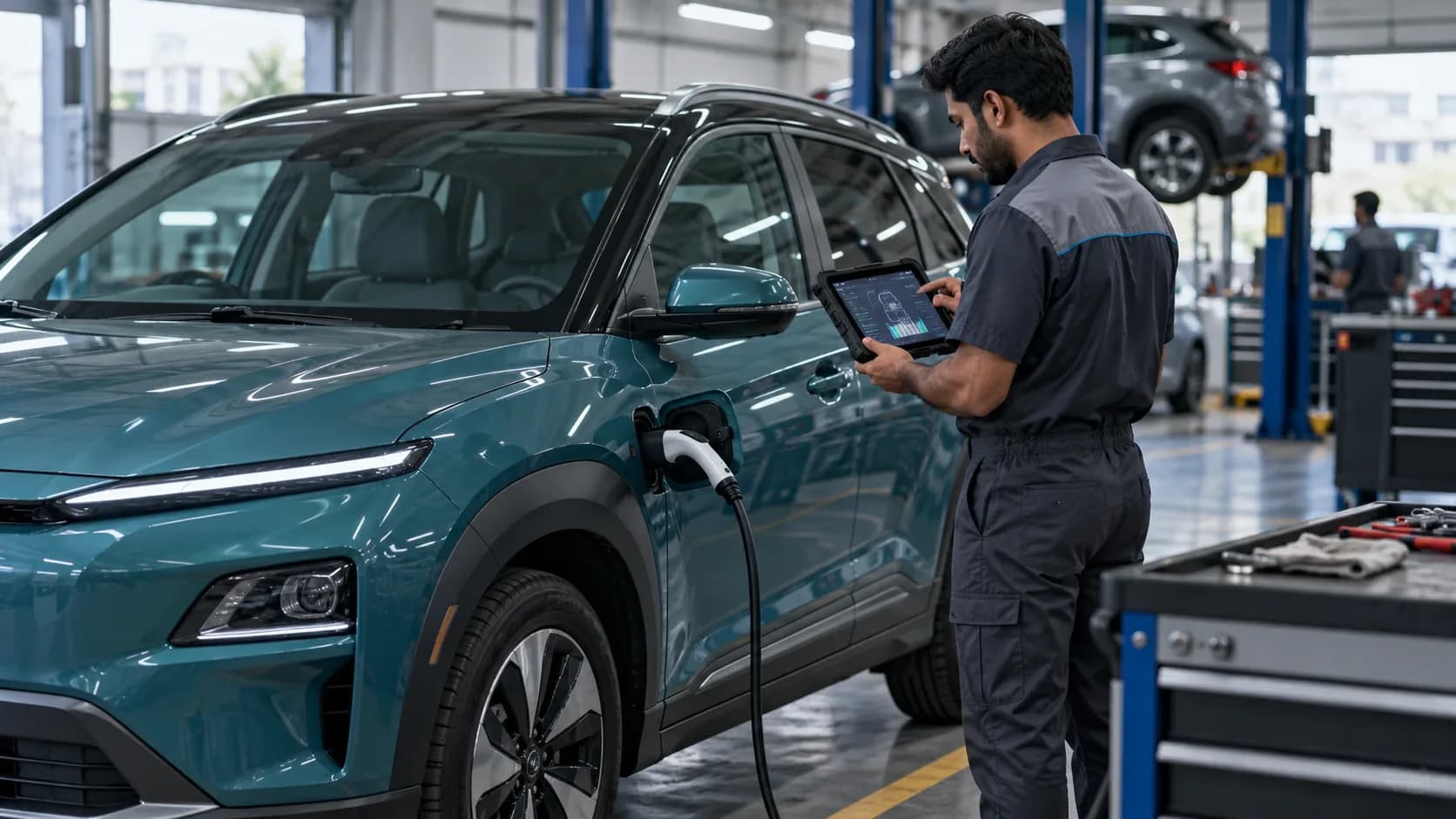
Your EV shows plenty of charge, yet the doors will not unlock electronically and the screens stay dark. That sounds contradictory only if you think the big traction pack powers every system directly. Most electric cars also have a low-voltage auxiliary battery. When that system fails, the car can be unable to wake up even while the drive battery is charged.
Two batteries doing different jobs
The high-voltage pack stores energy for propulsion. A separate low-voltage system supports equipment such as lights, wipers, locks and control electronics. A converter normally steps energy down from the traction pack to maintain the low-voltage side. Kia's electric-vehicle component guide describes the high-voltage battery, 12V auxiliary battery and low-voltage DC-DC converter separately. Hyundai's EV manual makes the same distinction.
That does not mean every EV uses an identical battery arrangement or charging strategy. Some vehicles use different battery chemistries or have model-specific protection features. Use the owner's manual for your exact model before looking for a battery, reset switch or jump terminal. The common buyer lesson is simpler: the state-of-charge number on the main display is not a health report for every electrical system in the vehicle.
Why a car may not enter Ready mode
The low-voltage system can be needed to wake controllers and complete the sequence that makes the high-voltage system available. If it is depleted or faulty, the vehicle may appear dead, refuse to select drive or display several unrelated-looking warnings. The symptoms are not proof that the 12V battery alone is at fault; a converter, charging problem, software issue or wiring fault may also be involved. A workshop diagnosis matters more than an assumption based on one dark screen.
Autocar India's long-term EV report describes an auxiliary-battery failure that left a car unresponsive. InsideEVs' 12V explainer addresses why EV makers still use this separate circuit. Those examples are context, not evidence that any particular model is unreliable. The frequency and root cause of failures vary and should not be guessed from a single account.
What to do when the EV seems dead
First, move to a safe place and check what still works: mechanical key access if equipped, interior lighting, hazard lamps and the charge-port indicator. Note any warning messages and whether the car was charging or parked. Do not touch orange high-voltage cables, connectors or battery housings. Kia's component guide explicitly warns against dismantling high-voltage parts because of electric-shock risk.
Open the model's emergency and 12V assistance instructions or call roadside support. Some EVs specify accessible low-voltage terminals; others have particular methods to release a locked bonnet or charge port. Jump-starting instructions differ by car. Never assume the ordinary petrol-car cable sequence applies, and never try to jump or charge a high-voltage pack with a portable 12V booster. If the manual's process is unclear, have trained assistance handle it.
If the vehicle powers up after assistance, do not treat that as the end of the diagnosis. Ask a workshop to test the auxiliary battery's condition and charging behaviour, read fault codes and identify any excessive parked electrical draw. A reboot can temporarily restore operation while leaving the underlying failure in place. Keep the battery test and repair notes, particularly if the issue recurs.
Habits that can make the low-voltage problem worse
Accessory use while the car is not in its proper Ready or utility mode can draw from the auxiliary system, depending on the model. Dashcams, trackers or other aftermarket electrical accessories may add a constant load if installed incorrectly. Some cars automatically replenish the 12V battery from the traction pack under certain conditions, but those features have limits. Kia's auxiliary-battery saver guidance specifically notes that its feature cannot prevent discharge from a worn battery or unauthorised electrical devices.
When you buy an EV, ask the salesperson to demonstrate the actual power-off, accessory and Ready states. Read which parked features remain active and for how long. If you plan to leave the vehicle unused for an extended period, follow the maker's storage advice for both the traction battery and the auxiliary system. Do not apply a generic "drive it once a week" formula from petrol cars without checking the manual.
Check the auxiliary battery when buying a used EV
A used-EV inspection often focuses on traction-battery health, range and charging speed. Add a low-voltage check to the list. Request battery replacement history, any repeated no-start complaints and fault-code records. Test locking, unlocking and Ready mode after the car has been parked rather than immediately after a long charging session. Have the workshop check the specified battery type and the output of the low-voltage charging system. Do not replace a lithium auxiliary battery with a conventional lead-acid one merely because it fits physically.
Also distinguish warranty coverage: traction-pack warranty language may not be the same as auxiliary-battery coverage. Ask the manufacturer or seller for the exact terms in writing, including whether an aftermarket tracker or accessory installation affects a claim. Avoid promising yourself that a healthy traction pack makes every electrical repair inexpensive.
Does plugging the car in recharge the 12V battery?
Many designs replenish the auxiliary battery when the traction pack is charging or when the vehicle is in Ready mode; Kia describes that behaviour in its battery information. But this is not a guarantee that every car left plugged in will recover from a failed low-voltage battery. The car may require enough 12V power to initialise charging controls, and the timing and protection logic differ. If the 12V side has repeatedly gone flat, simply connecting an AC charger may not resolve the underlying fault.
Likewise, a large traction-battery percentage does not tell you whether the auxiliary battery's cells hold charge. A battery can appear adequate while freshly charged and then lose voltage after a period parked. That is why a controlled battery test and a check of the charging system are more useful than another casual restart. Ask the workshop to explain whether its diagnosis found battery degradation, an abnormal parasitic draw, a converter issue or a software-related charging condition.
Record the fault before it disappears
If it is safe to do so, photograph the dashboard messages and note the time, traction state of charge, weather, whether the car was connected to a charger, and how long it had been parked. Mention accessories that may operate with the car off. This information can help a technician reproduce an intermittent problem. Do not disconnect the battery or clear codes as a first experiment, because that may erase useful evidence or introduce new faults.
After repair, request the measured test result and the exact part or software action on the invoice. Try a normal power-off and restart sequence before leaving the workshop. If the problem recurs, return with that documentation. An EV's low-voltage system is ordinary enough to be overlooked and important enough to immobilise a vehicle.
The useful question for an EV owner
Before a problem occurs, locate the emergency access and 12V assistance section of the manual, and save roadside-support details offline. If the EV will not wake up, keep people away from high-voltage components and arrange model-specific help. A charged drive battery and a dead low-voltage system are entirely compatible states. Knowing that distinction helps you describe the failure accurately and get the right repair rather than chasing an imaginary empty traction pack.