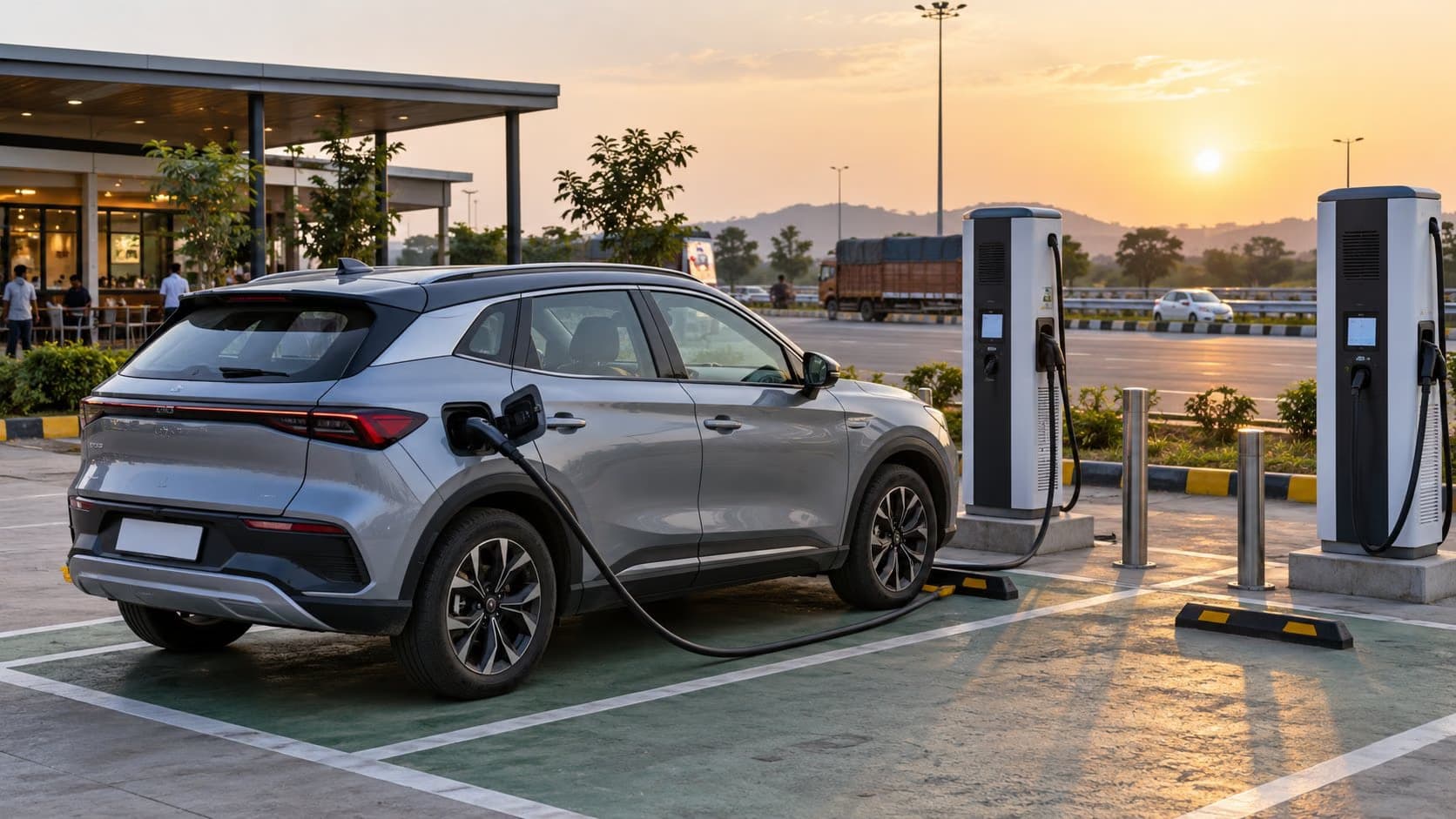
You have found a public charging point near the highway exit. The app says it is available, but that does not yet answer the practical question: will its plug and your car work together? Power and connector are separate details. A high-power station with the wrong connector is no more useful than a petrol pump with the wrong fuel.
In India, Type 2 is widely used for AC charging and CCS2 is common for DC fast charging, as Tata Power's charging guide notes. That is a description of common infrastructure, not a promise about every EV sold here. Check the exact car's manual and charge-port specification before relying on a map filter.
First distinguish AC from DC
An AC charging point supplies alternating current; the car's on-board charger converts it for the battery. A DC fast charger does the conversion outside the car and feeds DC through the appropriate fast-charge inlet. The US Department of Energy's vehicle-component explainer describes the on-board charger's role, while its charging-equipment guide explains why charge time depends on both station and vehicle. Its connector examples are for the US market, so use Indian vehicle and operator specifications when planning an Indian journey.
Do not assume an AC socket labelled 22 kW will put 22 kW into your car. The car's on-board AC charger may accept less. Equally, a 100 kW DC cabinet does not guarantee a 100 kW charging session; the car's allowed DC rate and battery conditions matter. Our separate guide to charge curves covers the power variation. Here the first question is more basic: can the vehicle connect at all?
Read the station listing carefully
Look for connector type, not only station power. A location can have several stalls, each with different plugs and ratings. Check the operator's current listing for the specific gun you intend to use, its operational status and whether the site is publicly accessible. The Ministry of Power's 2024 charging-infrastructure guidelines cover public and other charging locations, but they do not replace checking the individual station before travel.
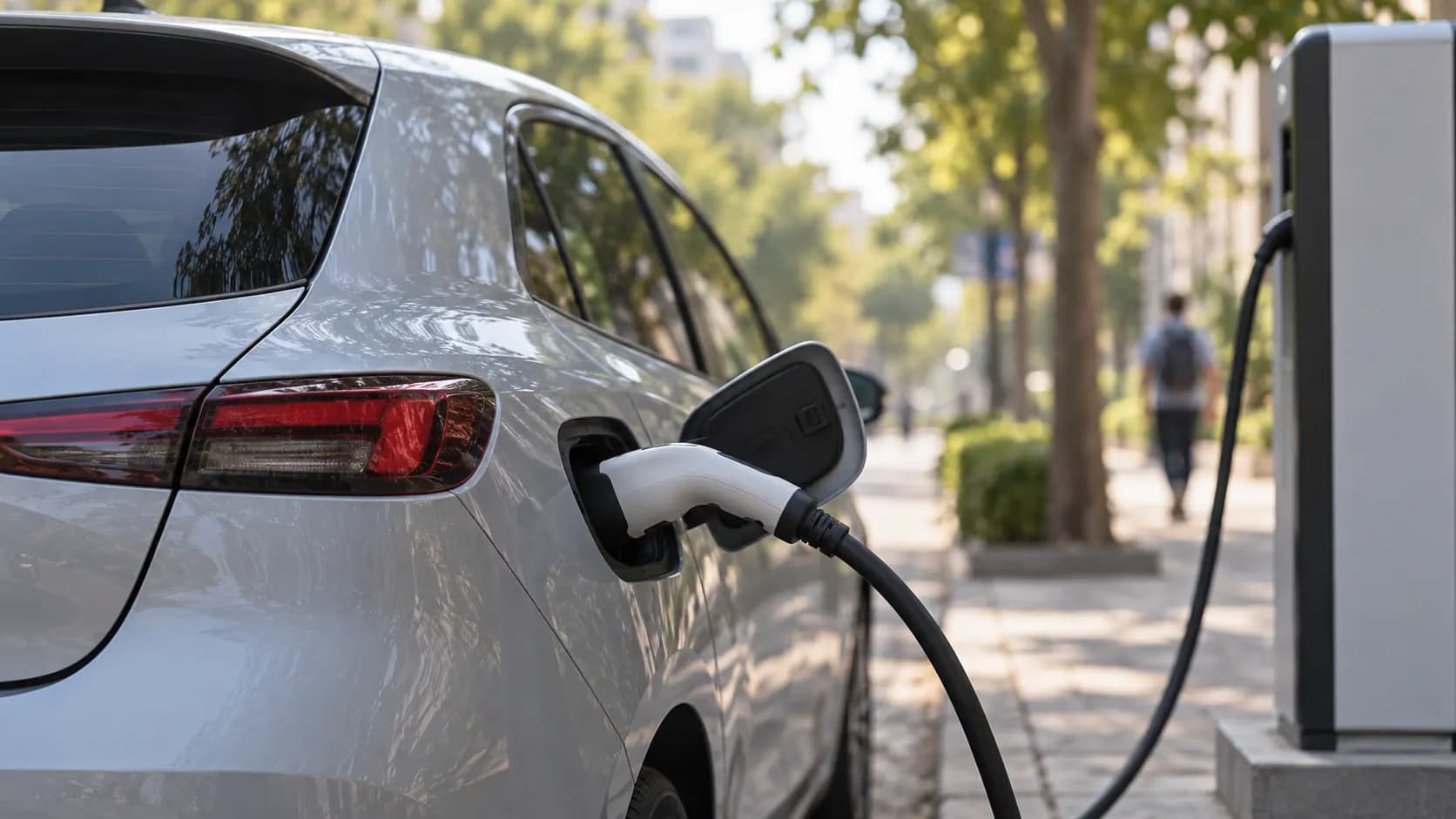
For AC charging, ask whether the station has a tethered cable or expects the driver to bring a compatible one. Inspect the cable supplied with your vehicle and the operator's instructions. A plug with a familiar outline is not enough reason to force a connection. Never improvise adapters or extension leads at a charging site; use only equipment the car and charger makers approve.
This cable question can change how useful a destination charger is. A hotel may advertise an AC socket, but a driver who has only a portable domestic charging lead may not have the cable required for that socket. Before paying for the car, put the supplied cable on the showroom floor and ask the dealer to identify both ends and the charging use case. Make a note of whether an additional approved cable is included, optional or unavailable. That small check can prevent an unpleasant surprise on the first overnight trip.
Check the car side of the equation
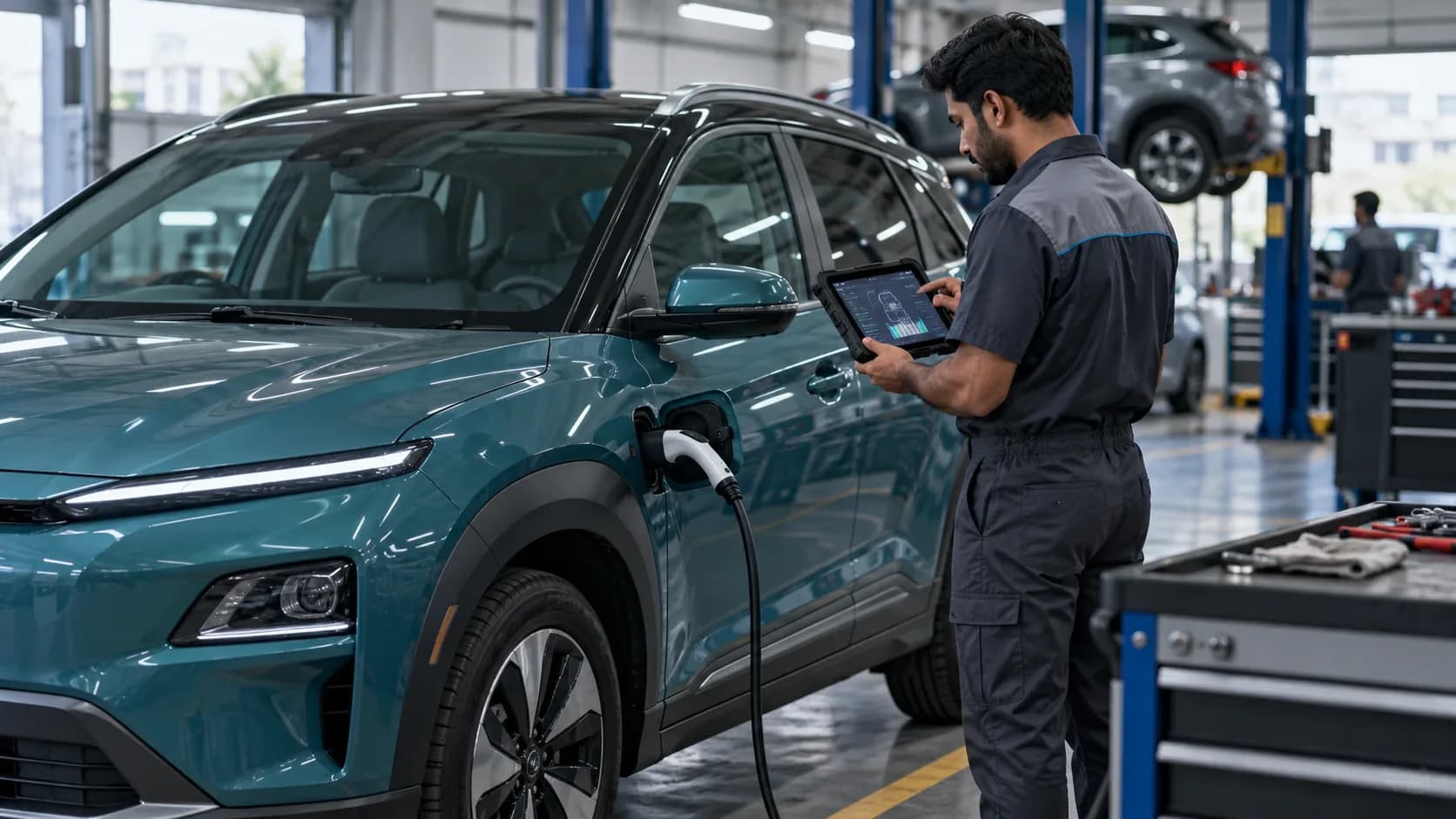
The owner's manual should identify the AC and DC connectors, the maximum accepted power under stated conditions and any restrictions on adapters. Verify the precise variant and market, especially with an imported used EV. A model name used in another country may have a different inlet or charging package. If the dealer says a particular station network works with the car, ask them to show the connector and a successful charge, not just a screenshot of a nearby charger.
Pay attention to whether your charging app needs an account, payment method or session activation before the plug will lock and charge. A compatible connector cannot resolve a failed payment or an offline stall. Keep an alternative site on your route rather than planning a journey that depends on one charger being available.
When comparing two stations with the same connector, ask how long you will actually stop. A lower-power AC point at a destination can be perfectly useful if the car will remain parked for hours. A DC fast point suits a shorter stop only if the car accepts DC charging and the battery can take advantage of it under current conditions. The fastest advertised cabinet is not automatically the best charging stop, especially if reaching it requires a large detour.
Also look beyond the pin shape. Connector condition, access hours, parking restrictions, payment rules and the operator's help channel can determine whether a real session succeeds. For a first visit, choose a site with another nearby option and arrive with enough battery to leave if it is unavailable. The risk is not that every public charger will fail; it is that an itinerary built around a single unverified charger has no margin.
At the charger
Park so the cable reaches without tension or crossing a driving lane. Check the connector for visible damage, follow the operator's start sequence and confirm on both car and charger that the session has begun. A locked plug with zero energy delivered is not a completed charge. If the station reports a fault, stop the session using the specified procedure and contact the operator; do not repeatedly force the connector.
The safe takeaway is a three-part check: connector matches, cable is available, and the car accepts the power type. After that come availability, payment and the time you can spare. Save a screenshot of the working station details when you plan a trip, but recheck them before departure because public charging information can change.