You can cool an electric car before getting in, and some EVs can prepare their batteries before a rapid-charging stop. Both get called “preconditioning”, but they solve different problems. One is about the cabin you occupy; the other is about the temperature at which the battery can accept or deliver energy. Confusing them can lead to unrealistic range expectations or a frustrating charging stop.
Start with the two separate systems
Cabin preconditioning runs the air conditioner or heater before departure so the interior is closer to the temperature you want when you set off. Battery preconditioning manages battery temperature. Depending on the car, it may happen automatically when you select a compatible fast charger in the built-in navigation, when you schedule departure, or only under particular temperature and charge conditions. Do not assume that pressing the remote AC button also warms or cools the battery.
The US Department of Energy explains why preparing a cabin while an EV remains plugged in can reduce the amount of battery energy used after departure, especially in cold weather. That is a principle, not a promised range gain for any Indian model. The benefit depends on weather, the car's thermal system, and whether charging power is available.
Why plugging in changes the calculation
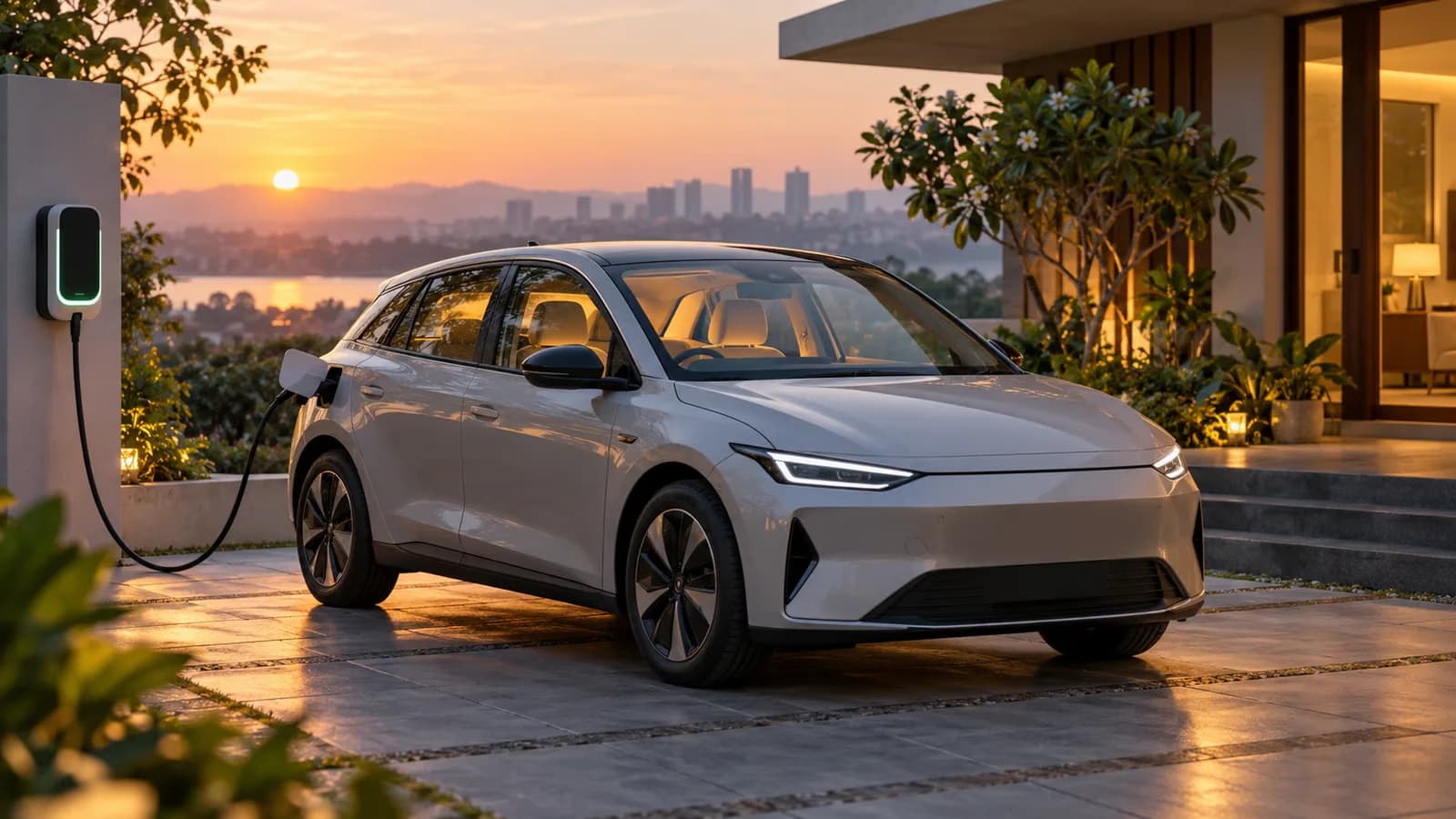
Running climate control consumes energy. If you start cooling or heating while the car is unplugged, that energy comes from the traction battery. You may improve comfort, but you have not created extra energy. If the car is connected to a suitable charger, some or all of the climate load can be supplied from the grid. The exact behaviour varies by vehicle and charger, so check the car's displayed state of charge before and after a trial on your normal route.
For a hot Indian afternoon, remote cooling can make the first minutes in the car noticeably more pleasant. It does not mean leaving the AC on for hours is efficient. Use a departure timer where available: a short preparation period close to the time you actually leave avoids wasting power after the cabin has reached the target temperature. Shade, parking position and window tint permitted locally also affect the starting cabin temperature.
Fast charging is a different use case
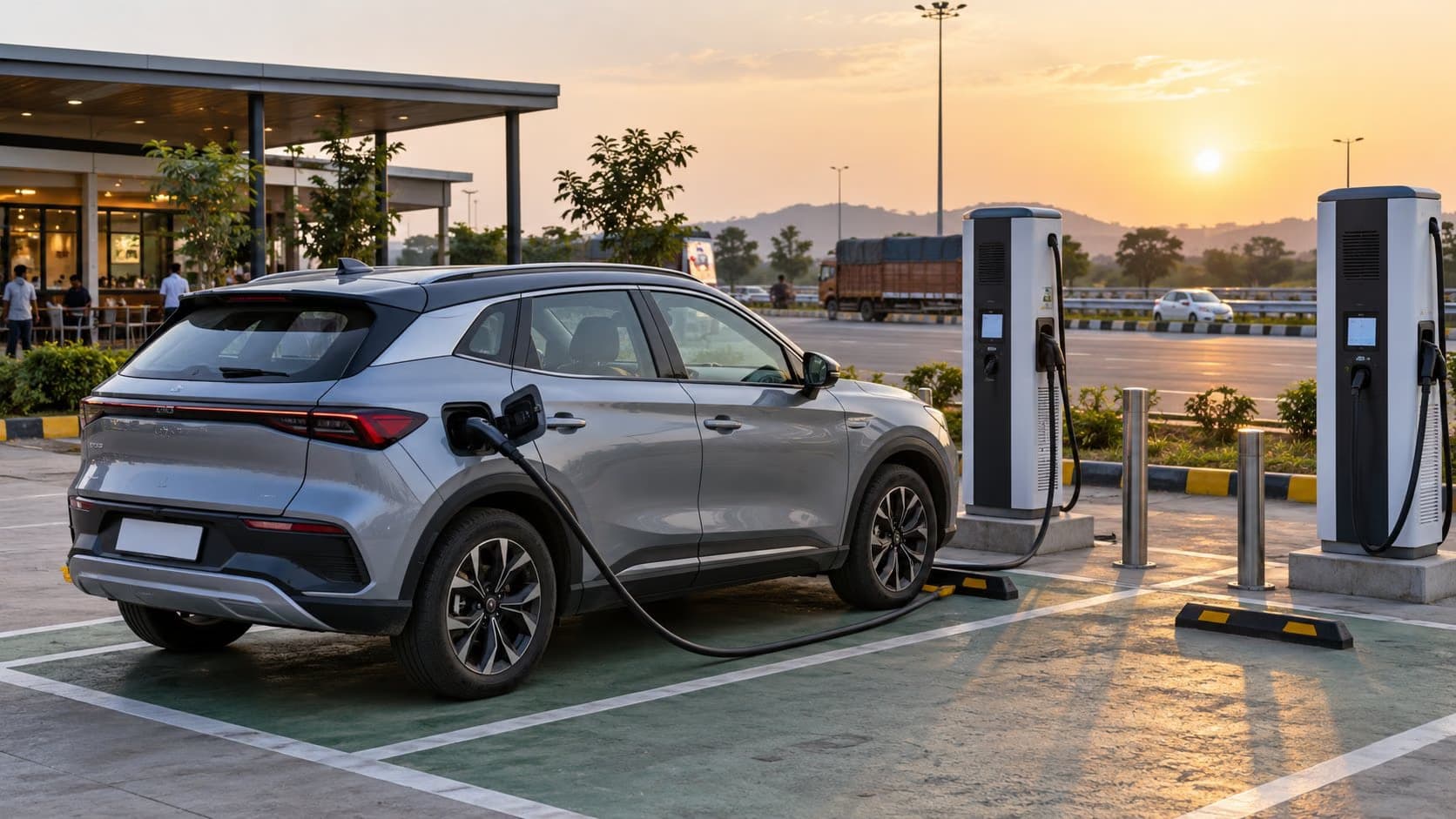
A battery charges within temperature limits set by its management system. If it is too cold or too hot, charging power can be restricted to protect it. Some cars therefore begin conditioning the pack on the way to a fast charger. This may consume energy during the drive, but can improve the battery's readiness when you arrive. The Department of Energy's technical discussion of ambient temperature and EV performance illustrates why pack temperature matters. It does not provide an India-specific charging estimate for your car.
On many cars, merely driving towards a charger using a phone map is not enough to trigger automatic battery preconditioning. The vehicle's own navigation may need to recognise the selected location as a fast charger. Others have a dedicated button or manage temperature without user input. Use the manufacturer's owner manual and the vehicle display to establish what your exact software version does. A charging station's connector, output and availability matter too; preconditioning cannot make an undersized or busy charger deliver a higher rate.
A realistic departure routine
- Confirm the charging cable is connected and the car is actually charging or able to draw power. An unplugged car cannot use grid energy for cabin preparation.
- Set a sensible cabin temperature and a departure time in the car or official app. Test that the schedule follows the correct time zone after software updates.
- On the first few uses, record the charge percentage before preparation, at departure and after a familiar drive. That reveals your car's actual behaviour better than a generic claim online.
- For a planned fast-charging stop, use the car's navigation if the manual says that is how battery preparation starts. Allow enough driving time for the system to work.
- Before leaving a remote charging location, confirm the charger is operational through its operator's current status, not only a map pin.
When not to expect a large benefit
In mild weather, a battery may already be in a suitable operating range. Cabin preparation then serves comfort more than range. On a short commute, running a long climate cycle before a ten-minute drive can consume more energy than it saves. If the car is parked in extreme sun, the initial cooling load can still be substantial even when you start remotely. Likewise, conditioning a battery for a fast charger is of little use if you will use a slow AC charger or arrive at a very high state of charge, where charging typically tapers.
Temperature is only one variable in a charging session. State of charge, battery chemistry, the vehicle's charge curve, station capability, cable condition and power-sharing at the site can all affect what you see. Compare several sessions under similar conditions before concluding that preconditioning has failed.
Questions to ask before buying an EV
Ask the dealer to demonstrate cabin scheduling and battery preparation on the exact model and variant you would buy. Can it be started from the official app? Does it work without mobile signal? Does route guidance to a recognised charger activate battery preparation? Is there an on-screen indication when it runs? Will a missed departure schedule keep the HVAC active? These are more useful questions than asking only whether the brochure says “connected car”.
Preconditioning is useful when treated as an energy-management tool rather than a magic range button. For most owners, the simple habit is to cool or heat shortly before departure while plugged in, and to use the car's supported charger-routing workflow when planning a DC stop. Then judge the result against your own commute and charging records.