At a showroom, a seven-seater can look settled as soon as everyone finds a seat. On the first family trip, the arrangement may feel very different: the person in the last row needs help getting in, the middle row has to be moved forward, and the remaining luggage no longer fits. The useful test is not whether there are seven head restraints. It is whether your family can use all those places, together, in the way you actually travel.
Bring the passengers who will use the back row
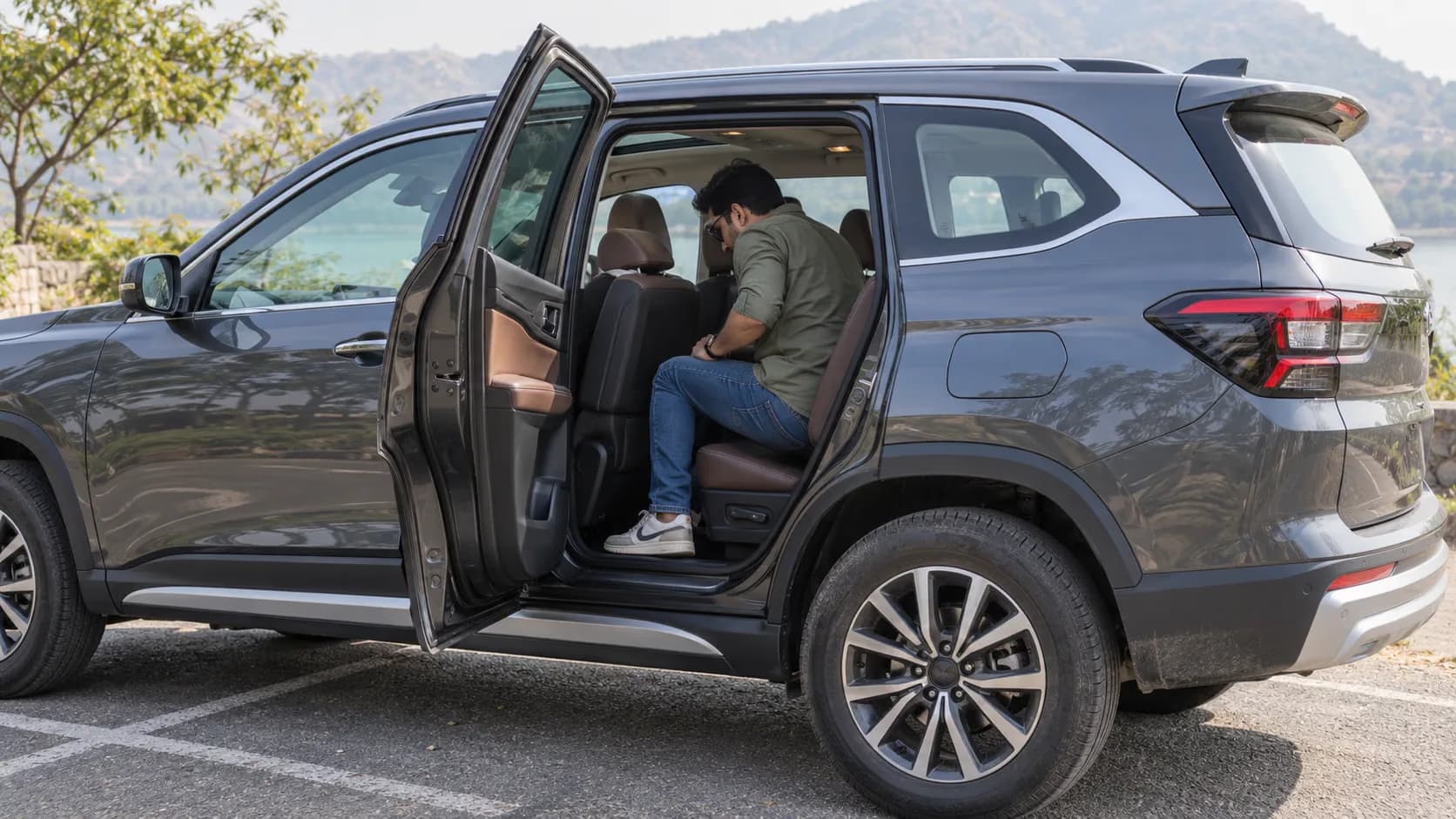
A solo test drive cannot answer a family-space question. If the third row will regularly carry grandparents, teenagers or other adults, take one of them to the showroom. Ask them to enter and leave without a salesperson operating the seat. Watch the door opening, step height, handholds and the space left when the second row slides or tumbles. A mechanism that works neatly in a demonstration may still require awkward twisting for somebody with stiff knees.
CarWale's three-row review usefully separates the width of the access gap from actual seated comfort; Autocar India's Triber review similarly examines the tumble mechanism and the position once seated. Those observations illustrate what to test, not a universal ranking of vehicles. The right choice depends on your passengers and the particular model.
Set the front and middle rows honestly
Showroom demonstrations often push the front passenger seat forward to make the next row look roomy. Set the driver's seat for the real driver, then place the middle row where its regular occupants can sit comfortably. Only then test the third row. If the middle seats slide, try the compromise in both directions: a few extra centimetres for the rear may take away knee space from the middle. Ask everyone involved whether that configuration is tolerable for the journey you have in mind.
Spend several minutes in the last row, not a few seconds. Check head clearance when sitting upright, knee angle, thigh support, foot space under the middle row and shoulder room with the expected number of occupants. A low cushion can make the knees sit high even if the published legroom sounds adequate. A small side window or high beltline may also change how comfortable a passenger feels. None of these is captured by the external dimensions alone.
Safety equipment has to work for every occupied seat
Check the number and type of seat belts and head restraints in the exact variant, and make sure passengers can buckle without reaching behind another person. Check whether a child restraint is approved for the seat you intend to use; do not assume every rear place has the same ISOFIX anchors. Read the exact vehicle's manual for child-seat placement and any airbag restrictions. A third row advertised as available is not permission to use improvised seating or loose children on a folded bench.
The folding and sliding mechanism itself should latch firmly when returned to its travelling position. Hyundai's rear-seat safety instructions warn that a seatback must lock after adjustment, and that passengers should not sit on a folded seatback while the car is moving. Follow the manual for the car you buy, including its instructions for operating powered or manual access mechanisms. Do not let children play with the controls.
Test the boot with the third row up
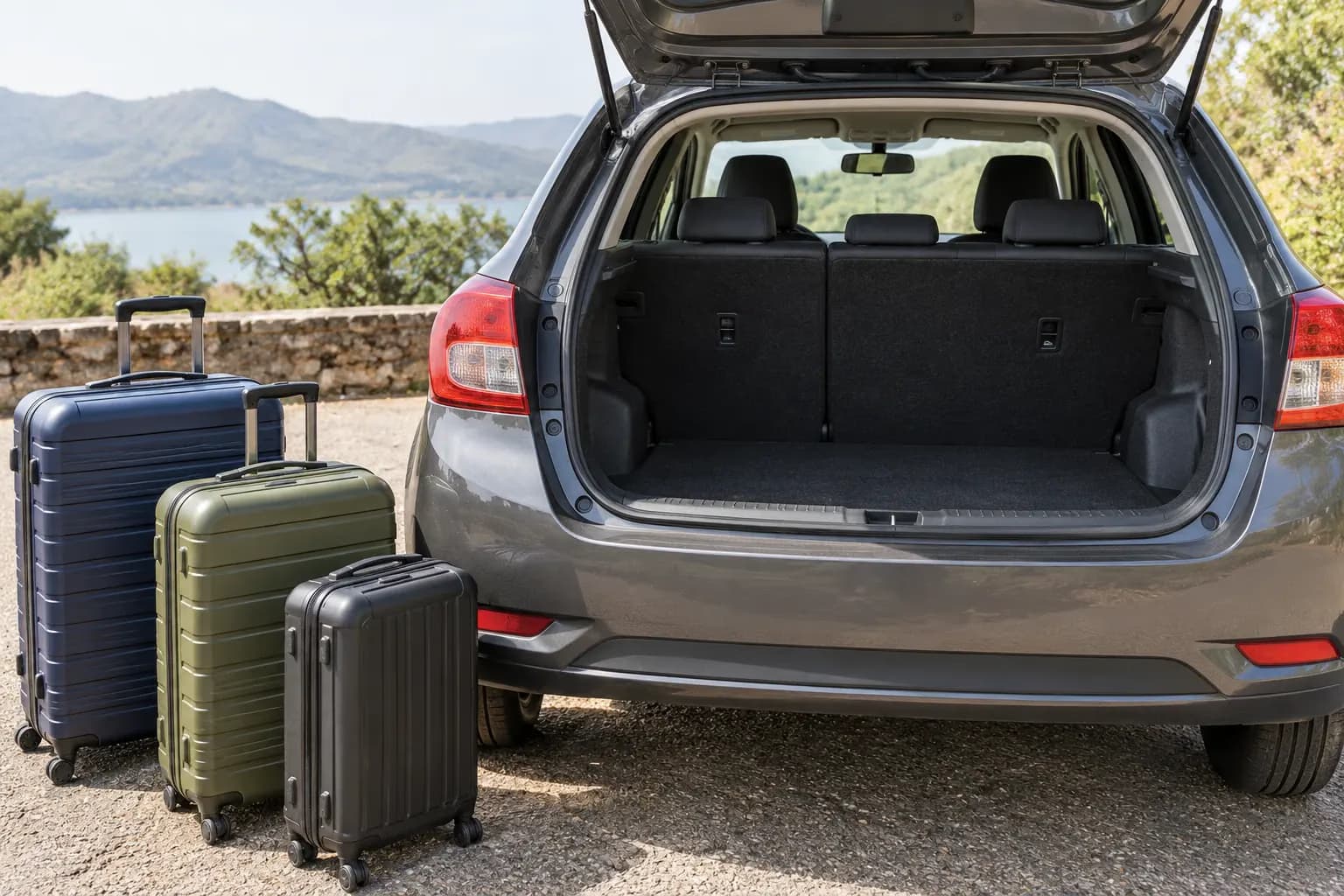
The number of litres quoted in a brochure may refer to a different seat configuration from the one you will use. With the last row upright, place your actual stroller, suitcases or school bags in the remaining space. Check whether the tailgate closes without pressing against the load, whether the parcel shelf has to be removed, and whether a spare wheel or charging cable eats into the useful area. Do not put unsecured luggage on the laps of rear passengers to make a vehicle seem practical.
If a trip needs six occupants plus luggage, it may be more realistic to compare an MPV with a three-row SUV than to shop by body style alone. The difference is not a rule that one category always wins. It is a prompt to test packaging. Some three-row cars prioritise occasional extra seats; others are designed around frequent use. Your trip pattern makes that distinction important.
Ventilation, visibility and the ride matter at the back
On a short demonstration, ask the third-row passenger about air flow and noise. Rear vents, window size and seat recline adjustment vary by model and variant. Do not infer that a roof vent is effective just because it is present; try it with the cabin cooled on a warm day. If possible, include uneven urban roads and a short faster stretch in the test drive, with every passenger belted. The last row may move more over bumps than the front row, and someone prone to motion sickness may notice it first.
Also check practical exits. Can the person in the back release the access mechanism, or must a middle-row passenger move? Is the route blocked when a child seat is installed in the middle? Can an adult reach the door handle comfortably? These details matter in ordinary parking spaces and not just emergencies. Never compromise a correctly installed child seat merely to make the walk-in demonstration look easy.
Repeat the walk-in in a tight parking space
Showroom cars often sit with every door fully open. In an apartment basement or a busy mall, a neighbouring car may allow only a narrow opening. Ask for a demonstration in an ordinary parking bay, where it is safe and permitted. The middle-row lever might be easy to reach from outside but hard to operate without swinging the door wide. Pay attention to the high sill as the passenger steps out, especially after a long drive when joints are stiff.
If older relatives will use the last row often, this test can be more valuable than a touchscreen or a powered tailgate. It is also worth seeing whether the middle-row seat returns to the same comfortable position and locks without a hard shove. A mechanism used several times a day should not require strength or a special technique. Recheck it on both sides, since the access route may differ.
A better comparison than "six-seater versus seven-seater"
Captain chairs can create a walk-through gap but reduce the nominal seating count; a bench may carry one more person yet require a tumble for third-row access. Neither layout is automatically better. A family that usually carries four people and occasionally six may value a wide walk-through. Another that often carries seven will care more about the third-row cushion, seat-belt access and luggage left behind. Evaluate the exact seat layout in the exact trim; brochures may mix photographs of multiple variants.
For each shortlisted car, make one practical note: who can sit in each row for a two-hour drive, how they enter, where their bags go, and what compromise the middle row makes. If the answer requires "we'll manage" on every trip, the seating claim is doing more work than the car. The strongest family car is not necessarily the one with the most seats on paper, but the one whose least glamorous seat still suits the person who will use it.