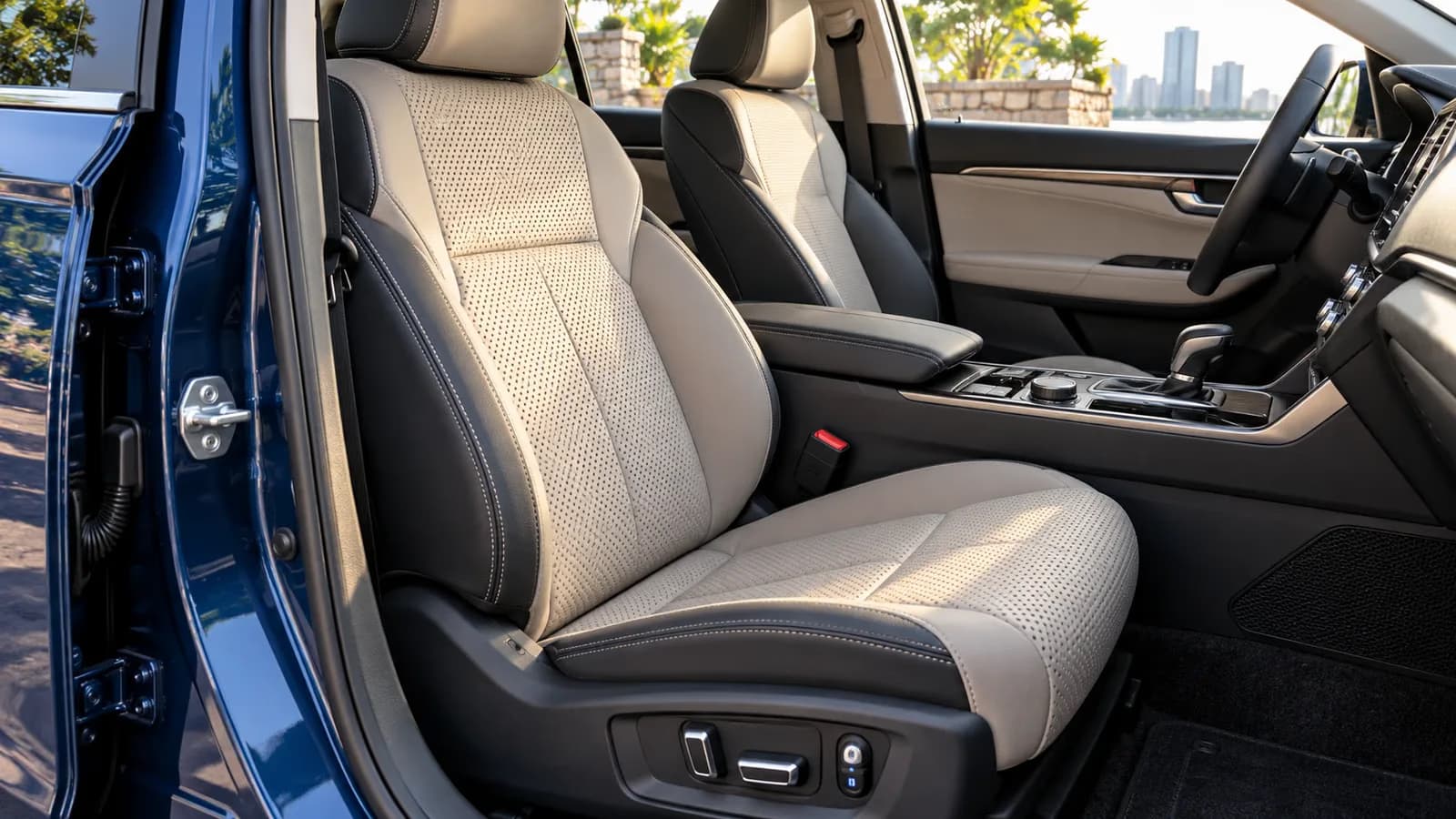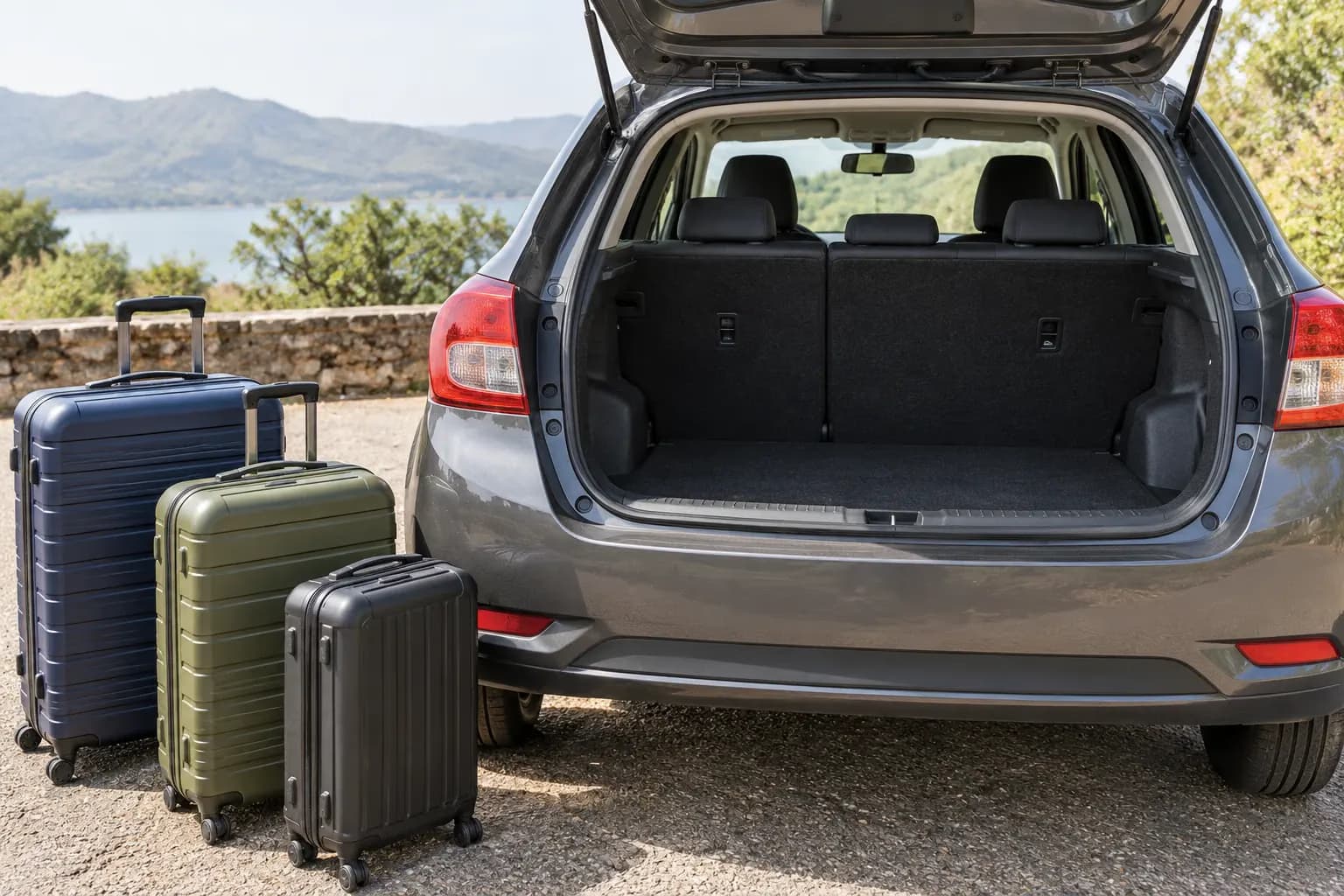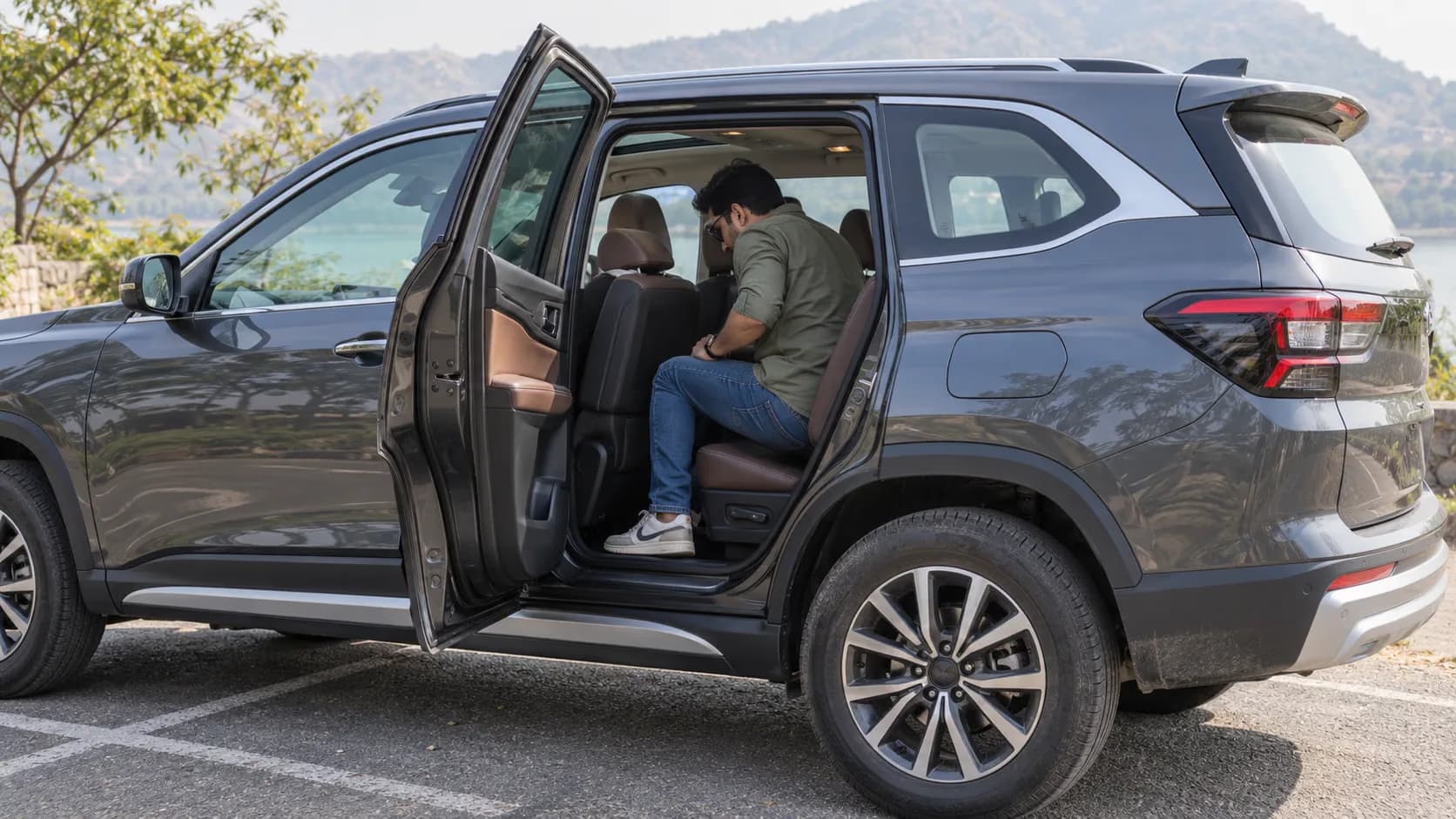
Most showroom comparisons begin from the driver's seat. For a family car, that leaves out the place where parents, grandparents, children and friends spend long journeys. Rear-seat comfort is not a single dimension on a brochure; it is the combined result of access, posture, suspension response and the way people actually fit.
Take the seat you will use
Carry the child seat, booster, or adult passenger who will regularly travel there when possible. Sit behind your own driving position, not an artificially forward front seat. Enter and exit from the kerb-side door, check the opening angle and notice whether the sill or roofline makes the movement awkward.
Score the real basics
- Thigh support and backrest angle for the intended passenger.
- Headroom with a natural seating posture.
- Knee and foot room behind the actual driver's position.
- Middle-seat usability, including the hump and shoulder room.
- Three-point belts, head restraints and ISOFIX access where relevant.
- Rear AC effectiveness, vents, USB points and storage without loose cables.
Use an imperfect road
A five-minute smooth-road loop cannot reveal how the rear bench behaves over speed breakers, broken patches and lane joints. Include a short representative stretch and listen for vertical movement, side-to-side toss and repeated suspension thump. A comfortable front seat does not guarantee a calm second row.
Do not confuse features with fit
Sunshades, charging ports and a reclining backrest can be helpful, but they should not distract from belt geometry, head restraint height or the ability to install the child seat you own. Take notes immediately after each comparison drive. The more specific your record, the less likely a bright showroom and a feature list will decide the car for you.
For safety-equipment context, use the Bharat NCAP consumer resources and the owner's manual for the exact child-seat and belt instructions of each shortlisted car.