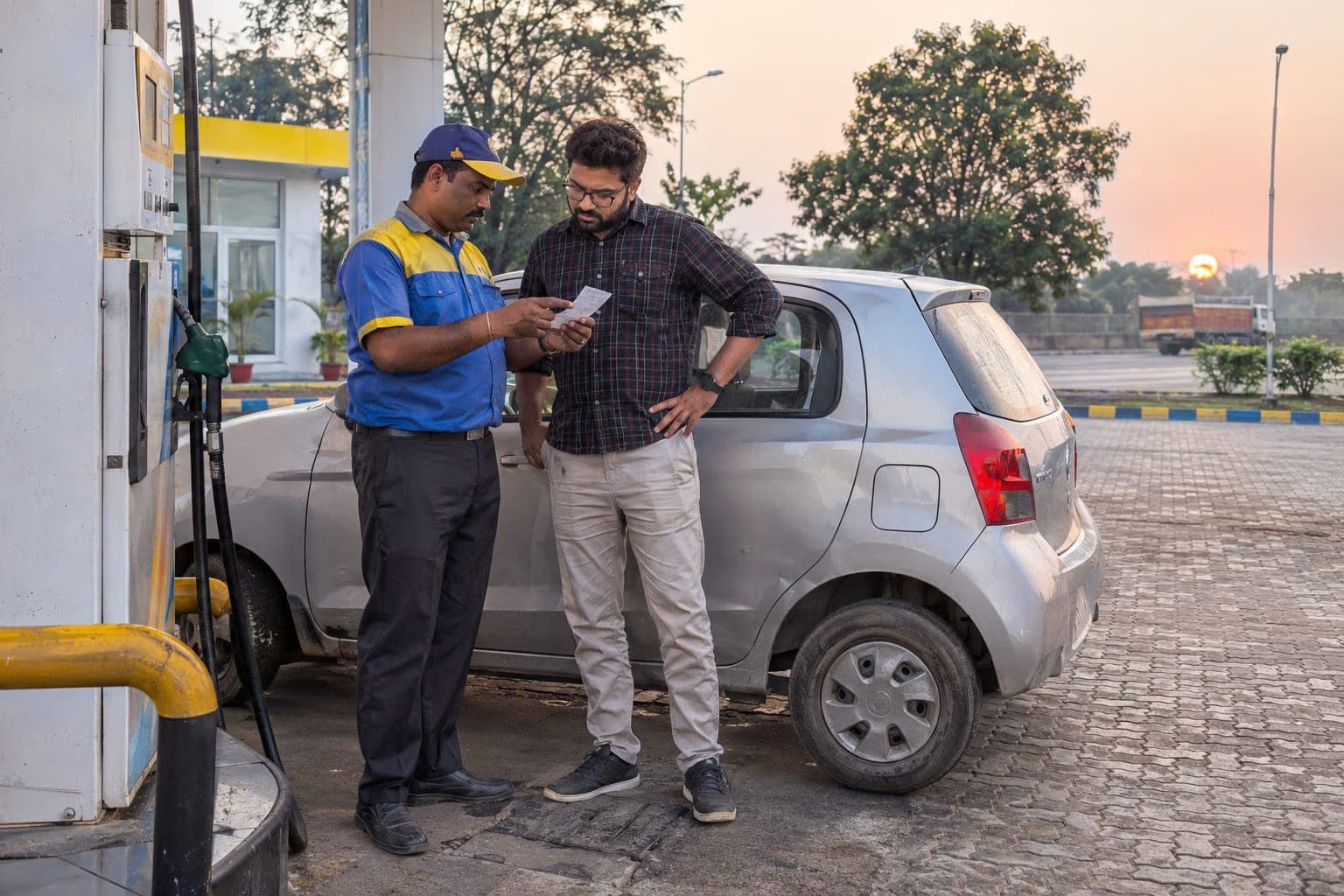
The fuel nozzle is back on the pump when you notice the receipt says petrol, but your car is diesel. The most useful action is also the easiest to miss: do not start the engine. Tell the station staff, keep the car safely parked and call your vehicle maker's roadside assistance or a qualified recovery service. The correct response depends on whether contaminated fuel has stayed in the tank or has already travelled through the fuel system.
The RAC's wrong-fuel recovery guidance distinguishes these two situations. Before starting, the job is generally to prevent circulation and arrange draining by trained personnel. If the engine has run, stop in a safe place and have the fuel system assessed. That distinction is more important than an internet rule about how many litres can supposedly be diluted with the right fuel.
If you spot the mistake at the pump
Leave the engine switched off and avoid cycling the ignition or pressing the start button. On some vehicles, electrical systems can run fuel pumps as part of a start sequence, so the safest practical instruction is to avoid experimenting with controls. Put the car in a secure position and let the station staff know what happened. If the car is blocking a dispenser, ask for help to move it only in a way the vehicle's manual permits. Do not push an automatic car or an EV-style electronic shifter without knowing how its neutral and parking brake work.
Call the manufacturer roadside assistance number or a reputable recovery company. Tell them the exact car, engine type, wrong fuel, estimated quantity, amount already in the tank and whether the engine or ignition has been switched on since filling. That information helps them choose the right equipment and decide whether the vehicle should be taken to a workshop. Do not let an untrained helper siphon fuel or open lines on a busy forecourt. Fuel vapour, spills and electrical equipment make this a job for a proper service operator.
Keep the receipt and note the pump number, station location and time. Photograph the receipt and the fuel-cap label if safe to do so. You may need a clear record for the station, insurer or workshop. If the attendant made the error, calmly ask for the station manager's details and an incident acknowledgement. The immediate priority remains preventing the engine from running on contaminated fuel.
If you have already driven away
A car may continue to move for a while on the fuel left in its lines, or it may start misfiring, smoking, losing power or stalling. Do not try to “use up” the wrong fuel. Indicate, pull off the road safely and switch the engine off. If the location is hazardous, prioritise a safer stopping place over an abrupt stop in traffic. Put on hazard lights as appropriate and call recovery. Do not restart the car to prove to a mechanic that the symptom is real.
The consequences vary with the engine, the amount of wrong fuel and how long the engine ran. Petrol in a modern diesel system can reduce the lubrication that diesel fuel provides to high-pressure components. Diesel in a petrol engine can interfere with combustion and foul parts of the fuel system. Neither situation can be diagnosed responsibly from a single percentage quoted online. The workshop needs the actual vehicle history and may need to inspect components after draining.
Why “just top it up” is a poor general answer
You may hear that a small quantity of incorrect fuel is harmless if the rest of the tank is filled with the correct type. Some older vehicles may have tolerated mixtures that modern engines do not. The safe advice for an unknown car is not to gamble on dilution. Modern injection equipment is expensive, and the financial difference between a controlled drain before starting and a repair after driving can be substantial.
If a technician or manufacturer representative proposes a specific procedure, ask them to put it in writing for your exact engine and recorded fuel quantity. That is different from accepting a casual forecourt assurance. Avoid adding petrol to a diesel vehicle for cold-weather myths, or diesel to a petrol vehicle because someone says it will burn off. Fuel-system design, emissions equipment and warranty conditions vary by model.
What should the recovery and workshop do?
The method depends on whether the engine has been started. A qualified operator may drain the tank and lines and supply clean fuel before testing. If the car ran, the workshop may inspect the pump, filter, injectors and relevant components for contamination or damage. Ask for the work order to record what was found, not merely “wrong fuel fixed”. Keep the invoice, any diagnostic report and any replaced-part details.
Do not insist on a particular replacement part before inspection. A tank drain may be enough for a vehicle caught before starting; another vehicle may need more work. Equally, avoid authorising an expensive system replacement on the basis of a frightening estimate without measured findings. Ask the workshop to explain what evidence supports each step and whether the engine can safely be tested afterward.
Fuel removed from the car must be handled and disposed of correctly by the service provider. It is not something to pour into another vehicle or store in an improvised container. If the mistake occurred at a station, ask for a written account of the fuel dispensed, but do not delay safe recovery while a liability discussion is unresolved.
Insurance and the station record
Misfuelling cover is policy-specific. Call your insurer or check the policy wording rather than assuming comprehensive insurance automatically pays for draining or mechanical damage. Ask whether roadside assistance, a separate misfuelling add-on or an exclusion applies, and whether the claim needs prior authorisation before repair. Keep the incident chronology simple: who filled the car, what fuel was requested, what was dispensed and whether the engine ran.
When reporting the issue, distinguish what you know from what you suspect. A station receipt proves a sale but may not by itself prove which nozzle entered the vehicle. Photographs, a written station acknowledgement and the workshop's drained-fuel findings can be useful. Do not discard an invoice because the car appears to run normally afterward; records matter if a related fault appears later.
How to avoid a repeat
Check the fuel type printed on the filler flap and say it aloud to the attendant before the nozzle goes in. If you drive several household cars, do not rely on memory or the colour of a pump handle, which can vary by brand and location. Watch the selected nozzle and confirm the pump display. At the end, glance at the receipt before starting. A ten-second pause is cheaper than discovering the error outside the station.
A wrong-fuel event is recoverable when handled methodically. If the engine has not started, keep it that way and arrange professional draining. If it has run, stop safely and get the car inspected rather than driving onward. The RAC's service guidance supports that sequence; the vehicle maker and your insurer determine the exact recovery, repair and cover for your car in India.