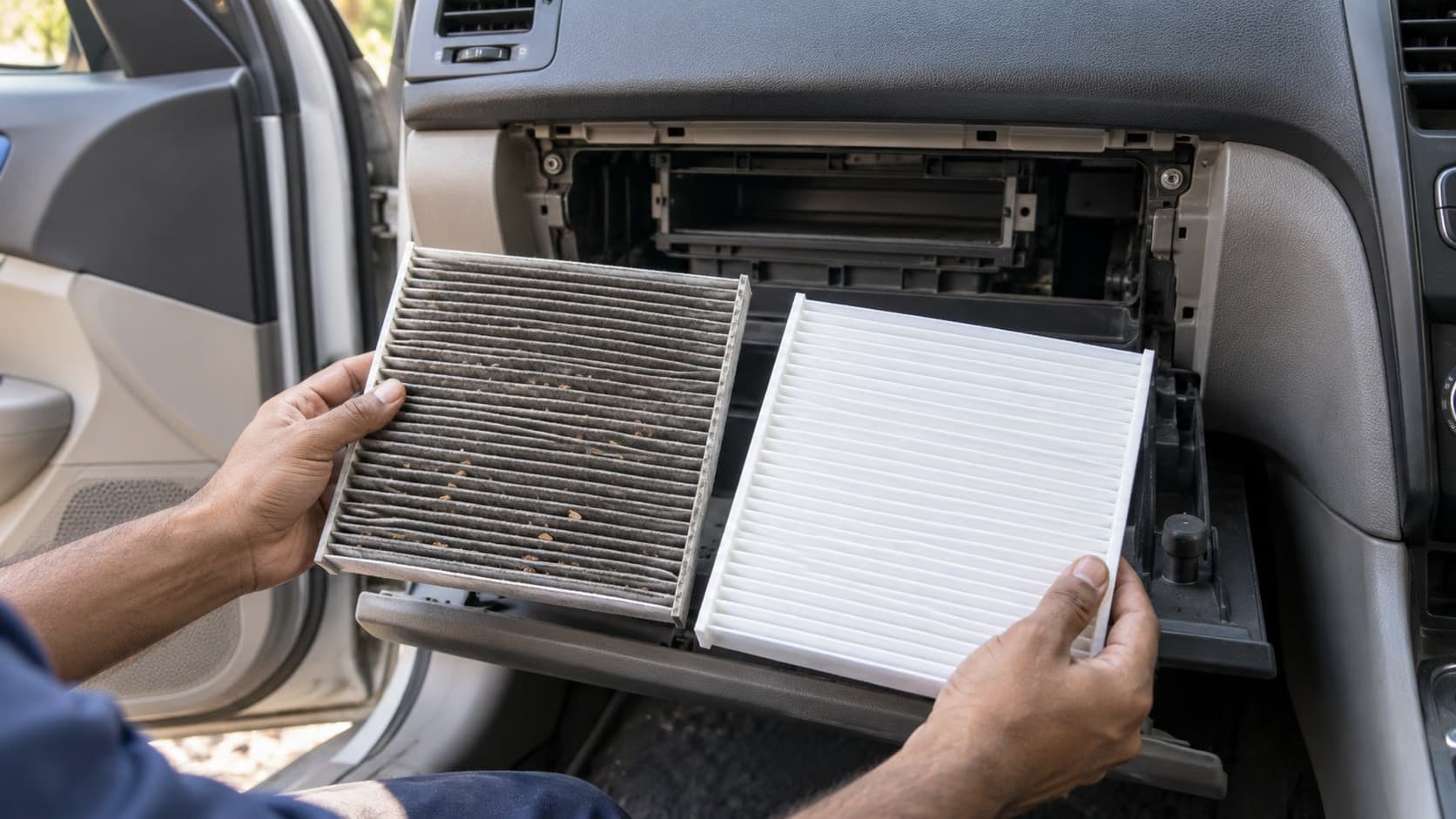
When a car's air-conditioning feels weak, the first workshop suggestion is sometimes an expensive refrigerant job. The problem may be much simpler if very little air reaches the cabin. A dirty cabin air filter can restrict the flow through the ventilation system. Replacing it will not repair every AC fault, but checking it is a sensible early step before paying to open the sealed cooling circuit.
The distinction is between air volume and air temperature. If the fan sounds normal but the vents deliver little air, a restricted filter is plausible. If a strong stream of air stays warm, the filter may not be the main cause. Both symptoms deserve diagnosis, not a guess. AAA's cabin-filter guidance lists reduced ventilation, persistent odours and hard-to-clear window fogging among signs of a restricted filter. Those are clues, not a definitive diagnosis for every car.
What the filter actually does
A cabin filter sits in the ventilation path and traps material carried with incoming air. Depending on its design it can catch dust, pollen and other particles; some versions use activated carbon to address certain odours. It is separate from the engine air filter, which protects the engine intake. Confusing the two can lead to the wrong part being changed and an AC complaint remaining unresolved.
The cabin filter does not turn a car into a medical-grade clean room, and a “premium” label cannot tell you how well a particular unit fits your housing. Match the part number and dimensions to the car, check whether the manufacturer specifies a particular type and make sure any replacement seals correctly. An ill-fitting filter may let air and debris bypass its media. If a workshop recommends a costly special filter, ask what verified benefit it provides for your model and how it compares with the specified part.
Use the owner's manual before choosing an interval
There is no single replacement distance that suits every vehicle and climate. AAA notes that manufacturer intervals vary and recommends checking the owner's manual for the exact schedule. Dusty construction routes, frequent driving with outside air intake and heavy pollen can make an inspection useful earlier than a standard interval. A lightly used car can still collect leaves and debris, so mileage alone is not the whole story.
Maruti Suzuki's car-care guidance directs owners to follow the periodic maintenance schedule in the owner's manual. Treat that car-specific schedule as the baseline. If a service adviser suggests replacement at every visit, request to see the removed filter and compare its condition with the scheduled interval. A dark surface does not automatically prove that airflow was badly restricted, but visible debris packed between pleats is a useful reason to act.
A quick check before approving work
With the car safely parked, turn the fan through its speeds and check the air volume from several vents. Note whether the weakness is at all outlets or one side only. A single blocked outlet can point to a duct or flap issue rather than a filter. Switch between fresh-air and recirculation modes and listen for the flap operating, without forcing a diagnosis from sound alone. If the blower does not run or makes an unusual noise, a filter change may be beside the point.
Ask the workshop to show where the cabin filter is located. In many cars it is behind the glove box; in others it may be beneath the dashboard or near the base of the windscreen. AAA describes these common locations but also advises consulting the vehicle's instructions. Some housings are easy to access; others require trim removal. Do not pull a panel or airbag-adjacent trim just because a generic video demonstrates a different model.
If the filter is removed, photograph its orientation and any airflow arrow before the replacement is installed. The arrow's meaning can vary by part, so follow the housing or service manual rather than assuming it always points downward. Confirm the access cover is fully clipped back on. A loose cover can create noise or allow unfiltered air past the media. These are straightforward checks and much more useful than paying for a bottle of “AC perfume.”
When a fresh filter will not solve the problem
If air flows strongly but is warm, the cooling circuit, controls or condenser may need professional inspection. If the fan is weak even with the filter removed briefly for a workshop test, the blower or ducting may be involved. A persistent damp smell can have other causes, including moisture in the system, so replacement alone may not remove it. Bosch Car Service India lists filter replacement alongside leak detection and other AC checks; they are separate services for different faults.
Do not approve a refrigerant refill solely because the car is old. Ask for the technician's evidence of low charge or a leak, the proposed repair and the total estimate. If the system is low because of a leak, adding gas without addressing the leak may be a short-lived expense. A good diagnosis records vent temperature and airflow conditions rather than declaring that every weak AC complaint needs the same fix.
Why window clearing matters too
Ventilation is also part of visibility. A restricted filter can make it harder to move sufficient air across the windscreen when the glass mists up, as AAA notes. Check the car's front demist setting and follow the owner's manual. In humid conditions, AC dehumidification and the right air distribution may matter as much as fan speed. If misting persists after a clean filter and correct settings, have the HVAC system checked instead of trying to drive with impaired visibility.
A fresh filter is not a replacement for using the demister correctly. Likewise, using recirculation continuously in a full car can make misting harder to manage in some conditions. Learn which controls your car provides and switch modes as needed. The goal is clear glass and comfortable airflow, not merely a cold number on the climate-control display.
How to judge a workshop estimate
- Ask for the exact cabin-filter part number and whether the quoted item matches the owner's manual.
- Have the old filter shown to you, with the complaint and the inspection recorded on the job card.
- Separate the filter price, fitting labour and any optional cleaning treatment.
- Request a before-and-after check of airflow at the vents.
- If cooling remains weak, request a separate diagnosis rather than authorising a speculative gas refill.
Cheap, correct maintenance is valuable; automatic replacement without inspection is not. A filter can be an accessible service item on one model and an awkward job on another. If you do it yourself, use the car's proper instructions, avoid damaging the housing and dispose of the old filter without shaking its collected dust inside the cabin.
The useful order of work
Start by describing the symptom precisely: weak air volume, warm air, smell, noise or poor demisting. Check the manual's filter interval, inspect the correct component and confirm a properly fitted replacement if needed. Then reassess the symptom. If the problem remains, move to targeted professional AC or blower diagnosis. This sequence is more informative than treating every complaint as an excuse for a refill, and it keeps a small service decision from turning into an unnecessary repair bill.