An electric car owner can spend an entire evening deciding whether to stop the charge at 80% or let it reach 100%. The honest answer is less tidy than a universal rule. The extra energy may be useful before a highway journey, while a lower routine target can avoid keeping a full battery parked for hours. Your own car’s manual matters more than a generic social-media number because battery management, chemistry, charging controls and recommended maintenance differ between vehicles.
A good starting point is to separate three situations: charging for tomorrow’s ordinary commute, charging immediately before a longer drive, and leaving the vehicle parked for days or weeks. They have different goals. A daily routine needs enough range with a sensible reserve. A trip needs a reliable departure buffer. Storage asks how to avoid leaving either battery extremely low or very high for a prolonged period. One setting cannot optimise all three.
Why do people talk about 80%?
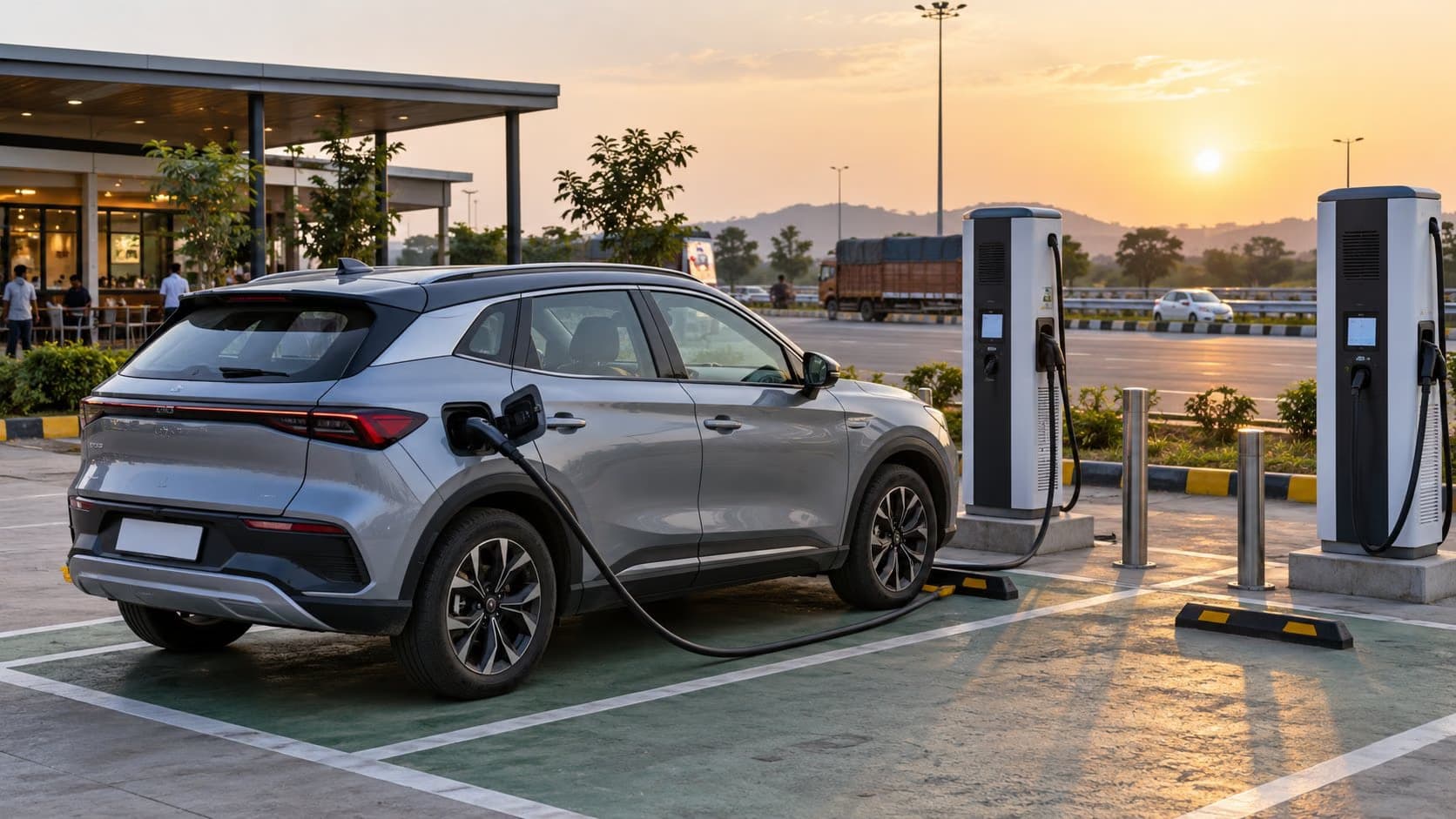
Public DC fast chargers often advertise a time to reach 80%, rather than a time to reach 100%. The remaining portion can be comparatively slow because the vehicle reduces charging power as the battery fills; the exact charging curve depends on the vehicle, pack temperature and charger. Autocar India’s charging explainer describes this practical slowdown. It is a reason to think about journey time at a busy public charger, not proof that charging above 80% is forbidden.
Another issue is how long the car sits at a high state of charge. Hyundai’s owner guidance for one 2026 EV says that keeping its battery between 50% and 80% when parked for a long time helps maintain performance. Notice the qualifier: this is guidance for long parking, in a particular vehicle manual. It should not be stretched into a claim that every electric car must stop at 80% after every charge. Check the storage and charging sections in the manual for your exact model and model year.
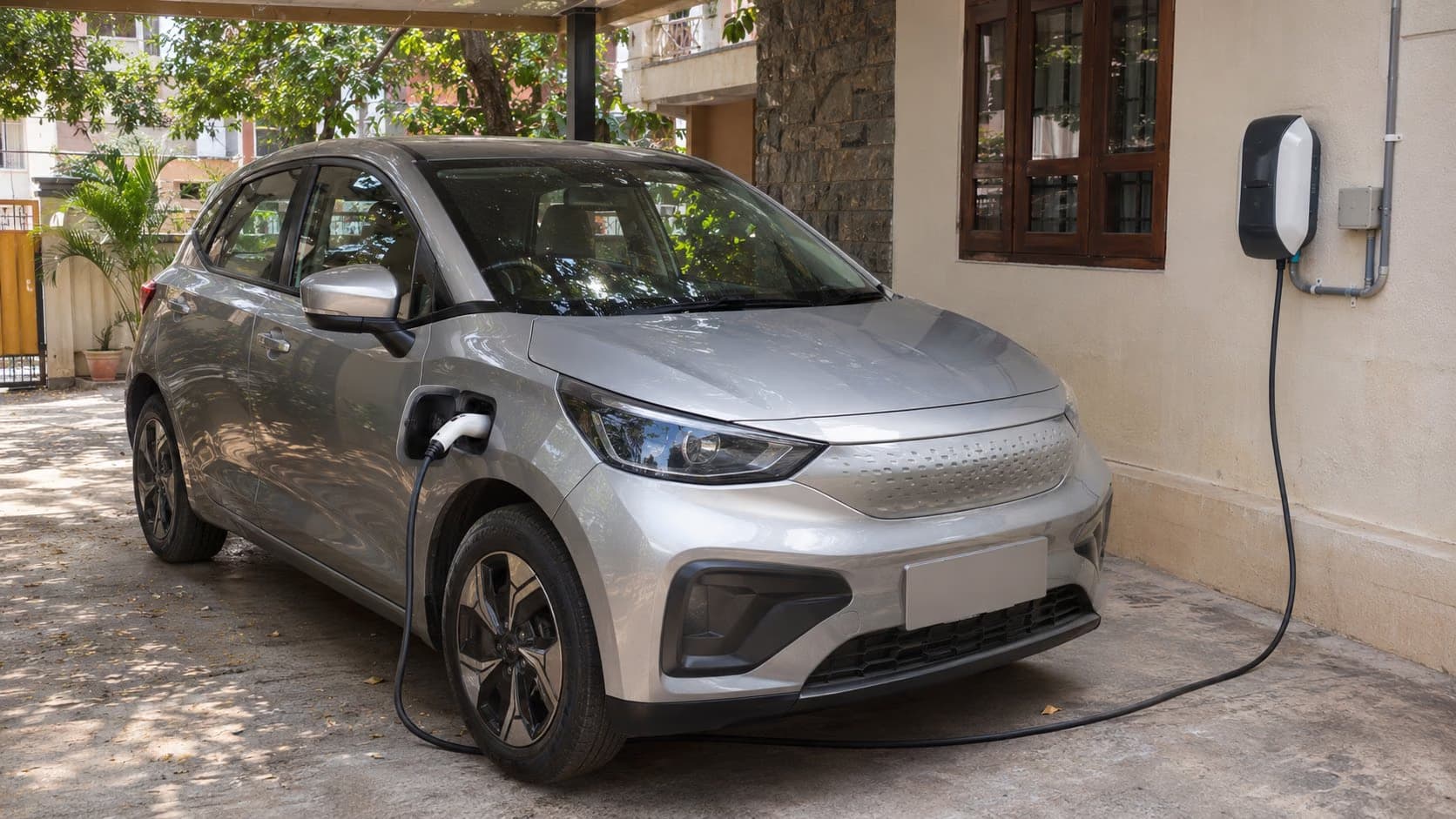
Some cars allow you to set separate AC and DC charging targets on the infotainment screen or app. If yours does, a routine target gives you a repeatable habit without watching the charge status every evening. Before changing it, confirm that the displayed percentage is the car’s normal indicated state of charge. Do not try to translate that number into cell chemistry or hidden battery buffers; the manufacturer’s software handles those details.
When does 100% make sense?
Before a long drive, a full indicated battery can give you more flexibility if a charger is occupied, an expressway detour appears or the day is unusually hot and air-conditioning demand rises. Plan to finish charging close to departure where practical, rather than leaving the car full for a long idle period. A full charge is an operating option offered by the car, not evidence that you have harmed it with one journey. Your manual may also specify occasional full charging or other procedures for calibration; follow those instructions rather than internet folklore.
At home, the time cost of the final 20% may be manageable if the car is plugged in overnight and you have a safe, approved installation. At a highway DC charger, the same extra percentage can cost disproportionate time. If another reliable charger lies comfortably within range, it may be quicker to leave earlier and charge again later. If the next charger is uncertain, that calculation changes. Assess actual route distance, elevation, weather and a reserve you are comfortable with; the dashboard’s remaining-range number is an estimate, not a promise.
How much charge do you need on an ordinary day?
Work backwards from your driving, not from the highest possible number on the screen. If your round trip is short and home charging is dependable, an 80% target may still leave ample headroom. If you have unpredictable late trips, no home charger or a long intercity commute, a higher routine target may be reasonable. A driver who routinely arrives home with very little charge should solve that practical problem before worrying about a theoretical ideal battery percentage.
Watch your own consumption history over several journeys. Note the route, distance, air-conditioning use and indicated percentage at departure and arrival. A single unusually efficient or inefficient drive is a poor basis for setting a daily charge limit. Recalculate as seasons or routes change. The first few weeks of ownership are especially useful for learning what your vehicle actually uses on your regular roads.
AC and DC charging are different decisions
The 80% conversation often mixes a battery-care target with a public-charger time decision. At home, a lower AC target may simply stop charging once the chosen level is reached. At a DC fast charger, stopping at 80% may be mainly about the slower final stretch and freeing the connector for the next driver. Do not assume the charger’s advertised maximum power is what your car will take continuously. The car controls the rate it accepts, and charge level and temperature affect it.
Check your car’s charge-port and cable instructions before using an unfamiliar charger. A public unit that repeatedly faults, has a damaged connector or is standing in unsafe conditions is not made acceptable by reaching a preferred percentage quickly. Use the network’s current status and have an alternative stop on longer routes. For home installation, use the manufacturer’s approved equipment and a qualified installer; do not build a routine around improvised extension leads.
What about leaving the car unused?
Long parking is where the manual’s storage guidance matters most. Hyundai’s guidance cited above gives one example of a 50–80% storage band. The same Hyundai manual has separate precautions for periods without use, including checking and charging the vehicle as specified. Another brand may give a different interval or target. Look up the exact section before leaving a car parked through a holiday or extended work trip.
Also remember that an EV has systems beyond its traction battery, including a 12-volt battery on many models. A car that shows a healthy traction-battery percentage can still need attention after long inactivity. Follow the vehicle’s instructions for storage, ventilation and periodic checks. If a warning appears, contact an authorised service centre rather than trying to diagnose a high-voltage system yourself.
A simple decision before you plug in
- Ordinary local use: set a target that comfortably covers your normal driving and reserve, subject to your manual.
- Long trip tomorrow: consider charging higher, including 100%, and finishing near departure if the car’s instructions allow it.
- Public rapid charge: compare the extra time after 80% with the distance and reliability of the next charging stop.
- Extended parking: use the storage range and check interval specified by your manufacturer, not a generic rule.
The mistake is treating 80% as a magic safety threshold or 100% as automatically wrong. Both are numbers on a dashboard serving different trips. The better habit is to know your car’s official guidance, charge for the journey you actually intend to make, and avoid leaving the vehicle at an extreme state of charge longer than its manual recommends.
Sources: Hyundai owner manual: energy and long-term parking guidance; Hyundai owner manual: high-voltage battery precautions. Charging behaviour and storage advice vary by model; consult your own manual.