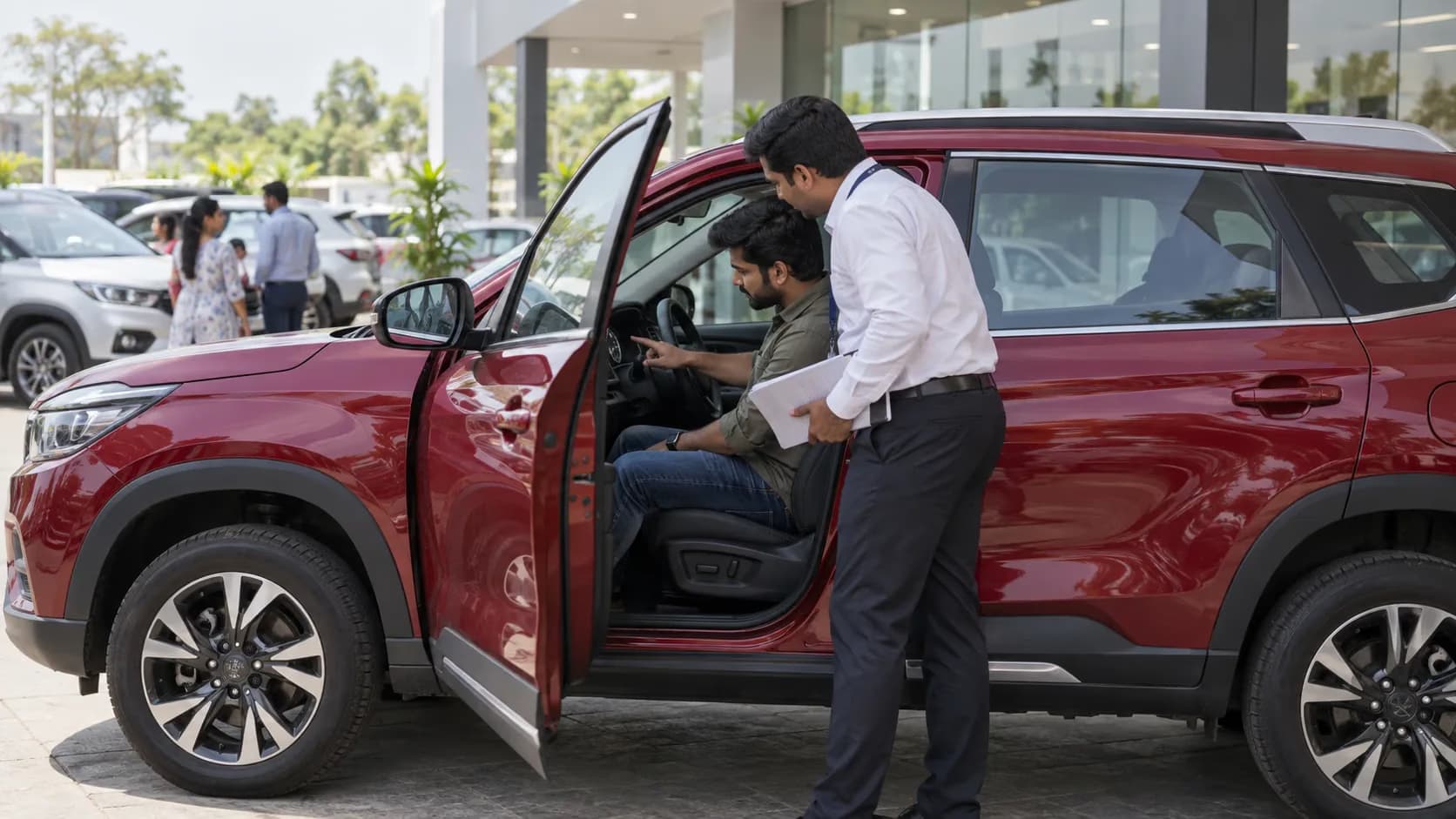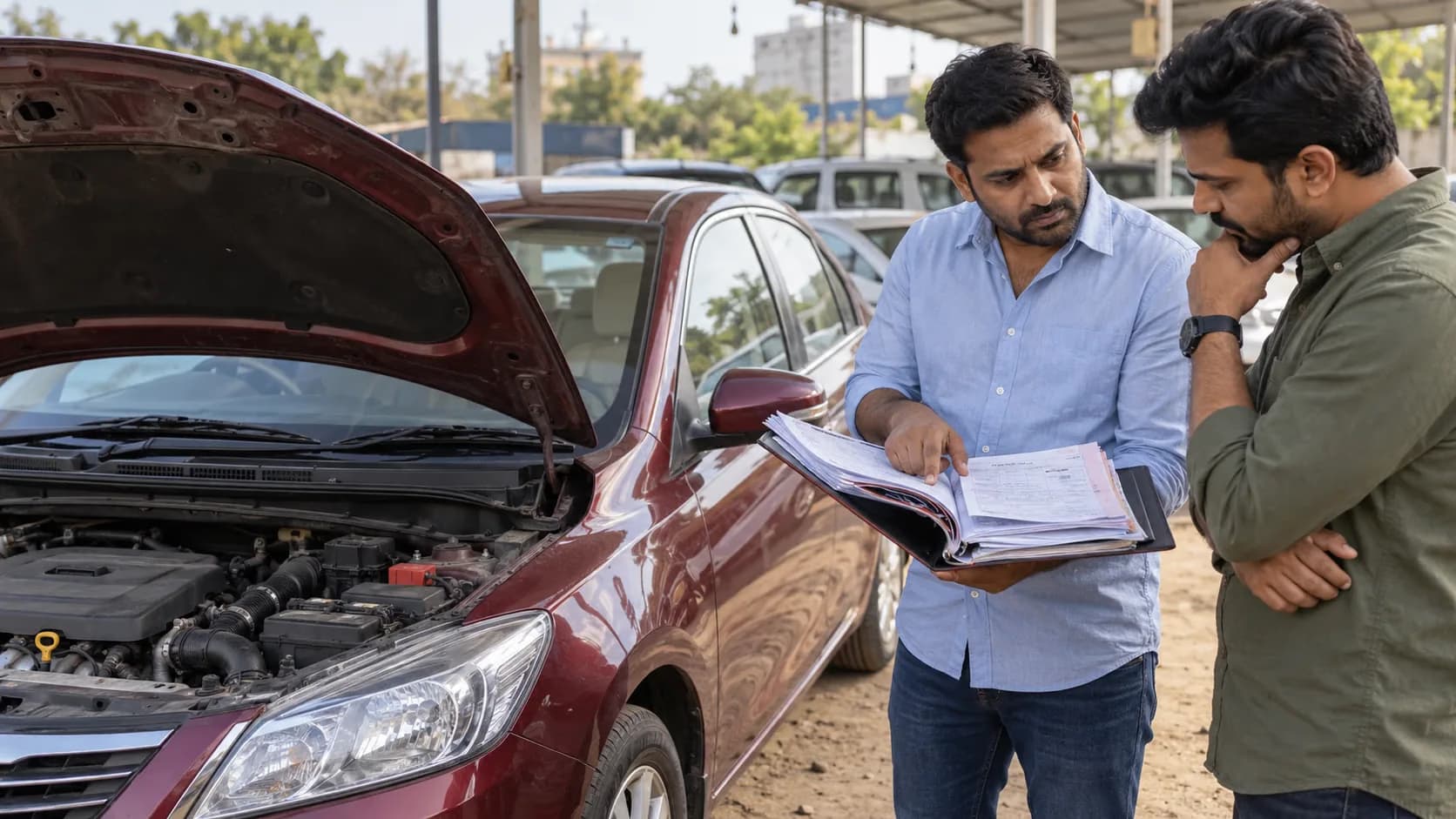
A used car with a fully stamped service booklet looks reassuring. It is not the same as a complete account of what happened to the car. A stamp shows that a workshop saw it at a particular time; an itemised invoice shows what it did. Neither one necessarily captures accident repairs, independent-garage work or a period when the car was driven without servicing. The strongest history is a chain of dated, VIN-linked records that makes sense alongside the odometer and a physical inspection.
The buyer's job is not to prove the seller dishonest. It is to see which claims can be verified before paying. "Company maintained" should lead to records, not end the conversation.
Start with the VIN, not a pile of paper
Compare the vehicle identification number on the car with the RC and service records. A number plate is easy to change; a service invoice for a different VIN is irrelevant to the car in front of you. Check the engine number where documentation requires it and confirm the owner details. If the seller gives you screenshots with the VIN cropped out, ask for a version that can be tied to this specific vehicle.
Sort the documents by date and odometer reading. A coherent sequence generally rises over time and has plausible intervals. A sudden lower reading, a long gap or a large jump is not proof of tampering by itself; clerical errors happen. But each needs an explanation and ideally an independent record. The annual mileage claimed in an advertisement should be consistent with the history.
What manufacturer records can show
Authorised-service records may give service dates, mileage and parts fitted. Hyundai India says its myHyundai app can show service and payment history for a verified vehicle. Maruti Suzuki says its True Value programme verifies service history and documentation before sale. These are examples of available records, not a promise that every model or every owner can retrieve a complete lifetime file instantly.
Ask the seller to request the record through the manufacturer's authorised channel, subject to privacy and ownership rules. Do not ask for someone else's account password. A service centre may need the current owner's consent or identity documents. If the car has moved between brands, importers or independent workshops, there may be no single database.
Understand what a gap does and does not mean
A missed authorised-service entry can mean the car was serviced elsewhere, not necessarily neglected. An independent invoice with date, mileage, VIN and parts used can fill that gap. A verbal "my mechanic did it" cannot show which oil specification was used or whether a major scheduled item was replaced. Ask the seller for bank or payment records if an invoice is missing, but remember a payment alone does not specify the work.
Equally, continuous authorised-service records do not guarantee the body has never been repaired outside the network. Insurance and body-shop records may tell a different story. A workshop visit labelled "inspection" is not an oil change; an invoice may list only a wash or minor repair. Read the line items instead of counting visits.
Build a timeline of the expensive work
Identify the manufacturer-specified maintenance schedule for the exact engine and transmission. Mark when fluids, belts, filters, spark plugs and other scheduled components should have been handled. Avoid generic internet intervals; they vary by powertrain and model year. Then compare the records with that schedule. If a time-based item is overdue, budget for it even when the mileage is low.
Look for repeat repairs to the same component. One replaced sensor may be routine; three unresolved visits for a transmission fault are a different risk. Ask whether the fault was ultimately fixed and what test confirmed it. A warranty claim can be a positive sign of documented repair, but it deserves the final repair order, not just the opening complaint.
Digital scores have blind spots
Hyundai India's Vehicle Digital Passport FAQ explains that its report relies on information available to its systems. It says repairs outside the Hyundai network will not appear there, data gaps can occur, and there is no physical verification as part of generating the digital report. That is a helpful example of why a "health score" should prompt questions, not replace an inspection.
If a seller displays any app score, ask which time period and sources it covers. Check the date of report generation. A clean digital dashboard is not evidence that the underbody is sound or every fluid is fresh. The same principle applies to third-party inspection certificates: read their exclusions and the actual observations.
Use a physical inspection to test the paperwork
Take the car to a qualified independent or authorised workshop with the records in hand. Ask the inspector to look for signs that contradict them: worn parts after a claimed replacement, fluid leakage after a recent repair, uneven tyre wear, body-panel work or warning lights. No visual check can certify a lifetime history, but it can reveal obvious inconsistencies.
During a test drive, check cold start, transmission behaviour, braking and temperature. Do not rely on a seller's warm, idling car to demonstrate a cold-start issue is absent. An inspector should use appropriate diagnostics where useful, with the seller's permission. Clearing fault codes before inspection hides information; it does not repair the cause.
Keep the evidence with the car
Save copies of the RC, authorised history, independent invoices, warranty claims and inspection report with the sale agreement. Confirm that the seller is legally entitled to share the records and obscure unrelated personal data where needed. The next owner will value this chain too.
Three inconsistencies worth resolving
First, an invoice dated after a claimed sale or ownership change may simply be a late bill, but ask who authorised the work. Second, a major part described as new should have a part number and a date; a generic labour entry does not prove replacement. Third, a service interval that appears perfect on paper while the car's tyres, pedal rubbers and seat show heavy wear deserves closer inspection. None is a conviction on its own. Together, they tell you where to focus an independent check.
If a workshop has changed ownership or software systems, an older record may not appear in its current app. Ask for printed job cards or copies from the branch rather than immediately concluding the car was never serviced. The seller should be willing to help trace records, but privacy rules may limit what a buyer can obtain without consent. Make the purchase conditional on the evidence you actually need.
Do not mistake an inspection for a warranty
A pre-purchase inspection describes observed condition at a point in time. It does not prove that every past service occurred, and it may exclude hidden internal faults. Read its scope and limitations. If a dealer advertises a separate used-car warranty, get those terms as a separate document and check what components, labour, claim limits and exclusions apply. Service history, inspection and warranty answer three different questions.
A documented gap is not automatically a deal-breaker. It changes the price and the amount of inspection needed. The car with imperfect but honest records may be a better buy than one sold with a flawless-sounding story and no VIN-linked evidence.