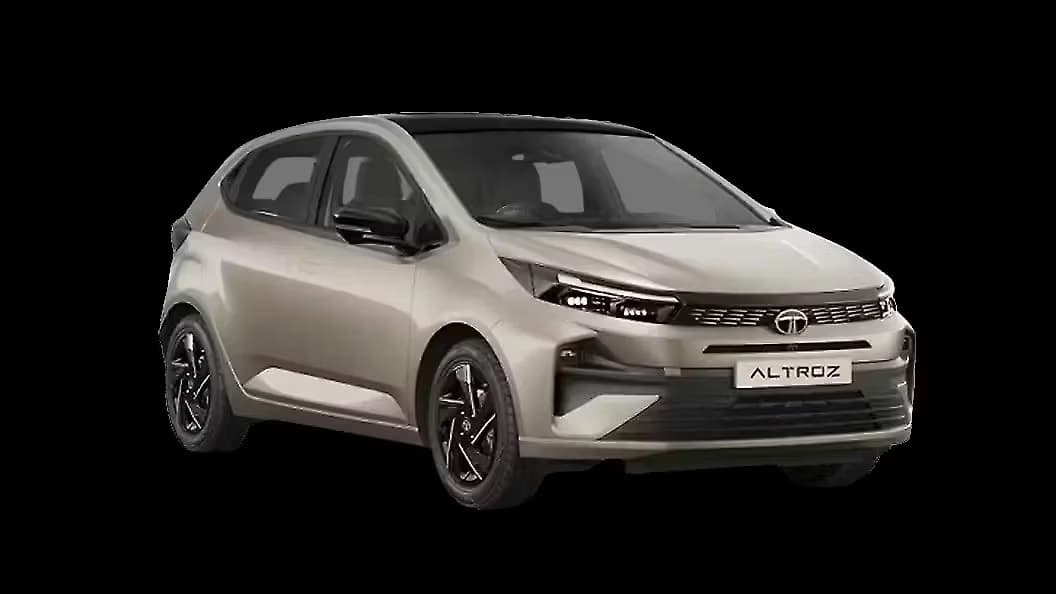
A CNG car's lower running cost is easy to imagine. Its boot is harder to judge until you put your family's actual bags inside. The current Tata Altroz iCNG uses two smaller cylinders beneath the luggage floor rather than one large cylinder spanning the boot. Tata calls this a space-saving solution in its 2025 launch material. It is a real packaging advantage, but it is not the same as saying the CNG and petrol boots are identical.
This distinction matters for buyers who alternate between a daily commute and family trips. A boot can look open in a photograph yet fail with a hard suitcase, folded stroller or wheelchair. The right question is whether the shape of the remaining space works for the objects you carry, not whether the tank looks clever.
What the twin-cylinder layout actually changes
Instead of leaving a tall tank visible across much of the luggage compartment, Tata places two cylinders low in the rear. The arrangement leaves a flatter, more usable area above them. Independent reviews of the current facelift report about 210 litres for the CNG version against 345 litres for the non-CNG car; the manufacturer describes the space as usable rather than a literal no-loss boot. Treat any published volume as a starting point. The manufacturer brochure or an actual car in the showroom is the right place to confirm the exact configuration sold to you.
A volume figure cannot express the opening width, the height under the parcel shelf or the amount of space between wheel arches. A long, narrow object can fit where a square suitcase cannot. A soft duffel can conform to the available space while a rigid case cannot. Take the luggage you normally use, place it through the opening without forcing trim panels, and check whether the hatch closes normally.
Do the test with the parcel shelf in place if you expect to travel that way. A bag that only fits when piled high may block the rear view or become an unsecured load. Look for the spare-wheel arrangement and the location of the puncture kit or tools on the specific variant. Keep access to emergency equipment in mind; a boot that works only when everything is buried is less useful on a highway.
The floor height is part of the trade-off
The cylinders are out of sight, but their location affects the floor arrangement. Lift the floor panel, see how it is supported and ask the dealer to show the service access points. Do not assume you can modify the panel or remove protective covers to gain room. Those parts belong to a certified fuel system and should stay as designed.
In a petrol Altroz, the extra luggage depth may make it easier to stand a suitcase upright or stack shopping below the parcel shelf. In the iCNG, the useful space may still cover weekday bags, a cabin case and smaller items. The practical limit appears on the trip when four occupants each bring a large suitcase. Run the boot test before signing, preferably with the rear seat occupied as it would be on that trip.
Why CNG range is only half the ownership calculation
The appeal of iCNG depends on your access to reliable filling stations, annual kilometres and the price gap to petrol. A showroom mileage claim cannot tell you how long the detour and queue at a CNG pump will be on your route. Map your usual commute and the two or three stations you would actually use. Ask an owner in your city about queue patterns, but verify current pump availability yourself.
The car can run on petrol when CNG is unavailable, yet petrol-only operation changes the cost you expected when buying it. Calculate a mixed-use month rather than assuming every kilometre will be on gas. Consider the hours when you travel: a station convenient at midday may be frustrating during the evening rush. For occasional long journeys, plan how much luggage you need while the rear seat remains in use.
Compare the actual on-road price of the iCNG variant with the petrol variant that has the equipment you need. A higher initial cost may be worthwhile with high regular use; at low annual mileage the payback can take much longer. Insurance, servicing and any finance interest belong in the comparison. Avoid projecting savings from a single idealised km/kg figure.
Drive the powertrain you intend to buy
Tata's product note lists a 1.2-litre iCNG engine with 73.5 PS and 103 Nm in CNG mode. Those are manufacturer figures. They do not tell you how the car feels with three passengers, luggage and the air conditioner running. Take a proper drive in CNG mode, including an incline and an overtaking situation you can assess safely. A short petrol-mode demonstration misses the question most buyers have.
Transmission offerings have changed over time. Do not assume a review of an older Altroz iCNG describes today's exact gearbox or variant. Ask for the current engine-and-transmission matrix and test the configuration on your quotation. If an automatic is offered in your market, try its low-speed response in traffic as well as the boot. If your dealer cannot supply the variant you want, compare a realistic alternative rather than accepting a different gearbox by accident.
Safety, paperwork and CNG maintenance
The current Altroz family has a manufacturer-announced Bharat NCAP result covering petrol, diesel and CNG powertrains. Match the tested equipment and the car you are buying before using any crash score as a blanket guarantee. More directly, check the CNG installation documents, service schedule and fuel-system inspection requirements supplied with your car. Factory CNG hardware is not a reason to skip periodic checks.
Do not treat a faint gas smell as normal. Follow the owner's manual for any suspected leak, avoid creating ignition sources and have the vehicle inspected by an authorised workshop. Do not alter the cylinders, their mountings or the luggage-floor structure for extra space. A little more boot is not worth compromising the fuel system.
Make the luggage trial repeatable
Bring the same two or three bags when you view the petrol and iCNG cars. Place them in the same order and photograph the result for your own comparison. Note whether the rear hatch closes without compressing a bag, whether groceries can sit upright, and whether a stroller needs to be dismantled. This makes a later decision much easier than relying on memory of two boots seen on different days.
Check the loading lip and how far you must reach to lift a heavy item out. A boot can be large enough on paper but inconvenient for an older family member. If the rear seat must fold to carry a weekly item, ask whether you can still transport the people you normally carry. The most useful capacity is the one available with everyone seated and belted.
The showroom test that settles it
- Bring the largest bag, stroller or mobility aid you use regularly and fit it in the exact iCNG variant.
- Check whether the parcel shelf, rear visibility and tool access still work with that load.
- Drive the car in CNG mode with realistic occupants and air-conditioning.
- Get an itemised on-road quote for the matching petrol and iCNG equipment levels.
- Confirm the current transmission, warranty and CNG service requirements in writing.
The twin-cylinder arrangement makes the Altroz iCNG more practical than a simple tank-across-the-boot design. It does not erase the difference from the petrol car. Buy it if the luggage test and your local filling routine both work; those two everyday facts matter more than a single boot-capacity headline.