A showroom demonstrator can look new under the lights yet have spent months doing short test drives with dozens of different drivers. That does not make it a bad buy. It does mean the word "new" on a quotation is inadequate: you need to establish who owned it, when its warranty started, how far it has travelled and what the price compensates you for. A discount alone cannot answer those questions.
Think of a demonstrator as its own category between a factory-fresh retail car and a conventional used car. It may have current-model equipment and dealer maintenance, but it may also have first-registration history, tyre wear and a shorter remaining warranty. The transaction should be evaluated on documented facts about that exact VIN.
First establish whether it has been registered
Ask for the VIN, registration status and proposed invoice type before discussing the discount. A vehicle registered in the dealership's or another person's name is not the same as an unregistered stock car merely used for stationary displays. If it has an RC, check the date and registered owner and understand how ownership will transfer. The tax, insurance and resale implications may differ from those of a first registration in your own name; obtain a written on-road breakup rather than relying on a verbal assurance.
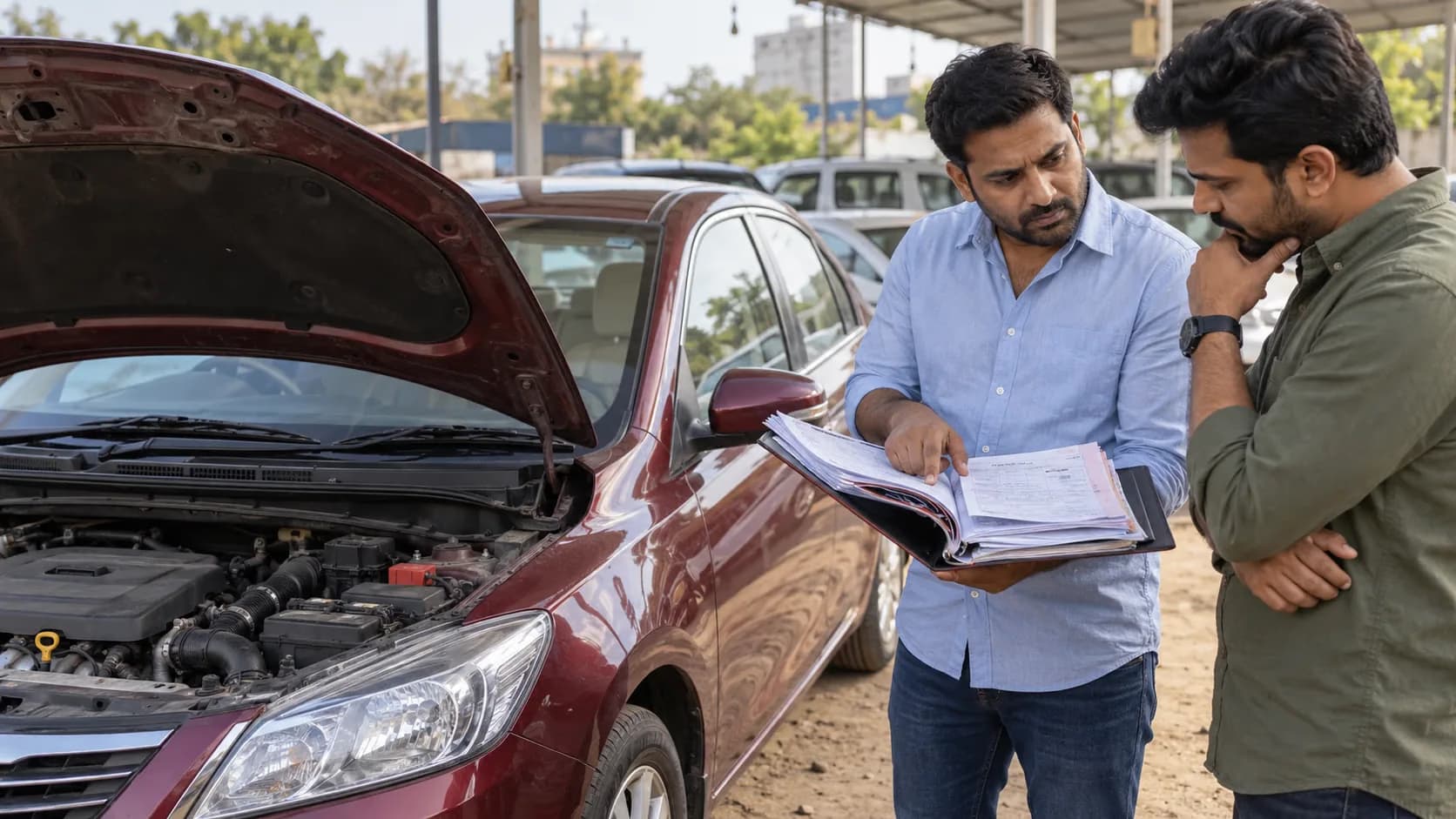
Request the original purchase or dealer allocation documents where available, plus the current RC, insurance schedule and pollution certificate if applicable. Check for any financing or hypothecation. If the seller cannot explain the registration trail, pause. A later buyer will ask the same questions when you sell the car.
Warranty starts are not reset by a sales pitch
Warranty terms come from the manufacturer. Hyundai India's policy, for example, says the new-vehicle warranty commences on delivery to the first purchaser. This is not a universal rule for every brand or every demonstrator; it shows why you should request a written VIN-based warranty start and end date from the manufacturer or authorised dealer, not infer them from the date you pay.
Ask separately about the basic vehicle warranty, powertrain coverage, roadside assistance, free services and any connected-car subscription. They can have different start dates or transfer rules. A salesperson's statement that "full warranty remains" should be matched by a document or service-system screenshot showing the actual balance. Do not assume an extended-warranty package will solve a missing basic-warranty period.
Look at the odometer, then look beyond it
Record the odometer during inspection and again at delivery. Ask for the demo-use period, test-drive log if available, and service history. Very low mileage does not rule out long idle periods, short cold runs, battery discharge or repeated kerb strikes; higher mileage is not automatically harmful if there is good maintenance evidence. What matters is whether wear and price match the story.
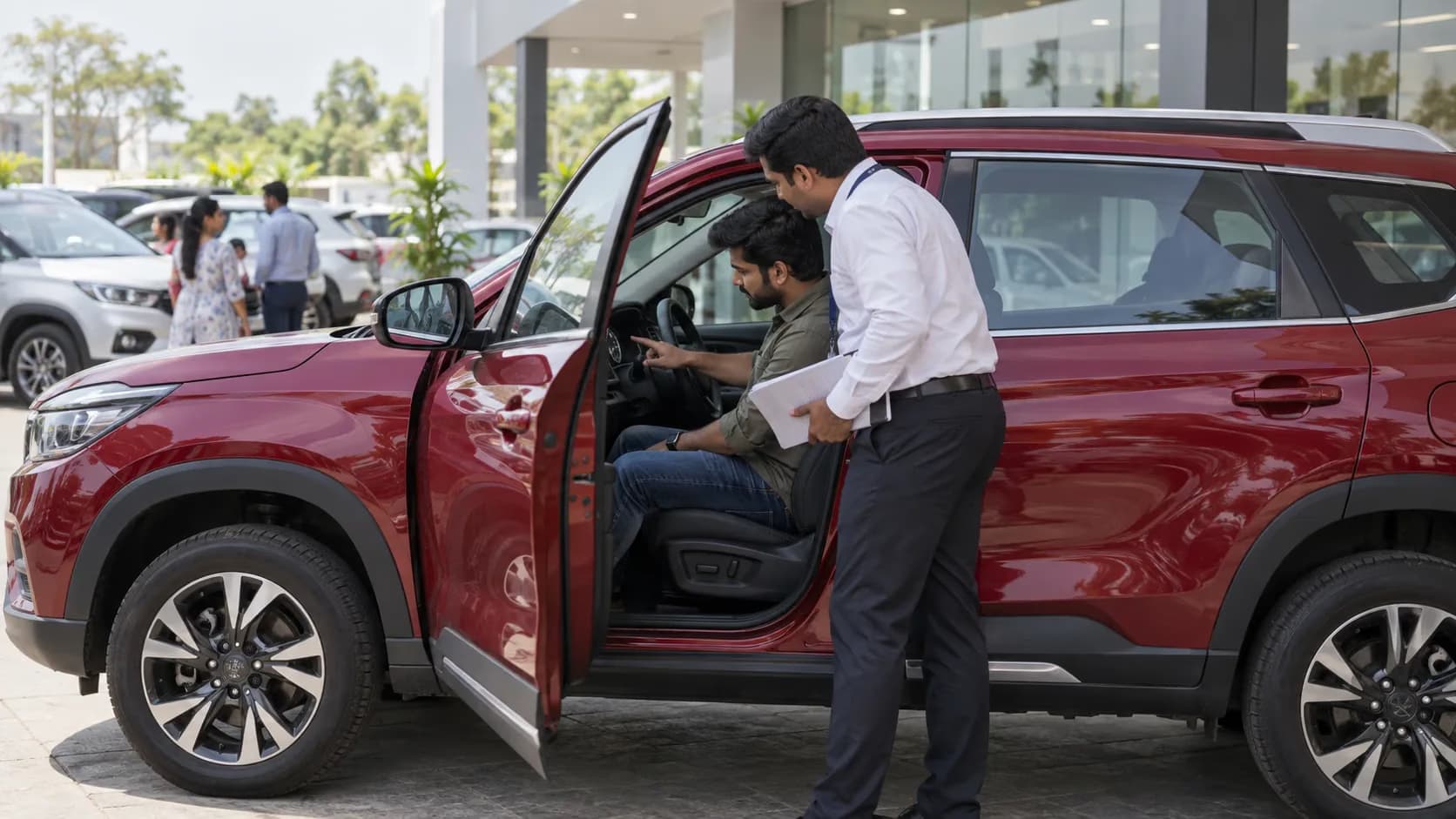
Inspect tyres for uneven wear and date codes, the wheels for kerbing, bumpers for repairs and the interior for repeated-use marks. Test every switch, seat adjustment, camera, sensor, charging port or fuel flap as appropriate. On a vehicle that has sat unused, check battery condition and fluids via an authorised workshop. Arrange an independent inspection when the discount is meaningful enough to justify it.
Pay particular attention to paint differences in daylight. A touched-up bumper may be routine, but you should know before purchasing. Compare panel gaps and inspect under the car for damage. Ask the dealer to disclose repairs in writing. A clean showroom detail can hide usage, while a complete repair record can make a small cosmetic repair less worrying.
The discount must be calculated against the right baseline
Get the current price of a genuinely new equivalent variant from the same market and date. Then itemise the demonstrator's quotation: ex-showroom or used-car price, applicable taxes, insurance, accessories, registration or transfer fees, and any compulsory add-ons. Compare the total paid, not just a headline "savings" number.
Factor in what you may lose: months of warranty, first-owner resale status, existing mileage, tyre life and a shorter subscription or service entitlement. A dealer may offer a big percentage off an outdated list price while a new car has a separate manufacturer offer. Check both written quotes on the same day.
Do not let a pending model update or a change in safety equipment be smuggled into the comparison. Verify manufacturing month, model year and exact variant via documents and the VIN. A demonstrator of the outgoing specification should be priced against a realistic alternative, not against an unrelated newer trim.
Make the handover conditional on inspection
Before final payment, agree in writing that you will inspect the exact VIN and receive the documents promised. Check that both keys work, all supplied accessories are present, any open recall or service campaign is addressed, and the invoice matches the agreed registration status. Ask the dealer to resolve identified faults before delivery rather than promising an informal later adjustment.
Keep photographs of the odometer, tyres, body condition and service display at handover. If there is a change in mileage between quotation and delivery, clarify it before signing. Once the sale is complete, written records are easier to rely on than memories of a showroom conversation.
When a demonstrator makes sense
Insurance and finance need their own checks
Ask the insurer for a quote using the car's actual registration and ownership status. The insured declared value and premium of a registered demonstrator need not match a factory-new quote. If taking a loan, tell the lender exactly what the vehicle is; a used-vehicle product may have different eligibility and terms. Do not accept a finance quotation that silently describes a previously registered car as new.
Check that the existing policy, if any, will be handled correctly at transfer and that your cover is active from delivery. Keep the invoice, proof of payment and transfer paperwork together. It is easier to resolve a later warranty or insurance question when the transaction history is complete.
Ask who has driven the car: one dealer representative or a rotating pool of customers. You may not get a perfect log, but a dealer should at least be able to account for the period of use and scheduled services. Check the spare wheel or repair kit, tools, manuals and both keys. These small missing items erode a discount surprisingly quickly, and replacing a modern key can be expensive.
Do not accept a rushed "today only" deadline as a substitute for the documents. A demonstrator is a specific physical car, not a configuration to be ordered later. Once you have its VIN, every check can be tied to that vehicle. If the dealer changes the VIN on the final paperwork, inspect the replacement from the beginning.
It can be sensible when the VIN history is clear, a qualified inspection is clean, the remaining warranty is verified and the final price compensates for its use and resale position. It is less attractive when the seller cannot document registration, refuses inspection or asks nearly the same money as a sealed new car. The right question is not "How large is the discount?" but "What exactly am I buying after the discount?"