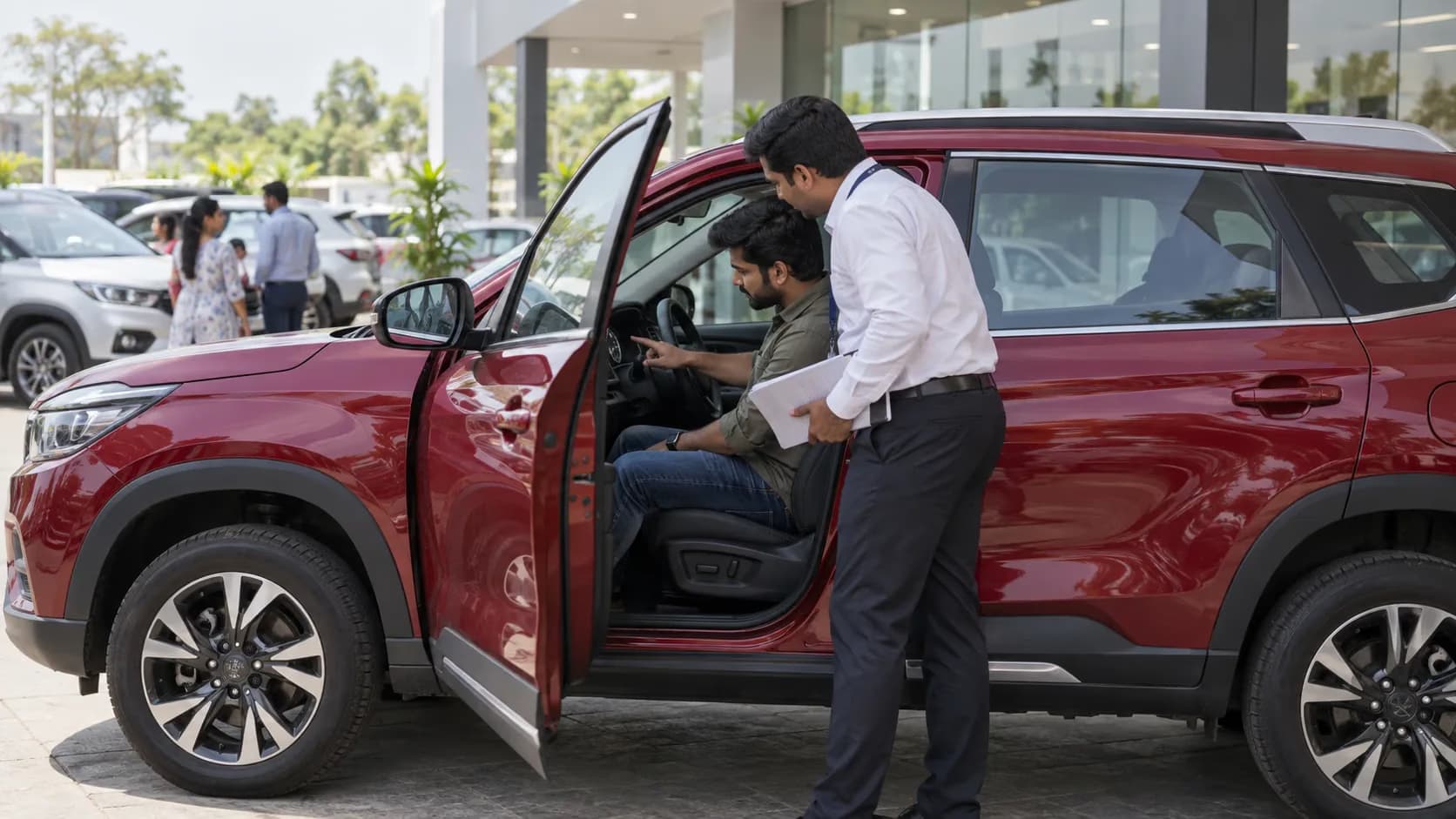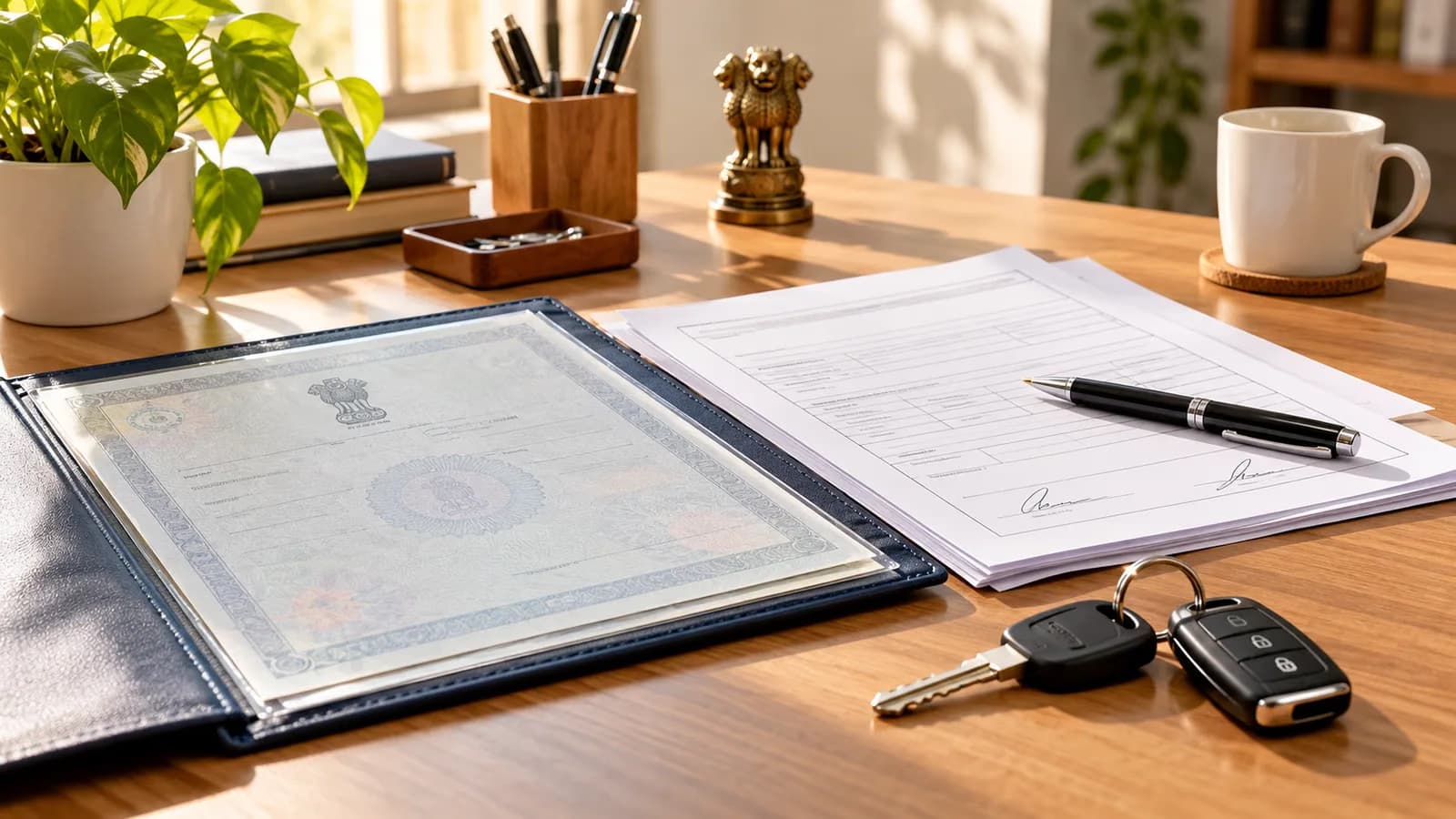
A used-car deal should end with more than a signed receipt and a key handover. The vehicle record, insurance, and supporting documents need an orderly transfer trail. That protects the seller from a later notice tied to the vehicle and gives the buyer a cleaner starting point for ownership.
Start with the RC and identity details
Match the registration certificate to the car's registration number, chassis number and seller identity. Check whether a finance endorsement remains recorded. If the vehicle is still under loan or hypothecation, obtain the relevant finance closure paperwork before assuming a simple transfer is possible.
Build one shared document pack
- RC and the required transfer forms for the transaction.
- Valid insurance record and the insurer's ownership-transfer process.
- Current PUC certificate where required.
- Address and identity proof as requested by the registering authority.
- Sale acknowledgement, payment record and dated handover note.
Do not leave the application vague
Keep the application acknowledgement and note the registration authority, application date and reference number. The seller should not rely on a verbal promise that the buyer will transfer the vehicle later. The buyer should keep copies of every submitted document and check the record after processing.
Insurance is a separate action
The RC transfer and insurance transfer should be treated as connected but separate tasks. Contact the insurer immediately after the sale and follow its stated process. Do not assume a policy will automatically reflect a new owner simply because the sale agreement is signed.
For the official baseline, read Parivahan's transfer-of-ownership guidance and verify local requirements with the relevant State transport authority.