Two used cars of the same model and year can be advertised at very different prices. One owner may have detailed service records and fresh tyres; another may have a pending repair and only a verbal assurance that everything is fine. A fair asking price is not simply the highest listing you can find online. It is a starting figure you can defend with the car's condition, history and comparable vehicles.
This guide is about setting a realistic price, not the ownership-transfer procedure, which is a separate task. Getting the valuation right helps both sides avoid a negotiation built on surprises.
Start with comparable cars, not wishful averages
Look for the same model, generation, powertrain, transmission and similar variant in your city or region. Age and kilometres matter, but they do not make every car identical. Note asking prices from several sellers, then remember that an advertised amount is not necessarily the final transaction price. Extremely cheap listings may hide faults; unusually high ones may sit unsold.
Create a short comparison table for yourself: model year, variant, mileage, number of owners, condition notes and asking price. Exclude cars that are materially different rather than stretching the comparison to justify your target. If few close matches exist, widen the search cautiously and acknowledge the uncertainty.
Condition should be visible, not merely claimed
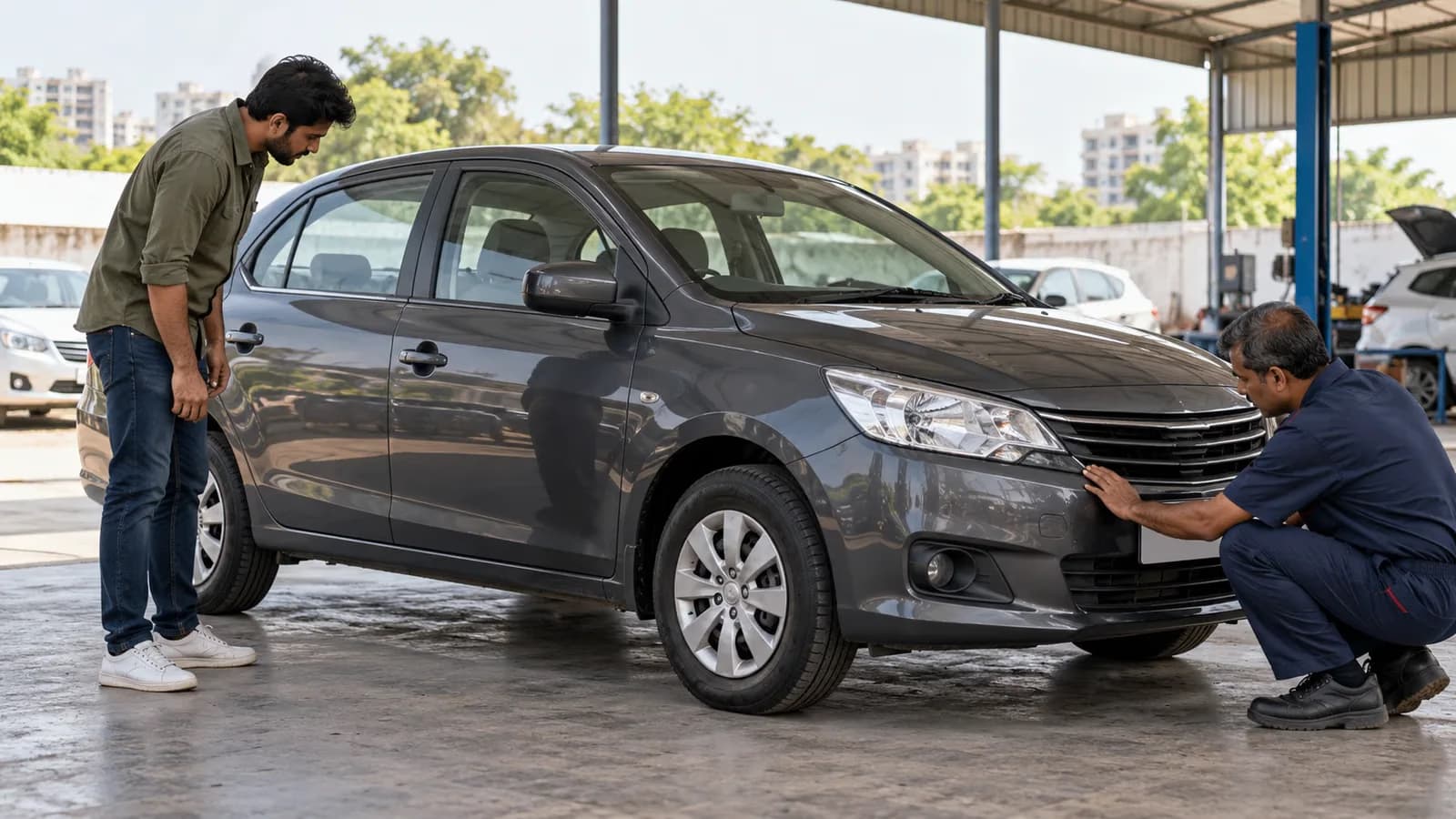
Inspect paint, panels, glass, interior wear, tyres, lights, AC, electronics and a cold start. List faults honestly. A professional inspection can uncover mechanical or structural issues you did not recognise. Maruti Suzuki True Value's buyer checklist emphasises ownership, insurance, service history and condition checks. Its retail process is not a universal pricing formula, but it illustrates the records buyers reasonably expect to see.
Do not describe a car as accident-free simply because you did not personally repair it. Ask for records and disclose what you know, including significant body or mechanical work. A transparent description may attract fewer speculative enquiries but makes serious negotiations easier.
Service records change the conversation
Dated invoices show what was done and when. A stamped booklet without itemised work is useful, but less detailed. A manufacturer's digital history can supplement paper records where available. Hyundai's digital vehicle-history explanation
Collect invoices for tyres, battery, major repairs and scheduled service. Redact personal contact information before sharing documents widely. Be ready to show the original records during a serious inspection rather than uploading sensitive papers to a public listing.
Do repairs before sale?
Small safety or functionality repairs may be worth completing so the buyer can test the car properly. Large cosmetic work is not automatically recovered in the sale price. Get a written repair estimate and compare it with the likely difference between selling as-is and selling after repair. Avoid spending money to hide a fault; disclose it instead and price accordingly. Keep the repair invoice if you do proceed.
Fresh tyres may improve confidence, but a seller should not assume the full tyre bill adds to resale value rupee for rupee. Conversely, worn tyres are a real near-term cost the buyer may deduct. The same logic applies to overdue service, a weak battery or a damaged windscreen.
Make the advert specific
Use clear daylight photographs of all sides, interior, odometer and visible imperfections. State the variant accurately, along with fuel, transmission, registration year, ownership count and service-history availability. Do not use a stock image or a photograph of another car. Do not publish an unredacted RC or insurance document in a public advert.
A realistic description answers the first ten questions a buyer would ask and reduces calls that lead nowhere. Keep claims verifiable: “service invoice available” is stronger than “best-maintained car in town”.
Leave room for a fair inspection
Agree on a safe inspection location and permit a reasonable independent check. Define in advance who pays for it and whether a refundable booking amount is involved. Do not surrender original documents or keys before payment and the appropriate transfer process, and use a traceable payment method. Those transaction steps deserve their own careful procedure; price negotiation should not rush them.
A defensible asking price combines comparable ads, the car's actual condition and documented history. It is not a promise that every buyer will agree, but it gives you a sound basis for saying yes or no to an offer.
Price the repair backlog, not just the cosmetic shine
A recently polished car can still need tyres, brakes, AC repair or a scheduled service. Make a list of near-term items with estimates from a credible workshop. Decide whether to repair them before advertising or disclose them with an appropriate allowance. A buyer's offer will often reflect work they expect to fund immediately after purchase. You can disagree with an exaggerated deduction, but documented estimates keep the discussion grounded.
Separate routine wear from an exceptional fault. A used car having ordinary age-related marks is not the same as one with structural damage or a persistent warning light. The market may accept minor scuffs; it will rightly price in uncertainty about major repairs. Avoid “as good as new” language when the car is clearly not.
Ownership count, mileage and local demand
These factors influence interest, but none works as a universal fixed deduction. A single-owner car with patchy records can be less attractive than a two-owner car with a consistent, verifiable history. Low mileage alone is not proof of good maintenance; long periods of inactivity can create their own service needs. Regional demand for a particular fuel or body style can also affect how many serious buyers contact you. Compare cars in the same area where possible.
Be accurate about the model year and registration year. They can differ. Check the vehicle identification number and paperwork before writing the advert. Misstating the variant or age may draw attention initially but damages trust once a buyer inspects the documents.
Choose a selling channel with eyes open
A direct sale may produce a higher gross offer but requires time for calls, viewings, inspection and transfer coordination. A dealer or exchange offer may be faster, with a lower net amount reflecting the dealer's inspection, reconditioning and resale margin. Compare the money you will actually receive after fees and any tied new-car discount. Do not compare a headline exchange bonus with a cash buyer's offer without separating the two transactions.
Ask whether an online instant valuation is only a provisional range. A final offer may change after physical inspection. Get key conditions in writing, including pickup, payment timing and which party handles transfer. Never release the vehicle on a screenshot of a pending transfer.
Negotiation with evidence
Start with the strongest comparable listings and adjust for clear differences. Keep a small folder of service invoices, tyre dates and recent inspection results ready for a serious buyer. If the buyer identifies a genuine fault, consider the cost to fix it rather than dismissing the concern. If they cite a vague “market price”, ask which comparable car and condition they mean.
Set your minimum acceptable amount before taking calls, but allow for reasonable inspection findings. This keeps the process from becoming personal. You are selling a particular used vehicle with an observable history, not defending what you once paid for it. A fair deal is easier when both parties can verify the same facts.