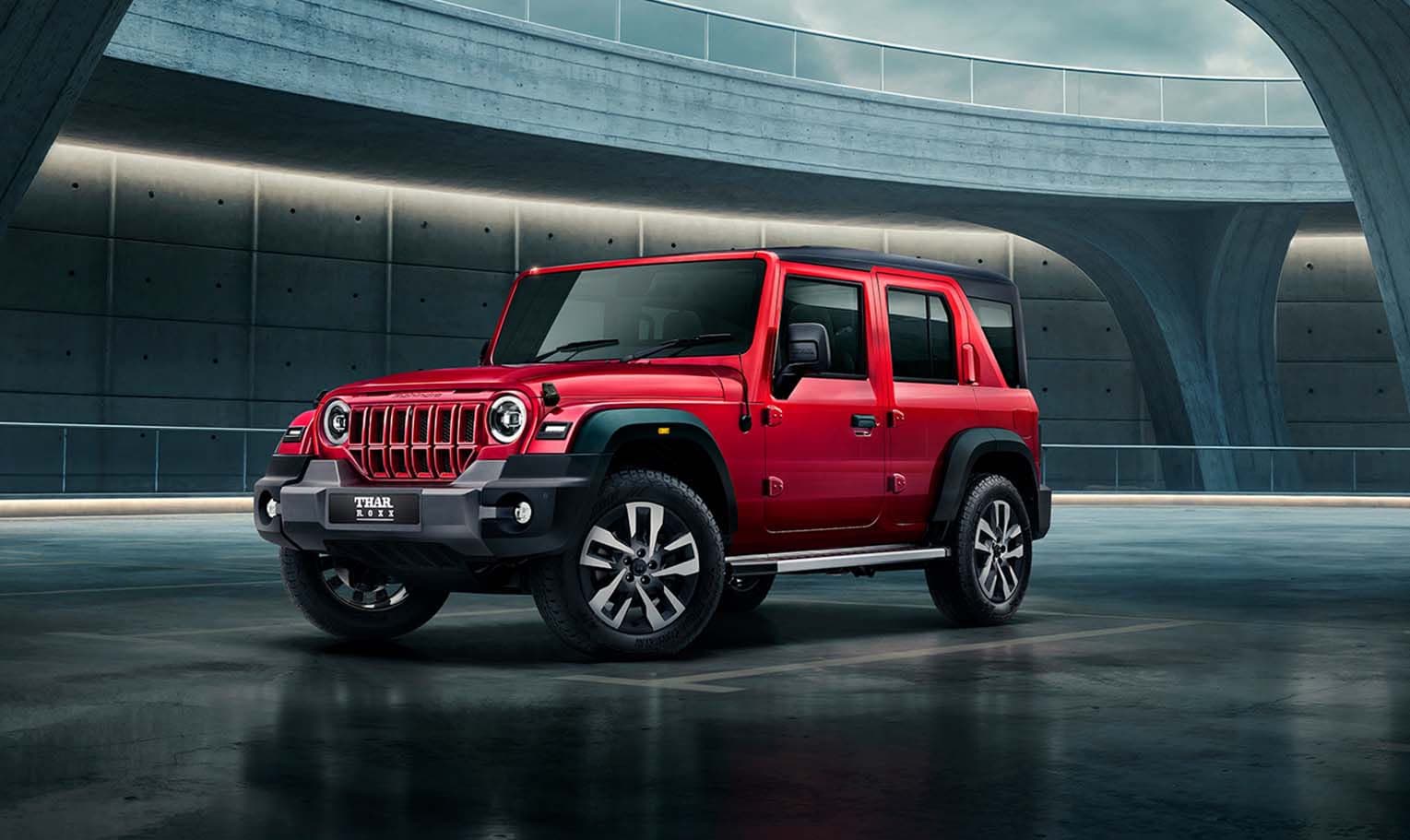
The Mahindra Thar Roxx looks ready for a trail even when it is parked outside an office. That visual promise can make the 4x4 badge feel compulsory. For many buyers, though, the useful question is more specific: will the car regularly face conditions that require a low-range transfer case and four driven wheels, or will it spend most of its life on tarmac, broken city roads and occasional unpaved approaches?
The Roxx offers rear-wheel drive (RWD, often called 4x2) and four-wheel drive (4x4) in different combinations. Mahindra's current official brochure is the starting point for the exact variant matrix; do not assume every engine, gearbox and trim can be paired with 4x4. In particular, the brochure places 4x4 with the diesel rather than the petrol. Check the latest order sheet and the VIN-linked specification with your dealer before paying a booking amount, because equipment and availability can change.
Start with the road you actually drive
A steep apartment ramp, potholes or a gravel lane do not automatically justify 4x4. Tyres, ground clearance, approach angle, driver judgement and a sound recovery plan matter on those surfaces. A rear-drive Roxx retains the upright body and much of the basic architecture that attracts buyers to this SUV. If your longest rough stretch is a maintained village road or a campsite track in dry weather, the extra driveline hardware may spend its whole life unused.
Proper off-road travel is different. Loose climbs, deep ruts, slippery mud and repeated rock steps can unload a wheel and defeat a two-wheel-drive vehicle. Four-wheel drive can distribute drive to both axles, while low range provides more controlled progress at low speed. Mahindra describes the Roxx's 4XPLOR terrain-management system and associated traction hardware in its product material. Which functions a car actually has depends on its variant and transmission; verify the exact configuration rather than treating a brochure feature list as standard equipment.
Even a 4x4 Roxx is not a promise that every route is safe. Tyre type, weather, water depth, recovery access and the driver's experience set the limits. The right way to learn a new car is on a suitable supervised route, not by discovering its breakover angle in a flooded lane. If the family trip involves remote trails, budget for tyres and a recovery plan alongside the 4x4 premium.
What changes beyond the badge?
Some buyers compare a low-spec RWD car with a high-spec 4x4 and attribute every comfort difference to the drivetrain. Separate the three choices: engine, gearbox and trim. Make a shortlist of the features you use every day—seat adjustment, camera, air conditioning, smartphone integration, rear-seat convenience—and mark which exact variant supplies them. Only then compare the price and capability of the driveline.
Mahindra offers petrol and diesel Roxx powertrains, manual and automatic transmissions, but not in every conceivable combination. The petrol's character and the diesel's low-speed pull suit different preferences; neither fuel choice should be decided solely on a headline power figure. A city buyer should consider traffic, annual distance, fuel availability and local restrictions. An occasional trail driver should examine whether the preferred 4x4 variant forces a diesel and gearbox combination that still works on the other 95 percent of journeys.
Check the tyre and wheel specification too. Large wheels and road-biased rubber can look appealing, but the tyre fitted to the actual car affects noise, ride, wet grip and resilience on sharp stones. Do not assume a 4x4 badge means it leaves the showroom on the ideal off-road tyre. Likewise, do not fit a larger tyre without checking clearance, load rating and the manufacturer's guidance.
A test drive with two different jobs
For daily use, drive the precise engine and gearbox you plan to buy through slow traffic and over a familiar imperfect road. Try a parking bay and a U-turn. The Roxx is a tall, body-on-frame SUV with a particular seating position and turning footprint. More grip on a trail will not make it fit a narrow garage; measure the garage and take the whole route into account.
Then use the rear seat. Open the back doors in a real parking space, fit a child seat if needed, check the rear air flow and load the luggage you normally take. The five-door body is a key reason to choose a Roxx over a three-door Thar, but a spec sheet cannot tell you whether your family finds the step-in height comfortable. If the boot will carry prams or a week's luggage, test those objects rather than relying on a brochure number.
For 4x4 buyers, ask the dealer for a safe demonstration of how the transfer case and terrain modes work on the selected variant. Confirm the shift procedure, speed limits for engaging modes and the warnings in the owner's manual. Understand when four-wheel drive should be disengaged; using a locked driveline incorrectly on high-grip tarmac can cause strain. If a demonstration cannot be arranged, read the exact owner's manual before accepting delivery and seek proper instruction later.
Count the whole ownership cost
Ask for written on-road quotations for the exact RWD and 4x4 variants in the same city, with matching insurance scope and accessories removed from the comparison. A larger ex-showroom figure is only the first difference. Registration, insurance, financing cost and the tyres you will actually use can widen the gap. If you expect to keep the SUV for several years, ask an authorised workshop about the maintenance schedule for transfer case and differentials on the chosen 4x4, and compare it with the RWD schedule.
Resale is uncertain. A 4x4 specification can appeal to a smaller group of enthusiastic buyers, but it does not guarantee that you recover its full purchase premium. Likewise, a low-mileage 4x4 that has been used hard off-road may need a more careful inspection than a road-used RWD example. Buy capability because you will use it safely, not because a speculative resale calculation makes the higher price look free.
Who should pick which?
Choose RWD when the Roxx's design, high seating position, space and occasional rough-road confidence are the attractions, and your real routes stay mostly on maintained surfaces. Spend the saved budget on the engine, gearbox, safety and comfort specification that suits daily life. Choose 4x4 when frequent, planned off-road use is part of the purchase, the diesel and available variant combinations suit you, and you are willing to learn the hardware properly.
Before signing, write down three drives you expect to make in the next year that genuinely need four-wheel drive. If you cannot name them, the RWD test drive deserves serious attention. If you can, verify the selected 4x4's exact equipment, tyres and recovery preparation. The badge should answer a route problem, not create one in the monthly budget.
For model details, see the Thar Roxx page. Specifications and availability cited here are based on Mahindra's official material and should be reconfirmed with the manufacturer or dealer for the vehicle you order. Cover photograph: Mahindra & Mahindra.