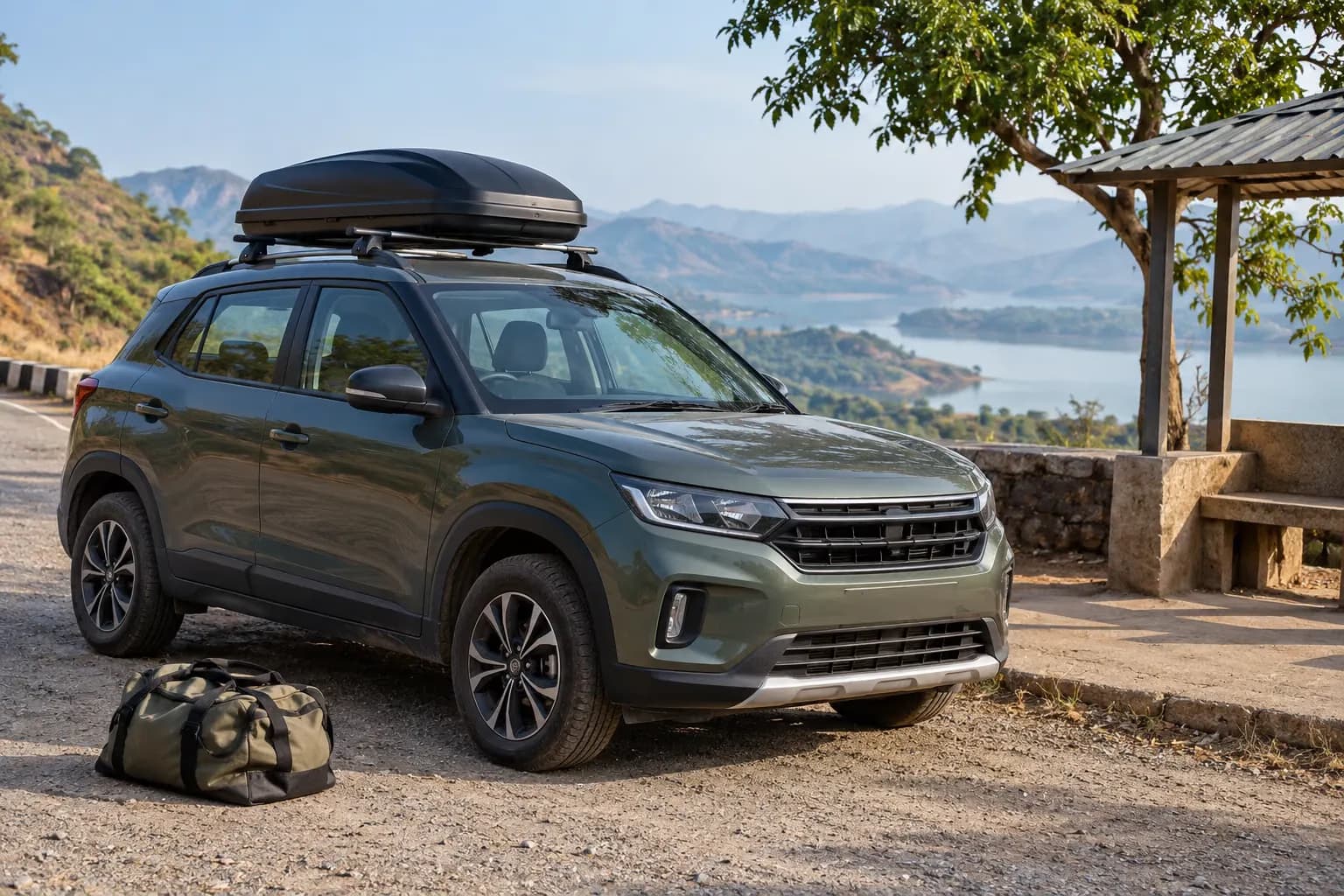
A roof box looks like a straightforward cure for a full boot. Put the big bags upstairs, leave legroom for everyone and drive away. The awkward part is arithmetic: a car's permitted roof load is not a luggage allowance on top of the rack and box. Their own weight comes out of the same limit.
Thule's roof-rack capacity guidance says the lower of the vehicle and rack limits governs, and explicitly counts the rack, accessories and cargo in the roof load. Its roof-box packing guide adds the box's own rating to the list of limits to check. That is the sensible order of work before shopping for a box.
Find three limits, not one headline number
First, find the maximum roof load in the owner's manual for your exact car and model year. Do not infer it from the height of the roof rails or from an accessory advertisement. Second, confirm the rated load of the correctly fitted bars and mounting kit. Third, check the box's maximum cargo load and its installation instructions. The allowable load is constrained by the lowest applicable limit, not by the most generous figure printed on the packaging.
Then weigh the empty components. If, purely as an illustration, the car permits 75 kg on the roof and the bars plus box weigh 20 kg, only 55 kg remains under the car's roof limit. If the box itself permits less cargo, that lower number wins. Those example weights are not recommendations for any vehicle: measure your own equipment and read its documents.
Crossbars and roof rails are different things. Decorative or longitudinal rails do not necessarily mean that any universal crossbar can be clamped to them. Confirm the approved fit kit for your car and the specified mounting points. Thule's rack safety guidelines warn against assuming a rack fits a different vehicle and require fasteners, locks and straps to be checked before trips.
If a salesperson quotes a roof-box capacity, ask whether the number refers to the box's own cargo rating or to the whole fitted system. They are not interchangeable. A box can have a generous internal volume and still be limited by the car's roof rating. Likewise, a rack's laboratory rating is not permission to exceed the vehicle maker's limit. Keep the manuals for all three parts in the car or on your phone so the installation and loading instructions are available on the day you pack.
Use the box for the right objects
A roof box is best for bulky, relatively light items, not a stack of dense tools or heavy suitcases. Put the heaviest permitted items low and within the box's approved loading pattern, following the box maker's instructions. Secure the load inside; the lid is not a cargo strap. If an object is too long or wide for the box, do not let it hold the lid partly open.
Leave essential items and things needed at a rest stop accessible in the cabin or boot. The first-aid kit, for example, should not require climbing up to a box. Keep heavy luggage low in the car where it can be properly restrained, subject to the vehicle's payload limit. Roof storage does not increase the car's overall permitted laden weight.
Remember what changes on the road
A loaded box raises the car's centre of mass and adds a larger shape for crosswinds to push. Thule's roof-box instructions tell drivers to adjust speed to the load and conditions and to expect changes in side-wind sensitivity, cornering and braking. A speed ceiling in a product manual is not a target; posted limits and road conditions still govern.
Measure the total height with the box fitted. The car may clear your apartment entrance without the box but not with it. Watch basement ramps, covered parking, toll structures and tree branches. If you cannot confidently judge clearance, stop and check. Remove the box when it is no longer needed rather than leaving it installed indefinitely.
Think about the passengers as well as the roof. If people, boot cargo and accessories already bring the vehicle close to its overall payload limit, moving bags to the roof does not erase their weight. The roof's separate limit and the vehicle's total carrying limit both still apply. A weighbridge or the vehicle's published weight data can help when a trip load is unusually heavy, but the manual's definitions and the actual equipment fitted are essential.
Roof tents and parked-vehicle loads are a different question again. A static rating should not be silently treated as the permissible load while driving. Thule distinguishes between dynamic and static limits in its roof-box guidance. If a supplier cannot explain which figure applies to the moving car, do not rely on a photograph of a tent on a similar SUV as evidence of suitability.
A pre-departure routine worth the minutes
Fit the rack according to its instructions, check every contact point and close every lock. Close the box, remove its key and try gently lifting at each corner to ensure the lid is latched. Confirm no strap hangs outside. After the first stretch of driving, stop safely and recheck the installation as the manufacturer directs. Road vibration and a hurried installation are a bad combination.
The useful buying question is not 'How many litres does the box add?' It is 'How much permitted weight remains after the system is fitted, and can I load my actual trip gear within it?' If the numbers are tight, a lighter packing list or a different vehicle arrangement is safer than treating the roof as an unlimited second boot.