A new-car insurance quote can look settled long before the policy details are actually clear. The headline premium gets attention; the Insured Declared Value, or IDV, often gets glanced over. That is a mistake. IDV is the sum insured for the vehicle's own-damage cover, so it deserves the same scrutiny as the variant name, registration city and add-ons.
For a buyer taking delivery, the useful question is not simply “Which quote is cheapest?” It is whether two quotes are offering the same protection on the same car. A lower premium can sit beside a lower IDV, a larger deductible, fewer add-ons or a different claims arrangement.
Start with what IDV actually does
IRDAI describes IDV as the sum insured for a vehicle's own-damage cover and says it should reflect the vehicle's current market value. In a total-loss or constructive-total-loss situation, the policy schedule's IDV becomes a central reference point, subject to the policy terms and the value of any salvage.
That does not make IDV a guaranteed cheque for every accident. Partial repair claims are assessed under the policy wording, including deductibles, depreciation, exclusions and the parts that were actually damaged. Think of IDV as a core value in the cover, not a substitute for reading the rest of the schedule.
Why the lowest premium is not automatically the better quote
| Check | Why it matters | What to compare |
|---|---|---|
| Exact vehicle | A different variant or accessory value can change the quote. | Variant, fuel type, registration city and invoice details. |
| IDV | It is the own-damage sum insured shown in the policy schedule. | Ask why one quote has a materially lower or higher figure. |
| Deductible | The amount you pay yourself affects a small or medium claim. | Compulsory and voluntary deductible, if selected. |
| Add-ons | Zero-depreciation, engine protection, consumables and roadside assistance are not interchangeable. | Names, limits, exclusions and the price of each add-on. |
| Claims support | A workshop's cashless network and process matter after the sale. | Nearest authorised workshop, documents and escalation route. |
At delivery, ask for the schedule before you sign off
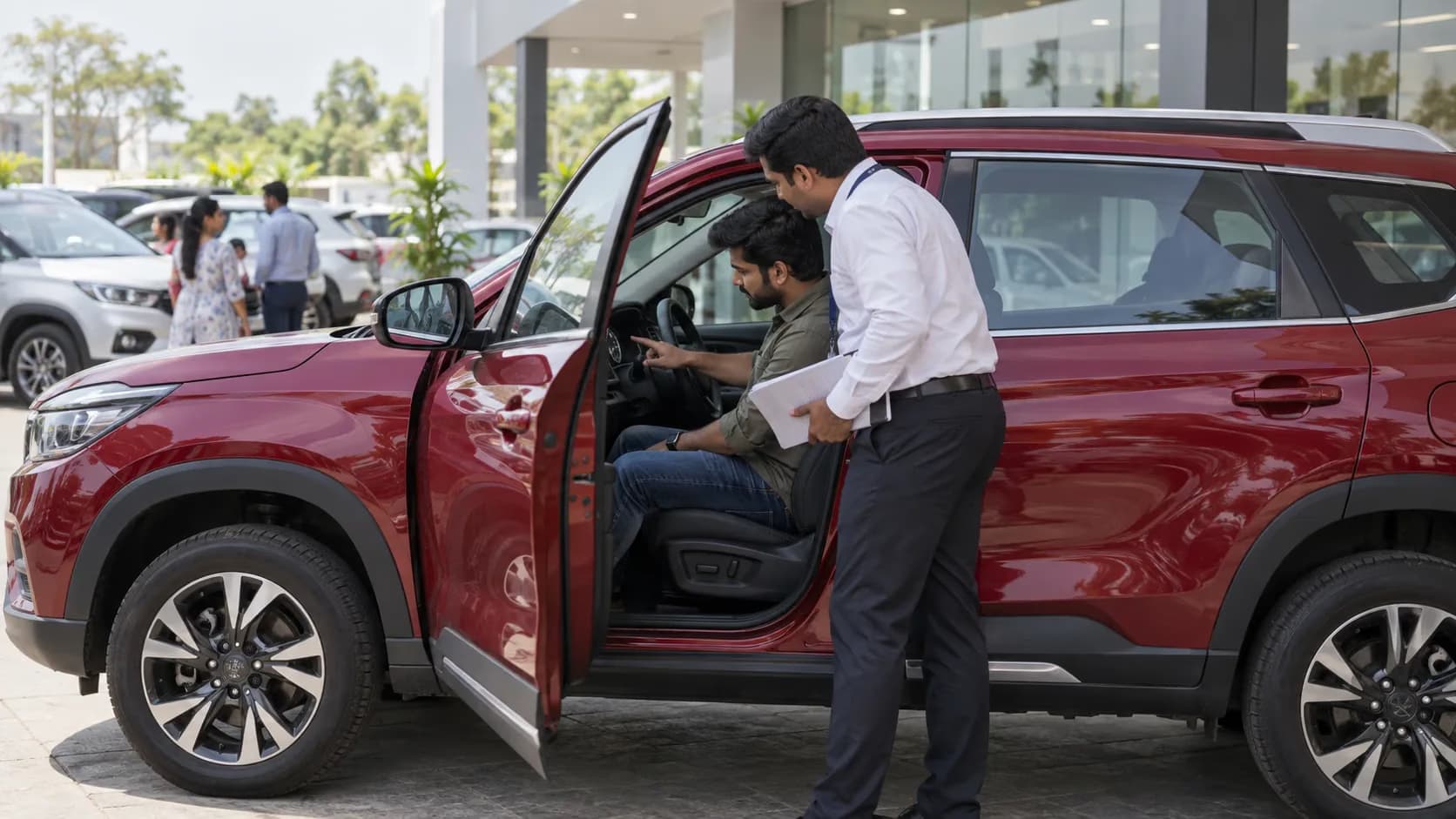
Ask the dealer or insurer for the policy schedule and read it against the final vehicle invoice. The make, model, variant, engine or chassis details, registration information, policy period, insurer name and IDV should all make sense together. If the car is still awaiting registration, confirm how the details will be completed and when the final certificate will be issued.
- Check that the quoted car is the exact variant allocated to you.
- Ask whether accessories fitted by the dealer are declared and how they are covered.
- Separate own-damage premium, third-party cover and add-on costs instead of judging one bundled number.
- Check the deductible and any voluntary excess selected on the quote.
- Save the policy schedule, insurer contact details and cashless workshop information with the delivery documents.
When a quote needs another question
A very low IDV, a vague add-on list or an unexplained difference between two otherwise similar quotes is a reason to pause, not a reason to panic. Ask for the comparison in writing. The answer may be perfectly reasonable: a different policy structure, a different declared accessory value or a different deductible. What matters is that the difference is visible before payment.
IRDAI's consumer guidance also advises buyers to compare deductibles, coverage and IDV rather than premium alone. That is a sensible delivery-day rule. Compare like for like, then decide whether the saving is real.
A simple rule for new-car buyers
Do not try to optimise a car-insurance quote from one number. Match the policy to the exact car, understand the IDV on the schedule, and compare the cover around it. Ten careful minutes before delivery are easier than reconstructing a quote after a claim.
Reference: IRDAI motor-insurance guidance for policyholders.