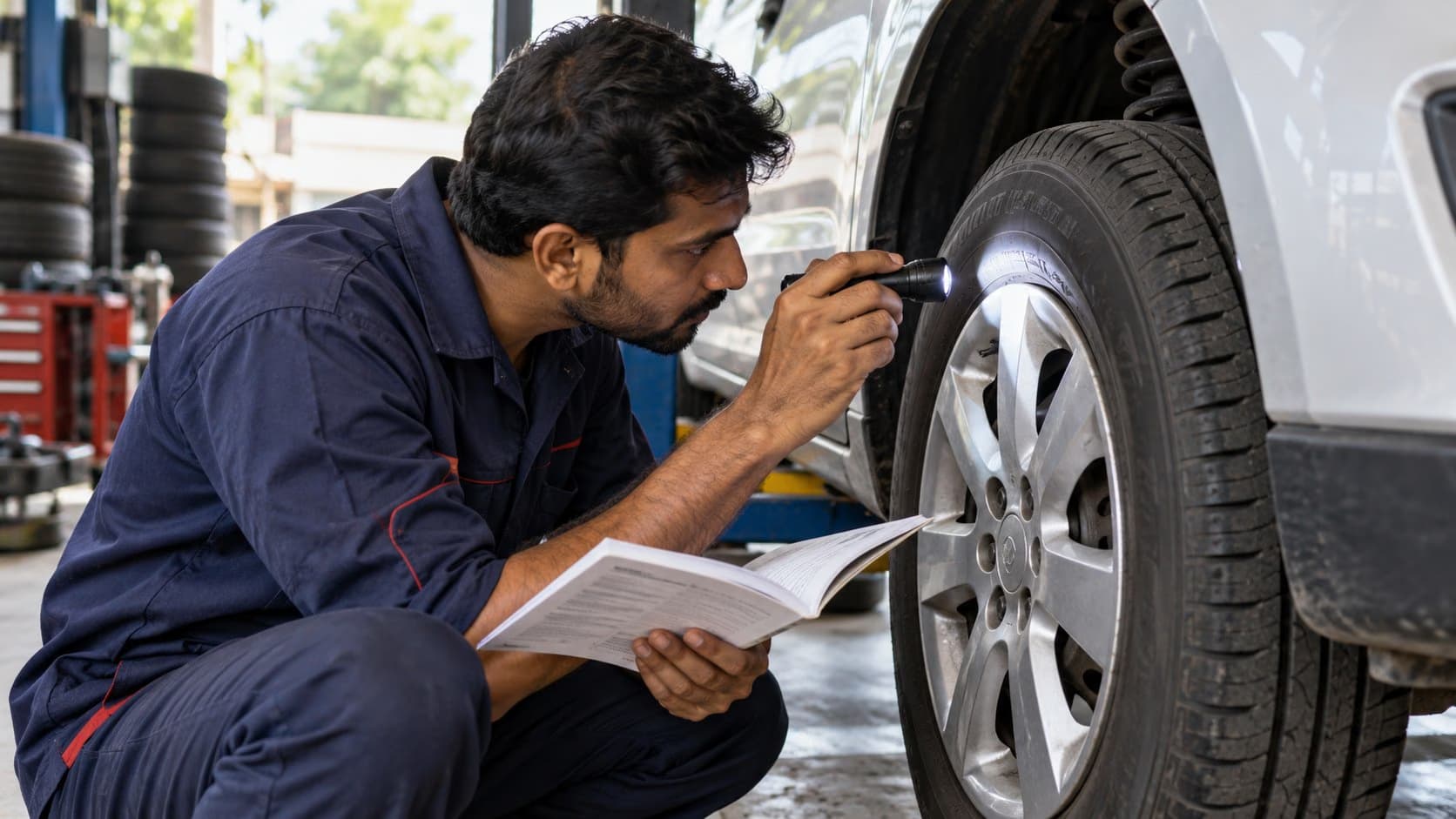
Your automatic car stops beside the road and a recovery operator says a rope tow will get it to the workshop. Before agreeing, open the towing section of the owner's manual. The permitted method depends on the vehicle's drivetrain, transmission, electronic parking brake and condition after the breakdown. A tow that seems harmless over a short distance can damage a car if the wrong wheels rotate while its driveline is not being lubricated or released as required.
The Hyundai towing instructions for one 2026 model show why there is no universal “automatic cars are fine in neutral” rule. Its AWD versions require all wheels off the ground using a flatbed or suitable dollies; its two-wheel-drive versions have different wheel-lift options. Those directions are model-specific, but the lesson travels well: tell recovery the exact vehicle and show them its manual before loading.
What to tell the recovery service on the call
Give the make, model, model year, transmission and whether the car is front-wheel drive, rear-wheel drive or all-wheel drive if you know. Explain the fault: a dead 12-volt battery, gearbox warning, collision, puncture and seized wheel create different loading problems. Say whether the car can roll, whether the steering unlocks, whether neutral can be selected and whether the parking brake releases. If you do not know, say so. An operator can bring skates, dollies or a truck suited to a non-rolling vehicle.
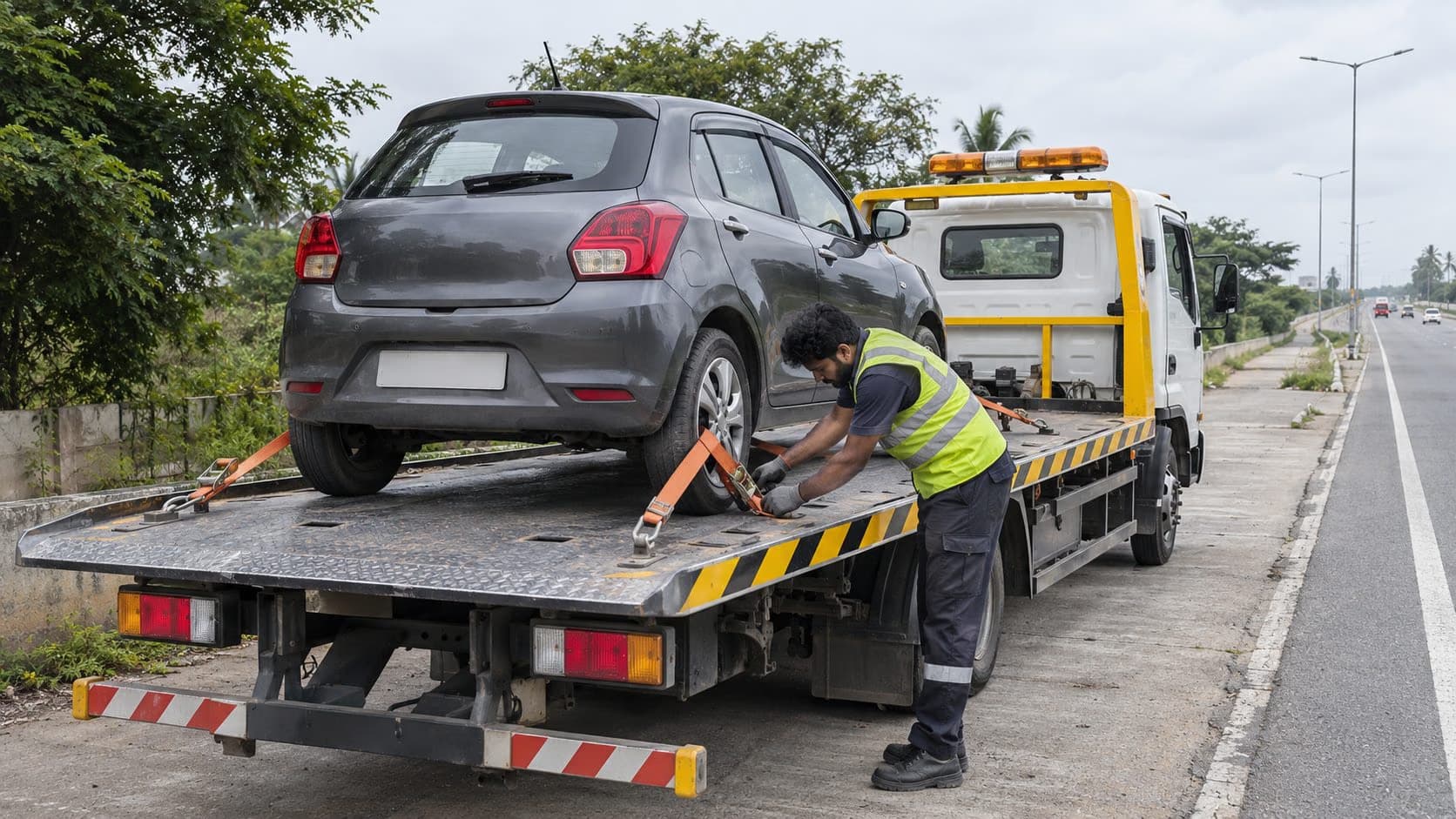
Send a photograph of the manual's towing page if the service accepts it. Ask what equipment will arrive: a flatbed, wheel-lift truck or something else. “Tow truck” alone does not describe how your car will be carried. A flatbed generally keeps all four wheels off the road, but even then the loading and tie-down method must suit the car. An operator should not pull against fragile suspension, body or battery components because a convenient hook is nearby.
Why the drivetrain changes the answer
With some two-wheel-drive cars, a manufacturer permits wheel-lift towing when the driven wheels are off the ground and the remaining wheels can roll. Other vehicles require dollies for the wheels still touching the road. AWD vehicles are often more restrictive because the front and rear drivetrains may be connected. Hyundai's cited manual explicitly requires all wheels off the ground for its AWD versions. A Toyota owner manual also lays out different methods for AWD and other configurations.
The presence of an automatic gearbox is only one part of the decision. Electric and hybrid cars may have their own recovery modes and high-voltage safety instructions. A four-wheel-drive badge on a different model cannot tell you the correct procedure for yours. Read the exact manual and, if necessary, ask an authorised service centre to confirm before the vehicle moves.
Neutral is not a magic safeguard
Owners often assume that moving the selector to N solves every towing risk. It does not. The car may need its driven wheels raised, a special transport mode or restrictions on speed and distance. In a breakdown, the selector may refuse to move without 12-volt power or a model-specific release procedure. The parking brake may also remain engaged. Forcing a selector or dragging locked wheels can add repair costs before the original fault is diagnosed.
Hyundai's manual explains that if its automatic transmission or parking brake cannot be operated, dollies or tyre skates should be used to get the wheels clear. Some cars provide an emergency park-release procedure, but it is not a general instruction to pry open trim at the roadside. Use the owner's manual or trained operator's method. If an operator proposes rolling the car to “see if it frees up”, ask them to stop and identify the correct loading process.
Can the towing eye be used?
The metal eye in the toolkit is commonly misunderstood as permission to rope-tow the car for any distance. Its purpose and limits vary. Some manuals permit only short, low-speed repositioning on firm ground; others specify a restricted emergency tow when no truck is available. It is also easy to attach to a point that looks solid but is not rated for pulling. Do not use a bumper, suspension arm or trailer hitch as a substitute without manufacturer approval.
The Hyundai example limits certain hook-assisted movement to loading or short repositioning, with precise speed and distance conditions. Those figures apply to that manual, not to every automatic car. Treat the eye as a tool for a defined procedure, not a general-purpose towing invitation. Have the operator show where the manufacturer's approved attachment point is before tension is applied.
Safety at the roadside and during loading
Move passengers to a safe area away from traffic. Put on hazard lights where appropriate and follow local road-safety instructions. Do not stand between the tow truck and car while a winch cable is loaded. If the car has collision damage, leaking fluid or an EV battery warning, tell the operator before they touch it. Recovery is a controlled operation, not a hurried push across active lanes.
Once the car is on the truck, check that it is secured at the approved wheel or chassis points and that loose items are removed from the cabin. Photograph the vehicle's condition, odometer and any existing damage before transport if it is safe to do so. Record the truck's registration, destination workshop and service ticket. That documentation helps if damage is found at handover.
What to do at the destination
Ask the operator to unload according to the same vehicle-specific restrictions. A car that was carefully carried on a flatbed can still be damaged by dragging it off with the parking brake on. If the vehicle will be left at a workshop after hours, confirm where it will be parked and who receives the keys. Obtain a recovery invoice with the method used, origin and destination.
Do not diagnose the original breakdown from the fact that the car rolled onto a truck. A car can move in neutral but still have a transmission, electrical or braking fault. Tell the workshop the original warning message and exactly how the car was recovered. If the fault involved a gearbox, ask them to confirm whether any transport-related inspection is needed.
The short pre-recovery checklist
Find the towing page in the exact car's manual; tell the operator whether the vehicle can select neutral and release the parking brake; confirm how many wheels will be off the road; and ask which approved points will be used for pulling and securing. If the instructions are unclear, request a flatbed or clarification from the manufacturer rather than guessing. The right equipment may take longer to arrive, but it is cheaper than adding driveline damage to an ordinary breakdown.
Hyundai and Toyota's published manuals illustrate the variation between configurations. The final authority is the towing instruction for your exact car, not the operator's experience with a similar-looking vehicle.