“Automatic” tells you that a car can change ratios without the driver operating a conventional manual clutch pedal. It does not tell you how the car will respond in crawling traffic, on a slope or when you ask for a quick overtake. Different transmission designs can feel very different, and two cars using the same type can still be tuned differently.
The useful comparison begins with your route, not a label on a brochure. The Bosch guide to automatic transmission technology describes several approaches to changing ratios automatically. For a purchase decision, confirm the exact transmission and maintenance schedule for the variant you are considering.
AMT: automated shifts in a manual-type gearbox
An automated manual transmission uses a conventional gearbox layout with actuators managing clutch operation and gear changes. It removes the driver's clutch pedal, but the shift can feel different from a smooth conventional automatic. Some drivers notice a pause as the car changes gear, particularly under acceleration.
During a test drive, try gentle and firm acceleration and observe how predictable the shift feels. On a slope, do not assume every AMT has the same creep or hill-hold behaviour. Ask the dealer which assistance features are fitted to the exact variant and read the manual.
CVT: ratios that change continuously
A continuously variable transmission can change its ratio across a range rather than only stepping between fixed gears in the familiar way. Depending on the car and the driver's request, engine speed can remain relatively steady or rise noticeably while road speed builds. Some CVTs use programmed steps to provide a different sensation.
The right question is not whether a CVT is universally quiet or universally noisy; it is how the specific car behaves on your route. Test a gradual urban acceleration and a safe, legal higher-speed merge. Listen to the response and decide whether the feel suits you.
Torque converter automatic: a familiar stepped approach
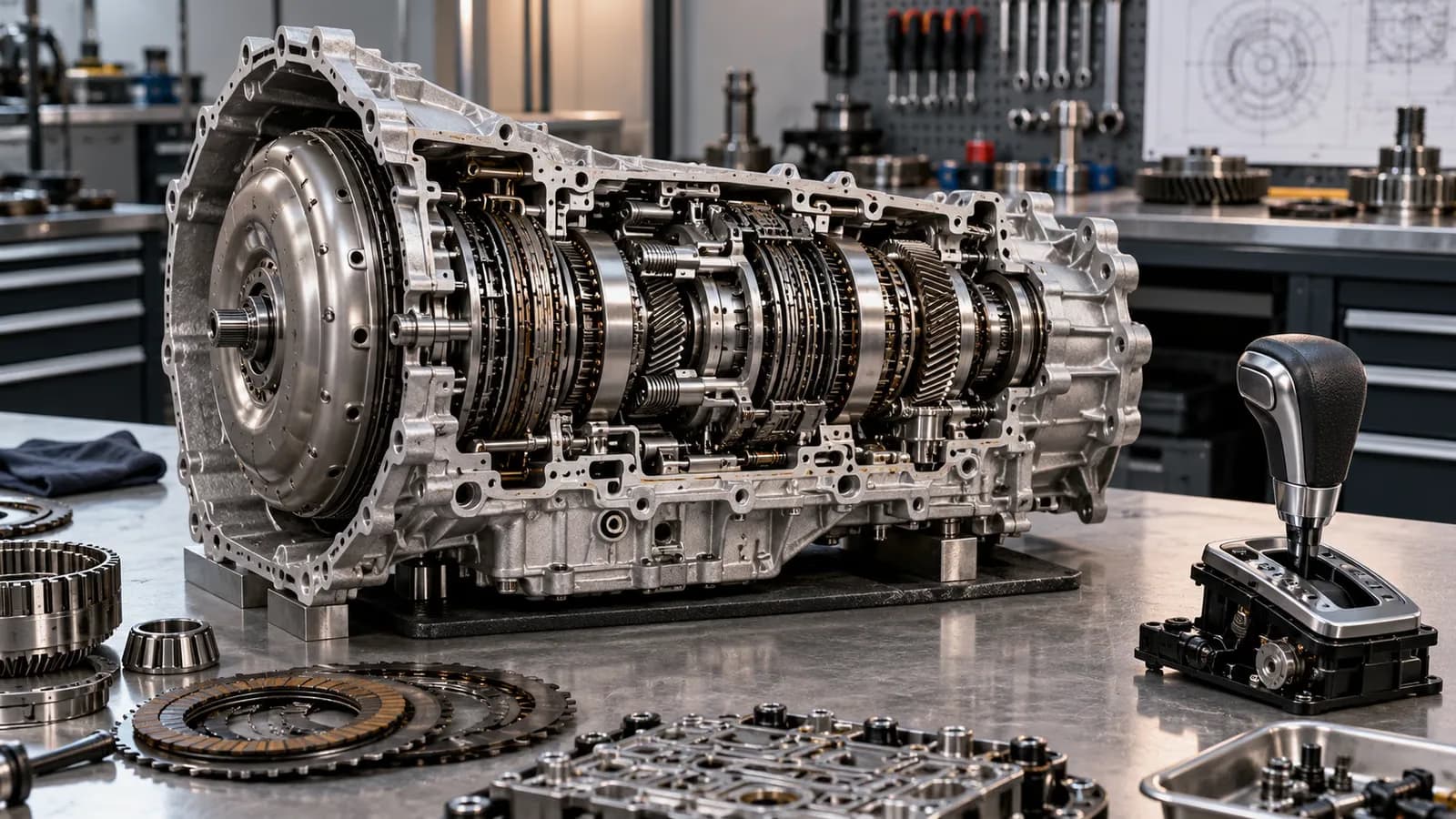
A conventional automatic commonly uses a torque converter and a set of stepped ratios. Many drivers appreciate its smooth low-speed behaviour, but calibration still matters. The number of gears alone does not establish how quickly or smoothly a transmission will respond.
Try slow parking, a gentle incline and a normal acceleration. Notice the delay, if any, between selecting a driving position and the car moving. Compare the experience with the other cars on your shortlist rather than assuming a transmission type guarantees one particular result.
DCT: two clutches, different calibrations
A dual-clutch transmission uses two clutches to manage gear changes. Designs and control strategies vary, and a particular DCT's behaviour in crawling traffic is not a reliable prediction for every other model. Check the vehicle's handbook for its low-speed and hill-driving instructions.
On the test drive, assess smoothness during repeated stop-start movement, parking and ordinary acceleration. Ask the authorised service centre about the prescribed maintenance schedule and ownership conditions for the specific transmission instead of treating internet anecdotes as a diagnosis.
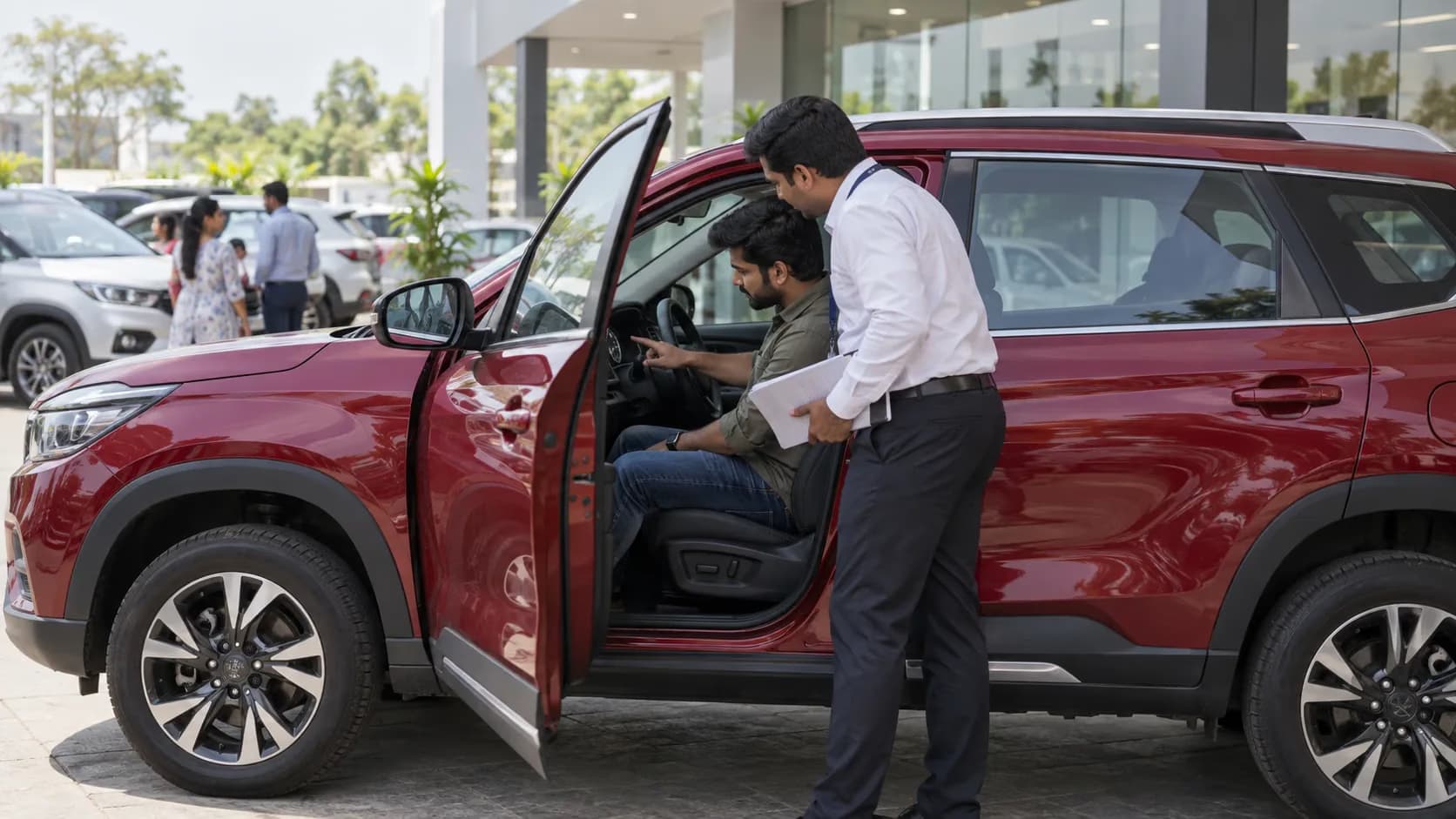
How to run a fair test drive
- Drive the exact engine and gearbox combination you intend to buy.
- Include your regular traffic conditions, a safe incline and a parking manoeuvre.
- Try light throttle first, then a normal overtaking request where legal and safe.
- Check visibility, braking, seating and controls as well as shift feel.
- Ask about service intervals, specified fluid and warranty terms in writing.
Keep air-conditioning and passenger load reasonably similar across comparisons. A gearbox is part of a whole vehicle: engine output, calibration, tyres and driver input also affect the experience.
Match the gearbox to the whole car
The same gearbox label can appear with different engines and in vehicles of different weights. A small-capacity engine with a CVT will not necessarily respond like a larger engine using a different CVT. Similarly, software tuning can change when a gearbox shifts. Compare the exact engine, fuel and variant shown on the quotation, and confirm that the demonstration car matches it.
On a familiar road, check whether acceleration feels predictable at the speeds you regularly use. A passenger can help note observations while the driver stays focused on traffic. Do not confuse a brief impression on a smooth dealer route with a complete assessment of ride comfort, visibility and traffic behaviour.
Parking, slopes and traffic queues
Check the car's instructions for creeping, hill holding and selecting the correct driving position. Not every automatic will hold position on an incline, and a hill-hold feature is not a substitute for operating the brake as instructed. When parking, confirm the correct sequence for the transmission and parking brake in the owner's manual.
In a traffic queue, avoid making general assumptions about what is mechanically best for every design. The manufacturer's guidance should take priority over a social-media rule that applies the same method to every AMT, DCT and torque-converter car. Ask the dealer to demonstrate normal operation and explain any warning messages.
What to request before paying
Get a written quote that identifies the transmission and includes the warranty duration and terms. Ask the authorised service centre about the scheduled service items, approved fluid and interval for the exact configuration. A dealer's estimate is not a guarantee of future maintenance cost, but it is a useful starting point for comparing written ownership information.
Why specifications on paper are only a starting point
Published performance or efficiency figures do not explain every interaction between engine, transmission and driver. Test data depends on the conditions and method. If an official figure matters to you, check the exact variant and its test basis; do not promise yourself the same result in every traffic or weather condition.
A test drive with typical occupants can reveal whether the response suits your use. Ask permission to use a safe route that includes a junction, low-speed queue and hill if these are part of your normal driving. Never perform an unsafe acceleration or braking test to compare gearboxes.
When service history matters
For a used automatic car, request service records and verify the specified maintenance with the manufacturer or an authorised workshop. A smooth short drive does not prove that all prior maintenance was completed. Equally, an unfamiliar shift sensation does not by itself prove a fault. Arrange an independent professional inspection and ask for a written assessment before deciding.
Consider warranty exclusions and the availability of authorised support in the areas you regularly travel. Keep records of services and follow the vehicle-specific maintenance instructions rather than applying a generic interval across all transmission designs.
Which one is best?
There is no universal winner. A driver prioritising predictable low-speed movement may prefer one car, while someone who values a different acceleration response may prefer another. Purchase price, real ownership costs, warranty and service support should be compared for the actual variants.
Request a written on-road quotation and a manufacturer service schedule, and take a longer test drive if the first one leaves questions unanswered. The best automatic is the one that fits your use and remains comfortable to operate every day, not simply the one with the most appealing acronym.