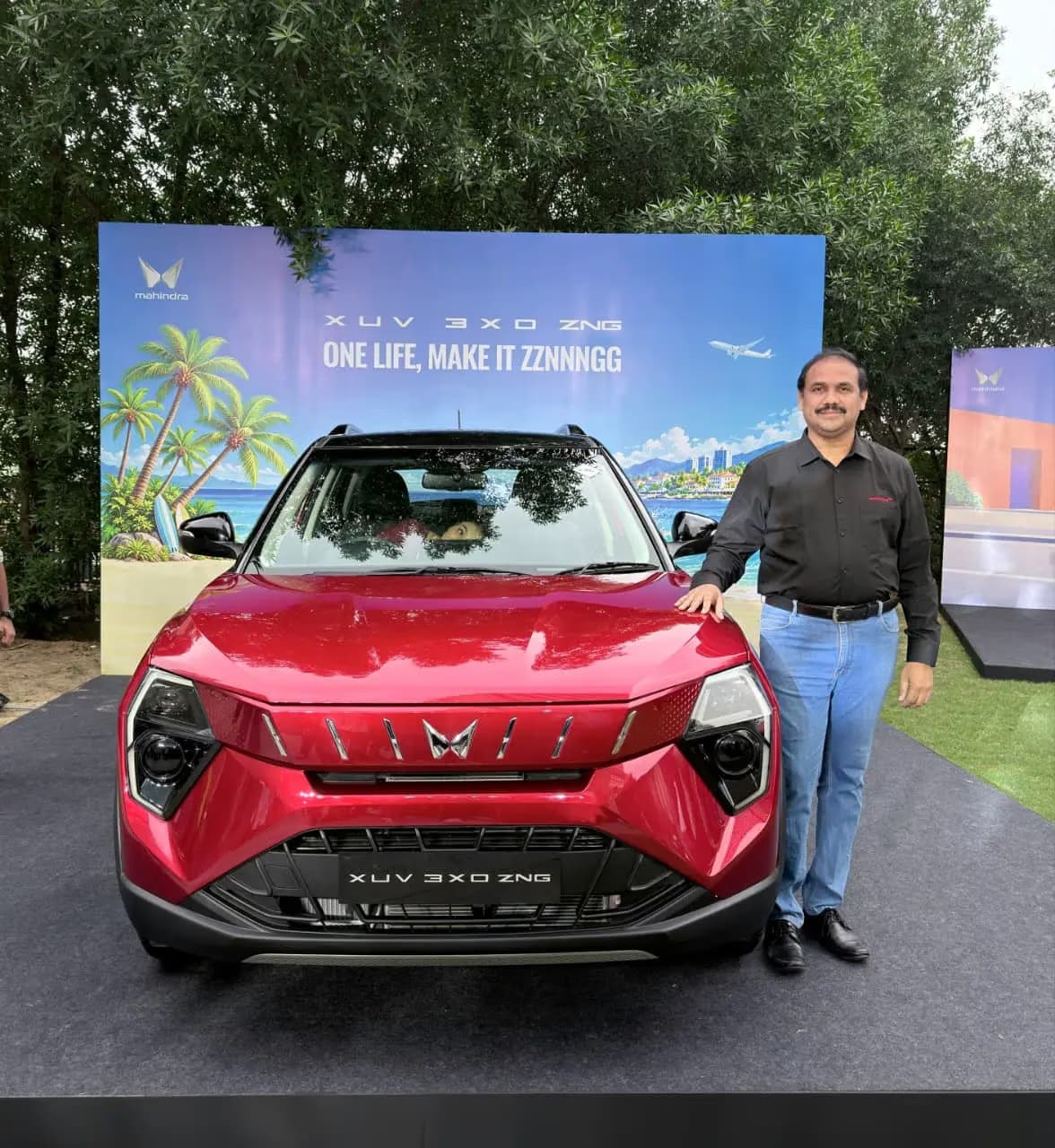
A factory CNG version of the XUV 3XO is finally here, and the interesting part is where Mahindra has put the cylinders. The company's October 2026 launch announcement says the XUV 3XO ZNG uses an underfloor twin-cylinder arrangement that leaves 270 litres of usable boot space. If you have dismissed CNG SUVs because a luggage cylinder consumes the boot, that is the detail to inspect at a dealership. It does not, by itself, tell you whether your usual suitcases will fit.
What has actually launched?
Mahindra announced the ZNG on 15 October 2026, with bookings and deliveries scheduled from 20 October. It is a factory CNG addition to the existing XUV 3XO range, rather than a new generation of the SUV. The official starting price was Rs 9.99 lakh, ex-showroom, at launch. Treat that as a dated manufacturer announcement: ask your local dealer for the current ex-showroom figure, on-road breakdown and availability before making a payment.
The official release lists four ZNG variants: MX Edge at Rs 9.99 lakh, REVX Edge(O) at Rs 10.79 lakh, AX5 at Rs 11.19 lakh and REVX A at Rs 12.27 lakh, all ex-showroom launch prices. The spread is Rs 2.28 lakh between the listed entry and top trims. It is worth comparing the equipment you would actually use, not assuming that the most expensive CNG version is automatically the sensible one. A city commuter who values the lower acquisition cost will ask different questions from a family that prioritises convenience features.
The engine matters more than the badge
Mahindra says the ZNG uses its 1.2-litre mStallion TCMPFi turbocharged engine. The manufacturer quotes 82 kW and 200 Nm in both petrol and CNG modes. That is unusually direct information: the release does not ask buyers to infer CNG-mode output from a petrol figure. Even so, peak output alone cannot describe throttle response in stop-start traffic, overtaking with five people on board or the feel of changing between fuels. Those points call for a test drive on your actual route.
The official certified CNG efficiency figure is 24.7 km/kg. A certification number is a comparison tool, not a promise of what you will see on the dashboard. Congestion, driving style, tyre pressure, air-conditioning, load and the share of kilometres driven on petrol will change real-world running cost. For a fair comparison with petrol, take your own annual distance, expected CNG usage and local pump prices, then calculate cost per kilometre for both fuels. Include the difference in purchase price and insurance, rather than comparing fuel prices alone.
One practical question the press announcement does not resolve for every buyer is whether the specific variant in stock has the transmission and equipment you expect. Ask for the current variant brochure and check the exact car before booking. Do not transfer specifications from a petrol or diesel XUV 3XO to the ZNG merely because the trim name looks familiar.
Does the boot solve the usual CNG compromise?
The two cylinders sit below the luggage area, and Mahindra claims 270 litres of usable boot volume. This is a welcome design choice for anyone who regularly carries bags, but volume in litres is only part of the story. Measure the depth and floor height at the showroom, check whether the loading lip suits heavy luggage and see what happens when the rear seats are occupied. The company says the spare wheel is positioned under the body. Ask the dealer to demonstrate how you would reach it safely on a roadside stop, because access can matter more than a brochure drawing when a tyre fails.
Do the same inspection with a full tank and a realistic load. If your family travels with a stroller, two cabin cases or sports equipment, bring those items to the showroom. A quoted 270-litre figure cannot guarantee a particular combination fits, because object shape and usable opening width matter. This is also a good opportunity to check rear-seat comfort: a CNG badge does not change the need to assess headroom, knee room and child-seat fit for the actual people who will use the car.
Safety claims need precise reading
The company lists six airbags, electronic stability control and ISOFIX child-seat anchors as standard ZNG equipment. Those are meaningful features to verify on the delivered variant. Mahindra also describes the vehicle as engineered on the XUV 3XO's five-star-rated platform. That should not be read as a separate crash-test result for every ZNG configuration. If crash protection is central to your decision, check the test body's exact vehicle and protocol, and distinguish a tested configuration from a manufacturer statement about a related platform.
CNG itself adds a set of ownership checks. Ask where the filler is located, how the car indicates CNG and petrol levels, what the service schedule says about the CNG system, and whether your normal route has a reliable pump. A large certified economy advantage helps less if every refill requires a long detour or queue. Factory installation has a clear benefit over an aftermarket conversion in that the manufacturer specifies the integrated system and its service process; still, follow the owner's manual and use authorised service procedures for the high-pressure components.
Which variant deserves a closer look?
Start with the MX Edge if price is your main filter, then compare it with the REVX Edge(O) using a current feature sheet. If a convenience item or safety aid matters daily, check whether the approximately Rs 80,000 launch-price step earns its place for you. The AX5 is another Rs 40,000 above the REVX Edge(O) at the announced prices, so its exact equipment difference deserves attention. The REVX A sits Rs 1.08 lakh above the AX5. None of those price steps says anything about value until you see the current feature list, warranty terms and on-road quote in your city.
Request separate written quotations for the two versions you are considering. Ask each dealer to show ex-showroom price, registration, insurance, accessories and any optional products line by line. That makes the price difference visible and stops a bundled insurance or accessory package from obscuring the vehicle's cost. If a promised discount depends on financing or an exchange, check the total finance cost or exchange valuation separately.
Who should actually consider the ZNG?
The ZNG makes the most immediate sense for a buyer with dependable CNG access and enough monthly driving for fuel savings to matter. Its turbocharged engine and underfloor cylinder layout make it particularly worth examining if you want CNG economy without giving up all of the boot. The case is weaker if you drive infrequently, live far from a convenient pump or need a transmission option you cannot confirm on the chosen ZNG variant.
Before placing a deposit, drive the ZNG in both available fuel modes if the dealer permits it, inspect the boot with your own luggage and obtain the current service and warranty documents. The launch figures provide a useful shortlist; the decision rests on the exact variant, its current price and whether the packaging works in your routine. The official Mahindra release is the source for the launch claims and figures above.